
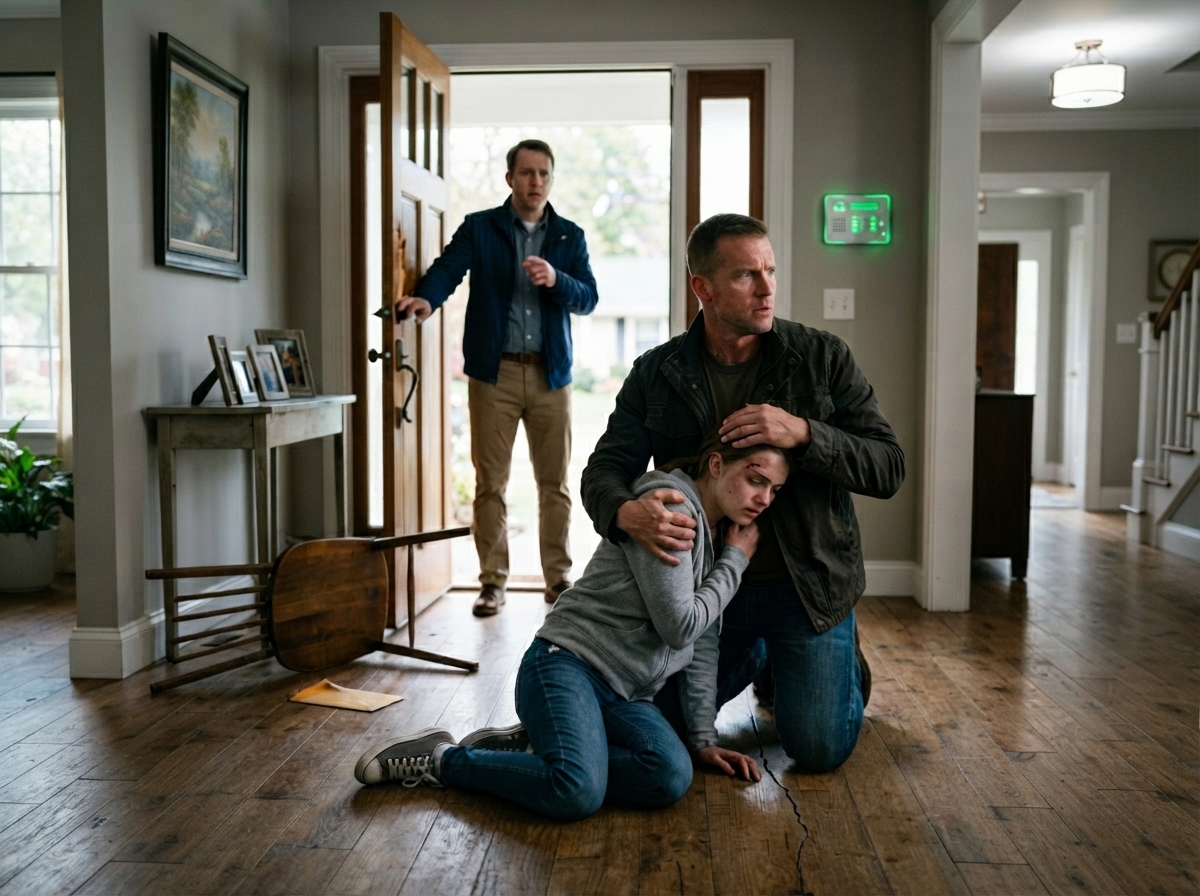
NOTE: Adrian’s confession reconstructs Sarah’s final night. Daniel learns that her death resulted from an operation meant to intimidate her, while the final evidence identifies who turned the threat into murder.
Adrian's confession changed the case completely.
According to him, Sarah had been targeted for intimidation.
The plan was to frighten her.
Take her evidence.
Convince her to stop investigating.
She was never supposed to die.
Daniel found that difficult to accept.
A person who had organized surveillance, threats, and manipulation could not suddenly become innocent because the final outcome had exceeded the plan.
But Adrian insisted.
“I didn't order her death.”
“Who did?”
“I don't know.”
“You expect me to believe that?”
“I expect you to look at the evidence.”
The investigators did.
The evidence showed that Adrian had arranged surveillance.
He had authorized threats.
He had communicated with Victor.
But the final instructions were different.
Someone had changed them.
Someone with access to the operation.
Someone who knew Sarah's medical schedule.
Daniel immediately thought of Evelyn.
But Evelyn had already admitted her role.
She had provided medical information.
She had not planned the final event.
The investigators examined the records again.
A medication had been altered.
The change was small.
Easy to miss.
But it had been made after Sarah's last appointment.
The authorization came from a hospital administrator.
Daniel remembered the name.
Dr. Helen Ward.
The woman who had disappeared after Sarah's death.
Police located her in another country.
She agreed to speak.
She admitted changing the record.
But she denied intending to kill Sarah.
“I was told it was temporary,” she said.
“By whom?”
She named Adrian.
Daniel felt anger rise.
“Then why did you hide?”
“Because I realized later what had happened.”
“What happened?”
“Someone changed the medication.”
“Who?”
Helen began crying.
“I don't know.”
Harris showed her the record.
A second authorization appeared.
Not Adrian.
Not Evelyn.
Not Victor.
The authorization belonged to someone using an old employee credential.
Thomas Greene.
The accountant who had supposedly died twelve years earlier.
Daniel stared at the screen.
“How is that possible?”
Investigators reopened Greene's death.
The body had been badly burned in a vehicle fire.
Identification had been based on dental records that were later found to be incomplete.
Another assumed death.
Another missing person.
The pattern was undeniable.
People had been disappearing when their usefulness ended.
Some had faked deaths.
Others had been helped to disappear.
Greene was alive.
And he had been using a different name.
Investigators traced him to a small town several hundred miles away.
He was arrested without resistance.
When Daniel saw him, he expected anger.
Instead, he saw an exhausted old man.
Greene confessed.
He had helped build the financial structure.
He had helped move money.
He had helped conceal identities.
He had also altered Sarah's medical records.
But he claimed he had not intended to kill her.
“Then why?”
“Because she was going to expose everything.”
“You knew she was my wife.”
“Yes.”
“You knew Lena.”
“Yes.”
“Then how could you?”
Greene lowered his eyes.
“I convinced myself she would survive.”
Daniel's voice broke.
“You convinced yourself?”
“Yes.”
“That doesn't make it better.”
“No.”
Greene explained that he had altered the record to make Sarah receive the wrong medication during a scheduled treatment.
He believed the mistake would frighten her.
He expected her to recover.
But another person intervened.
That person increased the dosage.
Greene didn't know who.
The investigators found the answer in the hospital computer logs.
The change came from an administrator account.
The account belonged to someone who had been dead for years.
Daniel stared.
Then he realized.
The account had been copied.
Someone inside the hospital had been using old credentials.
Evelyn knew about it.
Helen knew about it.
Reed knew about it.
But who had physically made the final change?
The answer came from a camera archive.
A nurse had entered the medication room.
She had not been part of the conspiracy.
She had simply noticed another employee behaving strangely.
She had reported the person.
The report had been ignored.
The employee was Adrian Cole.
But Adrian had already admitted his role.
He had entered the medication room.
Why?
He claimed he was removing evidence.
He said he discovered Greene's alteration and tried to stop it.
Daniel didn't know whether to believe him.
The evidence finally provided an answer.
Adrian had removed the original medication.
He had replaced it with another.
But the replacement was still dangerous.
He had not saved Sarah.
He had changed the method.
The prosecutors concluded that multiple people had contributed to the circumstances surrounding Sarah's death.
The law would decide individual responsibility.
Daniel understood that no verdict could change what happened.
Sarah was still gone.
The truth could explain her death.
It could not reverse it.
The trial continued for months.
Daniel testified again.
This time he spoke about Sarah as a person.
Not a victim.
Not evidence.
Not a name in a file.
His wife.
Lena's mother.
The woman who loved bad coffee and rainy mornings.
The woman who sang while cooking.
The woman who always checked the doors twice before bed.
The woman who believed that people deserved to know what was being done in their name.
He told the court that the conspiracy had turned her into a case number.
He wanted the court to remember she had been a human being.
After his testimony, Lena asked him whether he was angry.
“Yes.”
“Still?”
“Yes.”
“Will you always be?”
“I don't know.”
She thought about that.
“Maybe you don't have to stop being angry.”
Daniel looked at her.
“What do you mean?”
“You just shouldn't let anger decide everything.”
He smiled sadly.
“That's exactly what your mother would have said.”
The verdicts came one by one.
Several defendants were convicted.
Others accepted plea agreements.
Some charges remained unresolved.
Not every question received a final answer.
That disappointed Daniel.
But he had learned to distinguish uncertainty from deception.
There was a difference between not knowing and being lied to.
The investigation also uncovered victims Daniel had never known existed.
Families whose loved ones had disappeared.
Employees whose careers had been destroyed.
People whose medical histories had been altered.
The network had affected hundreds of lives.
Daniel established a foundation in Sarah's name.
Its purpose was simple.
Help families obtain records.
Help whistleblowers find legal support.
Help people challenge falsified information.
Lena became involved too.
She wanted the foundation to include a program for young people who had lost parents.
Daniel worried at first.
“Are you sure?”
She nodded.
“I don't want what happened to us to be useless.”
He understood.
Pain could not always be transformed into something beautiful.
But sometimes people could decide what they built afterward.
Years later, Daniel returned to the courthouse where the first hearing had taken place.
The building looked exactly the same.
But he was different.
He no longer expected justice to make grief disappear.
He understood justice as something narrower.
A record corrected.
A lie exposed.
A responsible person held accountable.
A victim believed.
A family given the chance to move forward.
He walked outside.
Lena was waiting.
She had grown taller.
Older.
Calmer.
She held Sarah's blue box.
“I brought it.”
Daniel smiled.
“Why?”
“I thought you might want to see something.”
She opened it.
Inside was a new photograph.
It showed Sarah holding Lena as a baby.
On the back was a note.
Daniel read it.
You don't have to solve everything.
Just don't stop asking honest questions.
Daniel laughed through his tears.
“That sounds like her.”
Lena smiled.
“Exactly.”
They walked home together.
The investigation was officially closed.
The final reports were archived.
The remaining evidence was stored.
The names were known.
The lies were documented.
But Daniel knew closure was not a door that suddenly slammed shut.
It was a road.
Sometimes you walked it for years.
Sometimes you walked it with grief.
Sometimes you walked it with anger.
Sometimes you walked it beside someone you loved.
He looked at Lena.
“You hungry?”
“Very.”
“What do you want?”
“Mom's recipe.”
Daniel smiled.
“Which one?”
“The pancakes.”
They laughed.
For the first time, remembering Sarah did not feel like reopening a wound.
It felt like bringing someone home.
That night, Daniel opened the last drawer beside his bed.
He placed Sarah's letter inside.
Beside it, he placed his father's notebook.
Then the blue box.
He closed the drawer.
The secrets were no longer controlling them.
They belonged to history.
And history could finally stay where it belonged.
Click Here to continue read next: PART8: Years Later, Lena Opened Her Mother’s Blue Box And Found A Final Letter That Explained The Choice Sarah Had Made For Her
The Door Was Still Open When I Realized The Stranger Behind Me Was Not The Person I Had Been Waiting For
Part 7 of 8

