
The call came from the security gate on an ordinary afternoon.
I was reviewing quarterly reports when my assistant's phone rang.
She listened for a few seconds, then looked at me.
“Ms. Sterling?”
“Yes?”
“Security says there is a woman at the gate asking to see you.”
“Who?”
“She says she's your daughter.”
My hand stopped over the report.
For almost a year, I had imagined this moment.
Sometimes I imagined Lydia arriving angry.
Sometimes crying.
Sometimes asking for money.
Sometimes expecting the old version of me to open the gates before she even reached them.
Instead, I asked one question.
“Is she alone?”
My assistant called the guard.
A moment later, she nodded.
“Yes.”
I looked out the window.
The driveway stretched toward the main gate through rows of trees.
“Let her in.”
The car approached slowly.
Lydia stepped out.
For several seconds, I didn't recognize her.
The expensive clothes were gone.
No designer handbag.
No diamond necklace.
No carefully arranged hair.
She wore black trousers, simple shoes, and a blue blouse.
Her hair was tied back in a plain ponytail.
She looked tired.
But she also looked steady.
She walked toward the house without rushing.
When she entered the living room, she stopped several feet away.
“Hi, Mom.”
I stood.
“Hello, Lydia.”
Neither of us moved.
The silence between us was not hostile.
It was unfamiliar.
She looked around the room.
Nothing had changed.
The furniture was still there.
The paintings were still on the walls.
The ocean could still be seen beyond the windows.
Then her eyes landed on the mantel.
The photograph.
The cardboard crown.
She stared at it.
“You kept that.”
“Of course.”
Her eyes filled.
“I thought you threw it away.”
“I couldn't.”
“Even after everything?”
I walked closer.
“I hated what you did.”
She swallowed.
“You hated me.”
“No.”
She looked down.
“I thought you did.”
“I was angry with you.”
“I deserved it.”
“Yes.”
She nodded.
That answer seemed to surprise her.
I gestured toward the sofa.
“Sit.”
She sat carefully.
I took the chair opposite her.
For a while, neither of us knew where to begin.
Finally, Lydia reached into her bag.
She removed an envelope.
“I brought something.”
I looked at it.
“What is it?”
“Another repayment.”
I didn't take it.
“How much?”
“Three hundred.”
I almost smiled.
“You don't have to prove your worth with checks.”
“I know.”
She placed the envelope on the table anyway.
“I want to repay what I can.”
“Then keep doing it.”
She nodded.
I asked about work.
That was what she had hoped I would ask.
Her shoulders relaxed.
She told me about the women she worked with.
Some had lost savings.
Some had lost homes.
Some had spent years believing that their partners controlled every financial decision because they were supposedly incapable of managing money themselves.
Lydia helped them organize accounts.
She helped them understand documents.
She sat beside women making budgets for the first time.
She had become good at it.
Then she said something quietly.
“Sometimes I hear their stories and realize I was becoming the kind of person who could hurt someone like that.”
I studied her.
“That must be difficult to admit.”
“It is.”
“Does admitting it make it easier?”
“No.”
She looked at me.
“I think it should hurt.”
I nodded.
That answer mattered.
Before the wedding, Lydia had always treated discomfort as something to escape.
Now she was describing it as something worth facing.
I asked her another question.
“Are you happy?”
She didn't answer immediately.
She looked toward the window.
“No.”
My chest tightened.
Then she continued.
“But I think I'm becoming someone who might be someday.”
I sat back.
There was no polished answer.
No attempt to impress me.
No performance.
Just honesty.
I stood.
“Coffee?”
She looked surprised.
“Sure.”
I went into the kitchen myself.
For years, people had prepared everything for me.
Staff served meals.
Assistants carried schedules.
Drivers waited outside.
Yet that afternoon, I made coffee for my daughter with my own hands.
She followed me into the kitchen.
We talked there for nearly an hour.
Not about money.
Not about property.
Not about inheritance.
Not about Marcus.
We talked about work.
Food.
The women she had met.
The mistakes she was still trying to repair.
At one point, she laughed.
It was a small laugh.
Nothing like the loud, polished laughter she had used at parties.
I realized I hadn't heard that sound in years.
When she finally stood to leave, she paused near the front door.
“I don't expect things to go back to the way they were.”
“Good.”
She looked at me.
For a second, disappointment crossed her face.
Then I added, “I don't want them to either.”
She was quiet.
“Then what do we do?”
“We start again.”
“Can we?”
“Slowly.”
“How slowly?”
“Very.”
She smiled.
“I can do slowly.”
After she left, I stood by the door.
I watched her walk toward the car.
She didn't look back.
That was strangely comforting.
She wasn't waiting for me to chase her.
She wasn't expecting a check.
She wasn't expecting a house.
She was leaving with her own life.
And I realized that might be the first real gift I had ever given her.
Months later, she sent another payment.
Then another.
The amounts were never large.
Two hundred.
Three hundred.
Five hundred.
Each one represented a sacrifice that mattered more than the number itself.
I never told her to repay the entire two million immediately.
That would have been impossible.
But I never erased the debt either.
She needed to understand that actions had consequences.
I needed to remember that love did not require me to pretend otherwise.
My own estate plan changed permanently.
The fortune Lydia had once expected to inherit would eventually support organizations helping women escape financial exploitation, single mothers rebuilding their lives, and people learning how to become financially independent.
Lydia knew.
She didn't protest.
That mattered more than any apology.
Two years after the wedding, she invited me to dinner at her apartment.
It was above a bakery.
The furniture was secondhand.
The kitchen was small.
She cooked pasta and slightly overcooked it.
I ate every bite.
After dinner, she handed me another check.
“You're still doing this?”
She shrugged.
“I said I would.”
“You don't have to prove anything anymore.”
“I know.”
She smiled.
“I just want to finish what I started.”
Then she told me about her latest promotion.
She was helping develop financial education programs for women whose partners controlled their money.
I looked around the small apartment.
There were no marble floors.
No ocean view.
No champagne tower.
No four-million-dollar wedding.
Yet she seemed more comfortable here than she had ever looked in my house.
“Do you like your life?” I asked.
She thought.
“Yes.”
The answer was simple.
That night, I understood something I had missed for decades.
Lydia had not needed more money.
She had needed the opportunity to discover who she was without mine.
Years later, we returned together to the Hamptons beach.
The place looked almost ordinary.
The pavilion was gone.
The flowers were gone.
There were no cameras.
No guests.
No champagne.
Only the Atlantic.
Lydia stood beside me with her hands in her coat pockets.
“Do you ever wish you had signed those papers?”
I laughed.
“Absolutely not.”
She smiled.
“I deserved that.”
We watched the waves for a while.
Then she became serious.
“If you had given us the money that day, I would have left with him.”
“I know.”
“He would have taken everything from me eventually.”
“I know.”
She lowered her head.
Then she said quietly, “You saved me.”
I turned toward her.
“No.”
She looked confused.
“I stopped saving you.”
She said nothing.
“That was different.”
The wind moved through her hair.
I continued.
“You needed a chance to save yourself.”
Her eyes filled with tears.
She reached for my hand.
I let her take it.
For most of Lydia's life, I had believed being a good mother meant removing every obstacle before it could hurt her.
I had mistaken protection for preparation.
I had believed that if she never experienced hunger, embarrassment, failure, or financial fear, she would somehow be safer.
Instead, I had left her defenseless against the first person who understood exactly how dependent she had become.
Marcus exploited her weakness.
But I had helped create it.
That truth would always belong to me.
So would the decision I finally made that day.
I stopped paying for her choices.
I stopped using money to prove my love.
And in doing so, I gave her something money had never been able to purchase.
A chance to become responsible for herself.
Lydia squeezed my hand.
“I love you, Mom.”
I looked at her.
The spoiled bride from that beach seemed impossibly far away.
“I love you too.”
We began walking toward the house.
Not because it belonged to her.
Not because she expected to inherit it.
Not because I owed her anything.
We walked together because, after everything that had happened, we had finally learned how to stand beside each other without money standing between us.
Click Here to continue read next: PART5: Two Years After the Wedding That Never Happened, My Daughter Invited Me to a Small Dinner That Meant More Than Any Mansion Ever Could
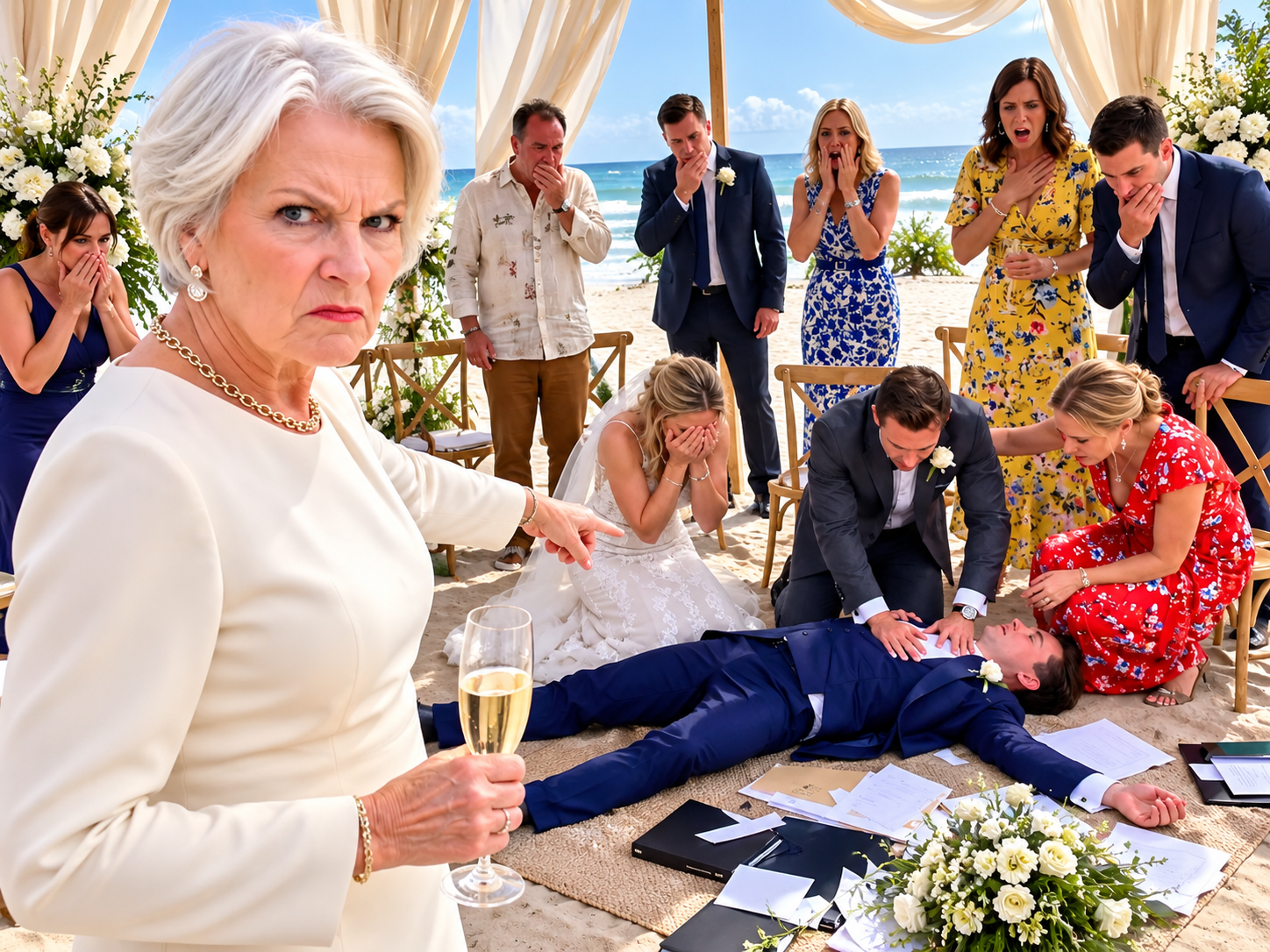
My Daughter Wanted One Last Gift From Me, But Her Fiancé’s Demand Revealed What They Had Really Planned
Part 4 of 8

