
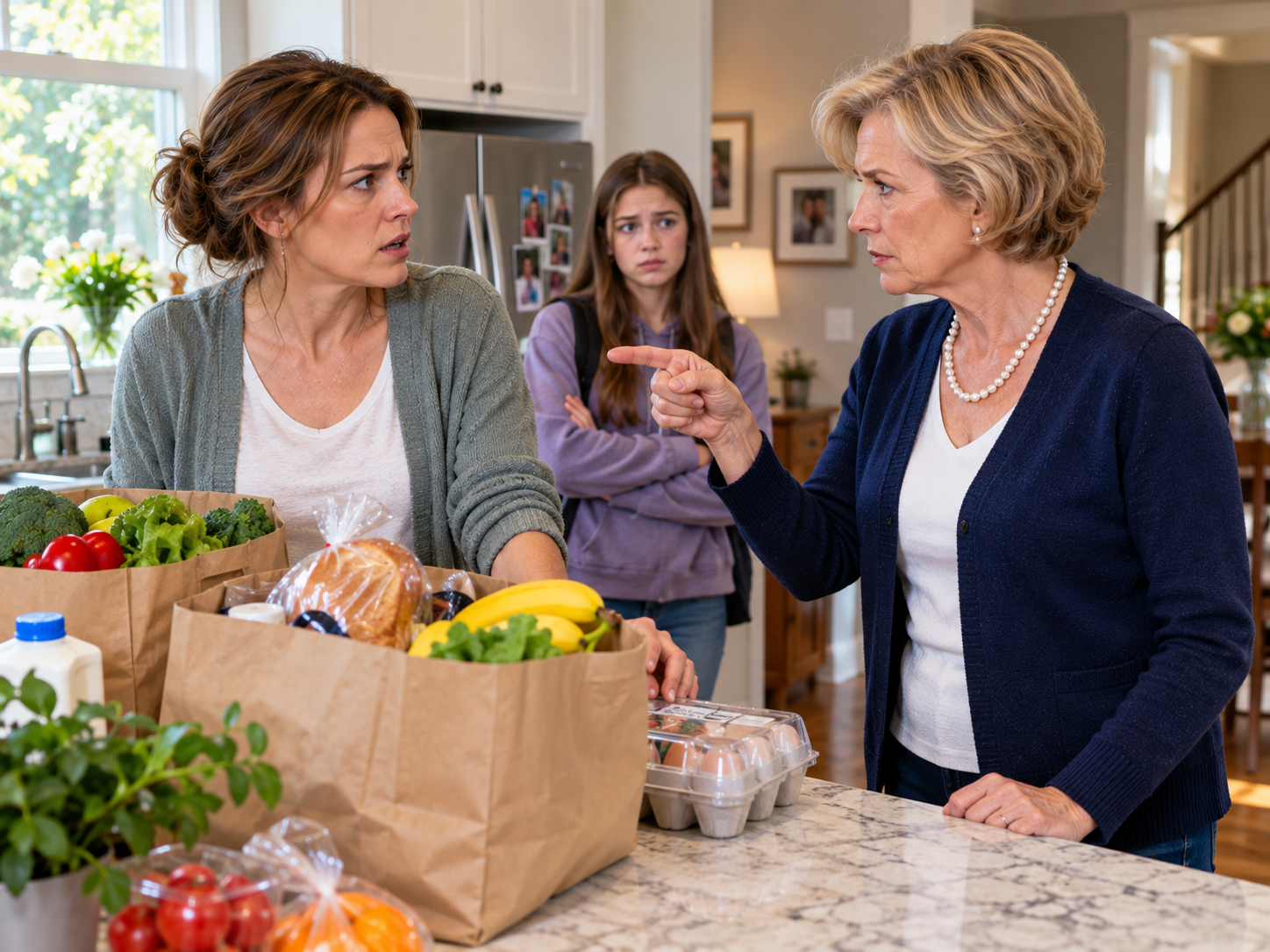
The account statement stayed on the table long after everyone else had gone.
I kept looking at the final balance.
It wasn't zero.
That almost made it worse.
There was enough money left to prove what the account had once been, but not enough to hide how much had disappeared.
Daniel sat across from me.
“Don't confront your mother tonight.”
“I already know what happened.”
“You know part of it.”
He tapped the statements.
“We need the complete transaction history before you decide what the numbers mean.”
I nodded.
Mom had gone upstairs.
Shane and Misty had taken the children home.
Aunt Linda had left quietly.
The house was finally silent.
Emily came downstairs.
“Are they gone?”
“Yes.”
She looked at the papers.
“What happened?”
I hesitated.
She was sixteen.
She deserved honesty.
“Your grandfather left money for your education.”
Her eyes widened.
“For me?”
“Yes.”
“Where is it?”
I looked at the statement.
“Some of it is still here.”
She understood the answer immediately.
“Some?”
I nodded.
“Grandma used part of it to help Uncle Shane.”
Emily sat down.
“How much?”
“I don't know yet.”
She stared at the table.
Then she asked, “Did she steal it?”
The word was harsh.
I didn't want to put it in her mouth.
“I don't know what the legal answer is.”
“But you know what happened.”
“I know money meant for your future was used for something else.”
She looked upstairs.
“Why?”
I had asked myself the same question.
“Because Grandma thought Uncle Shane needed it more.”
Emily's eyes hardened.
“Does she always think that?”
I didn't answer.
She looked at me.
“Do you?”
“No.”
“Then why did you let her?”
The question hurt.
“Because I trusted her.”
Emily nodded slowly.
“That doesn't mean you were stupid.”
I looked at her.
She shrugged.
“Grandpa trusted her too.”
That was true.
And perhaps that was the hardest part.
The next morning, Daniel arranged for an accountant to review the records.
The accountant, Ruth, worked from a small office downtown and spoke in numbers the way some people spoke in weather reports.
She spread the statements across a conference table.
“The original account had two sources of funding,” she said.
“Dad and me?”
“Your forty-eight thousand dollars was deposited into the property closing account. Your father's trust contributed an additional amount.”
“How much?”
She gave me the figure.
I stared.
It was considerably more than I expected.
“Why didn't I know about this?”
“Because you were not the account administrator.”
“Who was?”
“Your mother.”
Mom sat beside me.
She had aged overnight.
“Your father appointed me.”
“For Emily.”
“Yes.”
“And you used it.”
Mom nodded.
“Some of it.”
Ruth pointed to the first withdrawal.
“This was for Shane's business debt.”
Another.
“Medical expenses.”
Another.
“Rent.”
Another.
“Credit card consolidation.”
The list continued.
None of the transactions alone looked monstrous.
Together they formed a life.
Shane's life.
Mom had been quietly subsidizing it for years.
I remembered every family dinner where Shane had complained about being broke.
Every time Mom had told me not to mention money.
Every time she had said he was “getting back on his feet.”
He had never gotten back on his feet because she had been standing underneath him.
The final amount was enough to change Emily's college options.
Not enough to ruin her future completely.
Enough to make choices harder.
I felt anger rising.
Not the hot anger I had expected.
Something colder.
A disappointment so complete it left no room for shouting.
Mom whispered, “I was going to replace it.”
“With what?”
“I thought the house would solve everything.”
I looked at her.
“How?”
“If Shane moved in, he would stop paying rent. He could contribute to the mortgage. We could rebuild the account.”
“You were going to use my mortgage payments to restore money you spent on him.”
She closed her eyes.
“I thought it would work.”
“It wasn't yours to gamble.”
“I know.”
Ruth cleared her throat.
“There is one other issue.”
We looked at her.
“Some transfers are marked as loans.”
“Loans?”
“Yes.”
“Did Shane sign anything?”
“No.”
Mom looked down.
“Did you tell him they were loans?”
“I told him he needed to pay me back.”
“When?”
“Eventually.”
Ruth looked at me.
“Legally, documentation matters.”
Daniel nodded.
“We'll handle that separately.”
I didn't want to hear about lawsuits.
I wanted my family to have been different.
But wanting something did not change what had happened.
That afternoon, Shane came to my house alone.
He looked exhausted.
“Can I come in?”
I let him.
He stood in the kitchen where the entire argument had begun.
“I talked to Misty.”
I waited.
“She knows about the deed.”
“And?”
“She wants to move back into our apartment.”
“Can you?”
“Not after we gave notice.”
I looked at him.
“You may need to talk to the landlord.”
He laughed bitterly.
“Yeah.”
He sat.
“I found something in Mom's papers.”
My attention sharpened.
“What?”
“A list.”
“What kind of list?”
“Money she gave us.”
I said nothing.
“She wrote down every amount.”
“How much?”
He told me.
The number matched the accountant's preliminary total.
He looked ashamed.
“I didn't know it was from Emily.”
“That matters.”
“I know.”
“Did Mom ever tell you?”
“No.”
He rubbed both hands over his face.
“I thought she was using her savings.”
“You never asked?”
“No.”
“You never thought it was strange?”
He looked at me.
“I thought Mom wanted to help.”
“That part was true.”
He nodded.
“I should have known.”
“You should have asked.”
“I know.”
We sat in silence.
Then he said something I didn't expect.
“I don't want the house.”
I looked at him.
“I never wanted it this way.”
“Then why did you file the transfer?”
“Because I believed Mom.”
I believed him.
That didn't erase the harm.
“I need you to withdraw it formally.”
“I will.”
“And sign that you don't claim ownership.”
He nodded.
“I'll do it.”
“Then we're done with the property.”
He looked relieved.
“But not the money.”
His expression fell.
“I know.”
That evening, Mom came into my room.
She stood beside the door.
“Can I sit?”
I nodded.
She sat on the edge of the chair.
For several minutes she said nothing.
Then she began talking about Dad.
Not the way she usually did.
Not as the strong husband she had lost.
She told me about his fear during his final year.
He knew he was dying.
He knew Shane was struggling.
He knew Mom would feel responsible for keeping the family together.
“He told me not to give you everything,” she said.
I looked at her.
“What?”
“He said if I tried to protect everyone equally, I would eventually hurt the person who needed the least protection.”
I swallowed.
“He meant me.”
“He meant you had a life.”
“And Shane didn't.”
“He meant Shane depended on people.”
I nodded.
“That was true.”
Mom began crying.
“I thought I was doing what your father would have done.”
“You weren't.”
“I know.”
“You were doing what made you feel needed.”
She looked at me.
That landed.
“I think you're right.”
I wanted to tell her it was okay.
The words rose automatically.
I didn't say them.
Instead I asked, “Why did you tell me to leave?”
She stared at her hands.
“Shane said he couldn't afford another year in his apartment.”
“And?”
“I panicked.”
“You thought giving him this house was easier than telling him no.”
“Yes.”
“And when you realized I might resist?”
“I thought you'd understand.”
I almost smiled.
“You've been saying that for years.”
She looked up.
“I was wrong.”
It was the first time she had said those words without adding a defense.
I reached across the space between us.
Not to forgive her.
Not yet.
Just to acknowledge that she was my mother.
She took my hand.
We sat that way for a moment.
Then I pulled back.
“There will be consequences.”
“I know.”
“Emily deserves the money that remains.”
“I know.”
“And the money you used has to be accounted for.”
“I'll cooperate.”
“Even if Shane owes it?”
“Yes.”
She looked toward the window.
“Your father was right.”
“About what?”
“He knew that if I kept rescuing Shane, eventually he'd stop learning how to rescue himself.”
I thought of my brother sitting in my kitchen the day before.
For the first time, perhaps he was going to have to solve his own problem.
The title company completed the formal review two days later.
The attempted transfer was withdrawn.
Shane signed the withdrawal.
Mom signed a written acknowledgment of my ownership interest and Emily's.
The documents were filed.
Daniel explained that the house was no longer at immediate risk.
The legal problem was shrinking.
The family problem wasn't.
Emily and I began making plans for college.
She wanted to study architecture.
She had spent years drawing houses.
I had always assumed she liked the shapes.
Now I realized she liked the idea of creating spaces people could trust.
One evening she stood beneath the maple tree.
“Grandpa planted this?”
“No. It was already here.”
“He liked it.”
“He did.”
She touched the trunk.
“Do you think he knew this would happen?”
“Not exactly.”
“But he knew something could.”
“Yes.”
She nodded.
“I wish he were here.”
“So do I.”
A week later, Shane came over with the last document Daniel needed.
He stood in the doorway.
“Can I tell you something?”
“Sure.”
“I found another job.”
I smiled.
“That's good.”
“It isn't great.”
“Great isn't required.”
He laughed.
“Mom would have told me to hold out for something better.”
“Then don't tell her.”
He smiled.
For a moment, he looked like my little brother again.
Then he said, “I'm going to repay the money.”
“You don't have to promise me.”
“I need to.”
“Then do it because it's right.”
He nodded.
“I will.”
He handed me the document.
Before leaving, he looked toward the hallway.
“Emily still hates me?”
“She doesn't hate you.”
“What does she think?”
“She thinks you made a terrible decision.”
“Fair.”
“She also thinks you can make a better one.”
He smiled.
“That sounds like her.”
After he left, I placed the signed document beside Dad's letter.
The two pieces of paper represented opposite versions of our family.
One showed what Dad had protected.
The other showed what we had nearly lost.
For the first time, I understood that keeping the house was not the real victory.
The real victory would be refusing to repeat the same pattern.
Mom had spent years confusing love with rescue.
Shane had spent years confusing help with entitlement.
I had spent years confusing gratitude with silence.
Emily was watching all of us learn the difference.
And the hardest lesson was still ahead.
I had to decide what kind of relationship I wanted with my mother after the documents were settled.
Because the law could establish who owned the house.
It could not tell me whether trust could be rebuilt.
Click Here to continue read next: PART7: Keeping the House Was Easier Than Deciding Whether My Mother Could Still Have a Place Inside the Life She Nearly Disrupted
My Mother Chose the Day I Came Home With Groceries to Tell Me My Daughter and I Had Thirty Days to Disappear
Part 6 of 8

