Spring arrived gradually in Columbus, bringing warmer afternoons and the first pale green leaves to the trees along my street. By then, I had learned to recognize the difference between a quiet day and a day in which I was merely waiting for something bad to happen. For years, peace had felt temporary. I would relax for an hour, then my phone would ring, a bill would arrive, or someone in my family would explain why another emergency had become my responsibility. Now I could spend an entire Saturday morning making breakfast without wondering who would need money before lunchtime.
The legal case remained active, though the questions had become more focused. My attorney continued reviewing the financial records and communicating with the other side. There were still disputed issues surrounding the estate, and I understood that no single document would automatically resolve every question about the transfers and the sale of Grandma Dot’s house. I wanted a final decision, but I had stopped measuring each week by whether the case had ended. Progress meant that the evidence was being examined and the claims were moving through the proper process.
My parents rarely contacted me directly now. When messages did arrive, they were usually brief or passed through attorneys. Dad had once left a voicemail insisting that I was destroying the family by refusing to let the past go. I saved the message and forwarded it to my attorney when appropriate, but I did not call him back to defend myself. I had learned that explaining the same boundary to someone determined not to accept it could become another way of remaining trapped in the argument.
Mom’s messages were more restrained. Sometimes she asked whether I was eating properly or whether I had been working too hard. On other occasions, she mentioned a family memory as if we could return to the time before Thanksgiving simply by recalling it. I answered the ordinary questions when I wanted to, but I no longer treated every message as an obligation to rebuild the relationship. We could exchange a few civil words without pretending that the deeper problems had disappeared.
One Saturday, I found myself thinking about a small park where Grandma used to take me when I was a child. It was not particularly famous or beautiful, and there was nothing there that would attract tourists. It had a walking path, a few benches, and trees that shaded the grass in summer. Grandma had liked the place because it was peaceful. When life became noisy, she would take me there with sandwiches wrapped in waxed paper and tell me that some problems became easier to understand after a person had walked for a while.
I had not visited in years. For a long time, I had avoided places connected to Grandma because every memory seemed to lead back to the inheritance and the years when I believed her wishes had been erased. But that morning, I packed a sandwich, filled a water bottle, and drove to the park. I left my phone in my bag and walked slowly beneath the trees.
The bench where Grandma and I used to sit had been replaced, and the path looked narrower than I remembered. Children played near the grass while a couple walked their dog. Nothing extraordinary happened. No one recognized me, no secret was revealed, and no painful memory suddenly became easy to carry. I simply sat in the afternoon sun and remembered how Grandma used to listen when I spoke.
She had not always agreed with me. Sometimes she told me that I was being stubborn or that I needed to consider another person’s point of view. But she did not make me prove my love by surrendering my judgment. She could disagree without humiliating me, and she could offer help without making me feel indebted to her forever. The contrast with my family’s demands had become clearer as I grew older.
I thought about the last time I had seen her alive, when she had spoken quietly about the property and the documents she had arranged. I remembered the brass key she had wanted me to keep and her warning not to let Dad talk me out of what she had left me. At the time, I had assumed she was being cautious because she knew Dad could be forceful. I had not understood how important those words might become.
I could not know everything Grandma had anticipated. I would not turn her into a person who had predicted every detail of what followed. But I could honor what she had actually told me and what the records now showed. She had made a choice about her estate. I had a right to ask that the choice be respected. That was enough. I did not need to invent a more dramatic meaning to justify standing up for myself.
When I returned home, Pickles greeted me at the door with a loud complaint about my absence. I put my bag down, fed him, and opened the windows to let in the mild air. The condo was no longer simply the place I had purchased after cutting off my family’s support. It had become the setting for ordinary life: laundry drying on a rack, groceries waiting to be put away, a work notebook on the table, and a cat who believed every closed door was a personal insult.
I had once thought owning a home would make me feel successful. Instead, it made me feel responsible for my own choices in a way I had never experienced before. There was no family budget to rescue, no relative waiting for me to fix a shortfall, and no expectation that my spare room would become a permanent solution to someone else’s problems. If I wanted to spend money on a better chair or save for a vacation, I could consider those things without first calculating how much of the cost might be needed by someone else.
The freedom did not make me selfish. It made me more deliberate. I began setting aside money for repairs, emergencies, and the future. I reviewed my retirement contributions and made a plan to build my savings back toward the goals I had postponed. I did not spend recklessly to celebrate being free. I wanted a life that remained stable even when unexpected expenses appeared. Financial independence, I was discovering, was less about having a large amount of money than about knowing that the decisions surrounding it belonged to me.
At work, I completed the additional training assignment and received positive feedback from my manager. The project required careful review of complicated claims, and I found myself drawing on the same habits I had used during the legal process: verify the documents, follow the timeline, separate what was known from what was assumed, and never let a confident explanation replace evidence. I did not tell my colleagues that my family had taught me those lessons in the worst possible way. I was simply glad that a painful experience had strengthened skills I could use without allowing it to define every part of my life.
A few weeks later, my manager told me I would be considered for a higher-level position when the next opening became available. There was no guarantee of promotion, but the possibility was real. I thanked him and returned to my desk with a sense of satisfaction that felt unfamiliar. For years, I had been so busy supporting other people’s plans that I had treated my own ambitions as optional. Now I was giving them time, attention, and a fair chance.
Britney’s letters continued to arrive occasionally. In her most recent one, she described a conversation with someone in her program about the difference between feeling sorry for the consequences of a decision and understanding the harm caused by the decision itself. She wrote that she had spent a long time thinking about the account as a financial problem that had gotten out of control. Only later had she begun to understand that the deeper betrayal was asking for my private information under false pretenses and assuming she had a right to use it.
She did not ask me to visit. She did not ask me to contact the prison staff, send money, or tell the family that she had changed. I appreciated that restraint. I still did not know what our relationship might look like in the future, and I was not ready to promise that we would become close again. But her words showed that she was beginning to identify the choice she had made rather than describing herself only as someone who had made a mistake.
I wrote back a short letter. I told her I had read what she sent and that I hoped she would continue taking responsibility for her actions. I said that the harm had been real and that rebuilding trust, if it ever became possible, would require honesty over time. I did not promise to pay her expenses after her release or to help her return to the life she had left behind. I wished her strength in doing the work she needed to do.
After mailing the letter, I sat at my kitchen table for a while. I had worried that responding would pull me back into the role of caretaker. Instead, I felt calm. I had offered a measured acknowledgment without taking responsibility for her future. Compassion did not require me to manage her consequences, and distance did not require me to wish her harm. I could hope she became a better person without volunteering to carry the burden of making that happen.
The credit matter also moved closer to resolution. After further review and the submission of the requested documents, I received written confirmation of the actions taken on the disputed account. I read the notice carefully, checked the information available to me, and saved it with the other records. I understood that I should continue reviewing my credit reports and keep the documentation in case any incorrect information resurfaced. But I no longer felt that the account would permanently shadow every financial decision I made.
I remembered the first night I had discovered the balance: $11,046.18 attached to an account I had never opened. I had sat alone, staring at the screen, trying to understand how someone who knew my name and birthday could have used them to create a problem that appeared to belong to me. At that moment, the numbers had seemed almost impossible to challenge. Now I had a documented record of my dispute, confirmation of the steps taken, and a clearer understanding of how to protect myself going forward.
The estate matter took longer. My attorney continued pursuing the available remedies, and we waited for the legal process to determine what could properly be recovered. I did not treat the absence of a final ruling as proof that the case had failed, nor did I assume that every disputed dollar would return to me. I had learned to let the evidence support the conclusions rather than force the conclusions I wanted onto the evidence. Whatever the eventual outcome, I had not abandoned Grandma’s wishes or allowed my parents’ insistence to become the final word.
Dad never offered the kind of apology I had once imagined. He did not call to admit that he had been wrong, and he did not acknowledge the way he had humiliated me at Thanksgiving while benefiting from my financial support. Some days, I still wished he would. I wanted him to understand that his words had not merely hurt my feelings; they had exposed how little he valued me when I was no longer willing to provide what he wanted. But I could not make his understanding the condition for moving forward.
My mother’s apology remained incomplete. She had admitted some knowledge, but she was still reluctant to confront the full implications of what the records showed. I stopped trying to decide whether that reluctance came from fear, loyalty, shame, or some mixture of all three. The reasons might help explain her behavior, but they could not make it harmless. If she eventually chose honesty consistently, I would decide what kind of contact felt safe. Until then, I would continue living without waiting for permission to feel at peace.
One evening, I took the quilts out of the cedar chest and folded them carefully across the bed. I kept one for the sofa and placed the others back inside, preserving the things Grandma had made with her own hands. The brass key rested in the small dish beside my front door, where I could see it whenever I came home. It no longer felt like a symbol of a mystery I had to solve. It reminded me that something valuable had been entrusted to me, and that protecting it had been part of honoring the person who gave it.
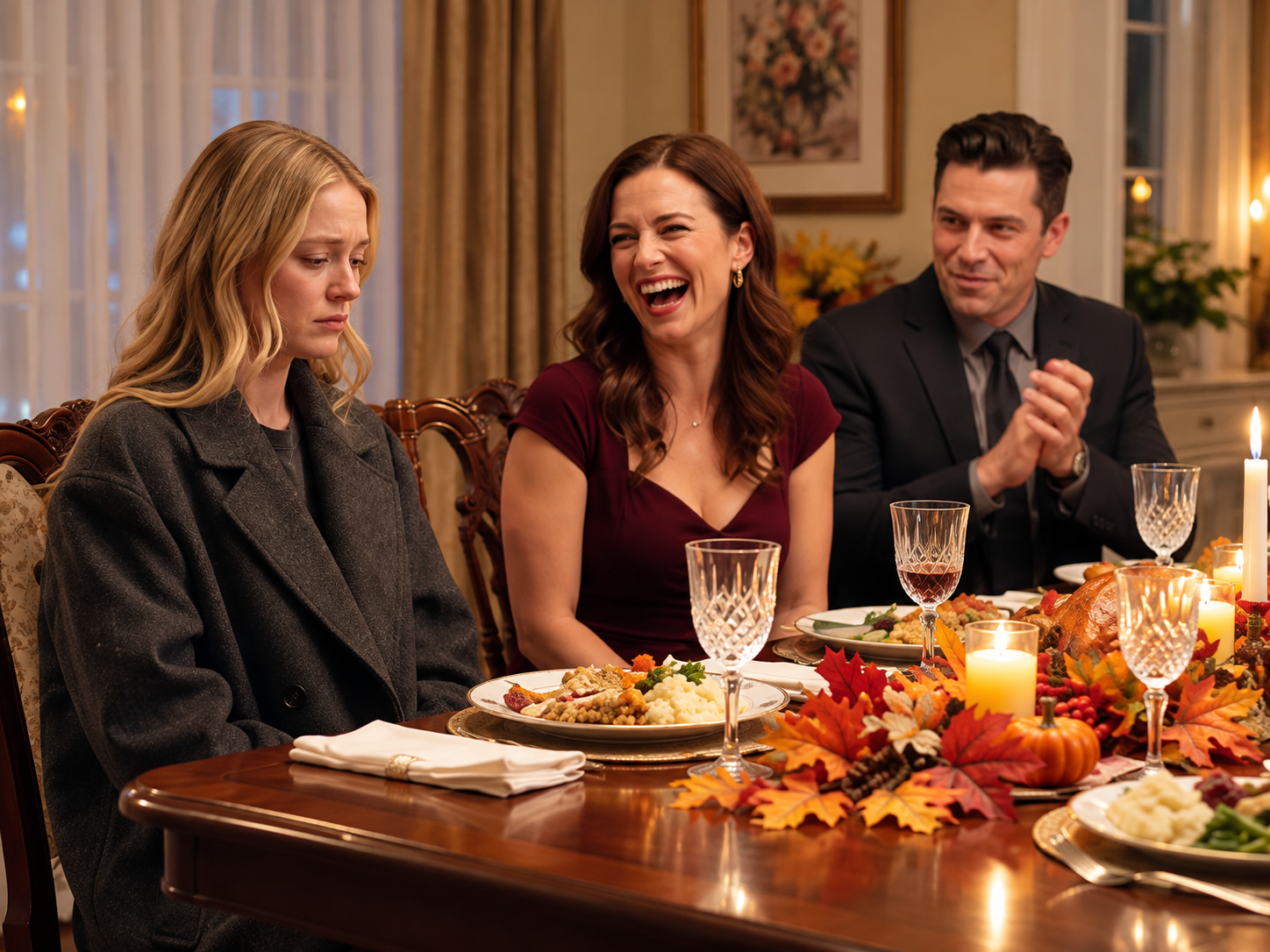
I thought about the Thanksgiving dinner where Dad had raised his glass and declared that nobody needed my money or me. At the time, the words had landed like a verdict. I had looked around the table and wondered whether I had somehow earned the contempt of people I had spent years helping. Now I could see the contradiction more clearly. They had told me they did not need me while relying on my payments. They had dismissed my place in the family while treating my resources as something they could expect. Their words had not described my worth. They had revealed the terms on which they wanted to keep me.
The hardest part of leaving that arrangement had not been blocking phone numbers or canceling automatic transfers. It had been accepting that my family might never tell the story honestly. They might remember me as ungrateful, cold, or unforgiving. They might continue believing that I had caused the crisis because I refused to finance it. I could not control those versions of events. I could only make sure that my decisions no longer depended on persuading them to see me differently.
That night, I prepared Grandma’s apple cake using the recipe card I had kept for years. The kitchen filled with the familiar smell of cinnamon and warm apples. I had made the cake before, but usually for family gatherings where I spent more time preparing everyone else’s comfort than enjoying the occasion myself. This time, I set one plate on the table, poured myself a cup of tea, and ate a slice while the evening light faded outside the window.
There was sadness in the quiet. I would not pretend otherwise. I missed the possibility of a family that could admit wrongdoing, repair what it had damaged, and learn to love without turning generosity into an obligation. I missed Grandma’s voice and wished she could have seen the home I had built. But I was no longer confusing the family I wanted with the family I actually had. Grief could sit beside relief. Love could exist alongside distance. And hope could remain without becoming another promise to sacrifice myself.
Before bed, I checked the lock, turned off the kitchen light, and carried the remaining cake into the refrigerator. Pickles curled up beside me as I settled beneath the quilt. My legal case still had its own timetable, my career had new possibilities, and the future remained open in ways I could not fully predict. I did not have every answer, and I had not recovered every loss. But my life was no longer organized around preventing the next family emergency.
I had learned that justice could not return every birthday, holiday, or quiet evening I had spent trying to earn affection. It could not erase the humiliation at Thanksgiving or guarantee that my parents would someday accept the truth. What it could do was establish facts, protect my rights, and give consequences a chance to follow the choices that had caused harm. The rest—the healing, the boundaries, the rebuilding—would belong to me.
When I closed my eyes, I thought of Grandma’s words one final time. She had told me not to let my father talk me out of what she had left me. I had first understood that as a warning about a house and a trust. Now I understood it more broadly. I could not let anyone talk me out of my judgment, my future, or the right to decide what I was willing to give. I could honor my family history without repeating its worst patterns.
The home around me was quiet, but it did not feel empty. It held the things I had chosen to keep, the work I was proud to do, the cat who trusted me to return each evening, and the memories of a grandmother who had believed I deserved more than a life spent proving my usefulness. I had not regained the family I thought I had. I had reclaimed the authority to build a life that was honest, secure, and mine.
Click here to continue reading: PART 13: My Father Sent One Last Demand Through His Attorney, but the Records He Wanted Me to Ignore Had Already Changed Everything
My Father Raised His Glass to Insult Me at Thanksgiving, Unaware That the Daughter He Mocked Had Been Paying for Nearly Everything He Owned
Part 12 of 20