
The first time I walked outside with a cane, I almost turned around before reaching the sidewalk.
Emily stood beside me.
She had two paper cups of coffee in one hand and the car keys in the other.
“You don't have to go far,” she said.
“I know.”
“The park is only a few minutes away.”
“I know.”
She looked at me.
“You're trying to convince yourself.”
“I am.”
She smiled.
“That usually works better when you don't announce it.”
I laughed.
The sound surprised both of us.
We drove to a quiet park near her apartment.
The path was flat.
There were benches every few yards.
No steep hills.
No crowded playground.
No reason for me to feel rushed.
I stepped onto the path.
My cane touched the pavement.
One step.
Then another.
My back began aching almost immediately.
At the first bench, I sat.
I cried because it hurt.
Emily handed me the coffee.
She didn't say anything.
At the second bench, I stopped again.
This time I cried for a different reason.
I had reached it.
The distance was small.
Anyone watching might have thought nothing had happened.
But Emily knew.
She sat beside me.
“You made it.”
I nodded.
“I know.”
The baby was still with me in those moments.
Not physically.
Not as evidence.
As a presence inside the story of everything I had lost.
People sometimes spoke about the pregnancy loss as though it were separate from the assault.
It never felt separate to me.
The injuries had taken the pregnancy.
The same violence had damaged my body.
The same person had caused both.
But my baby was not only part of a legal case.
The baby had existed.
I had spoken to the baby.
I had imagined a future.
I had written names.
I had planned small things.
Those memories deserved more than being reduced to evidence.
One evening, I opened the wooden box.
The torn pieces of paper were still inside.
I placed the letter beside them.
I read it once.
Then folded it again.
Emily sat nearby.
“Do you want to talk?”
“No.”
“Okay.”
She returned to her book.
That was enough.
Silence had become something different in her apartment.
At Daniel's house, silence meant waiting.
Waiting for his mood.
Waiting for the next criticism.
Waiting for an argument.
With Emily, silence simply meant nobody needed anything from me.
The difference was enormous.
My medical appointments continued.
At one appointment, the doctor asked whether I felt safe.
“Yes,” I said.
Then I paused.
“No.”
She waited.
“I mean… I'm becoming safe.”
She nodded.
“That is a better answer.”
I looked at her.
“Why?”
“Because safety isn't always a single event. Sometimes it is a collection of decisions.”
She was right.
I kept my phone private.
I attended therapy.
I accepted help.
I told the truth without trimming it to protect Daniel.
I stopped visiting the house because my name was still on the mail.
I learned not to confuse familiarity with safety.
The criminal case moved slowly.
There were no dramatic courtroom surprises.
No hidden recording appeared.
No stranger suddenly arrived with the perfect piece of evidence.
The case depended on what was already there.
The hospital records.
The medical scans.
The injuries.
The staff who heard Daniel demanding access to me.
My statement.
His own words.
The medical findings matched what I had described.
They did not match his explanation.
His attorney tried to suggest that Daniel had been overwhelmed.
That the incident had been misunderstood.
That grief and stress had distorted events.
But the reports used different language.
Suspension injuries.
Spinal trauma.
Abdominal trauma.
Pregnancy loss caused by physical injury.
The words were clinical.
That made them powerful.
Daniel could call it a misunderstanding.
The report did not.
Daniel could say he had been under pressure.
The scans did not.
Daniel could say he had only been trying to help.
The injuries told a different story.
I didn't have to make the evidence angry.
It already spoke clearly.
There were days when the legal process exhausted me.
I would receive a call from an attorney and feel my stomach tighten.
Another form.
Another appointment.
Another question.
Sometimes I wanted to throw everything away.
I wanted to forget Daniel's name.
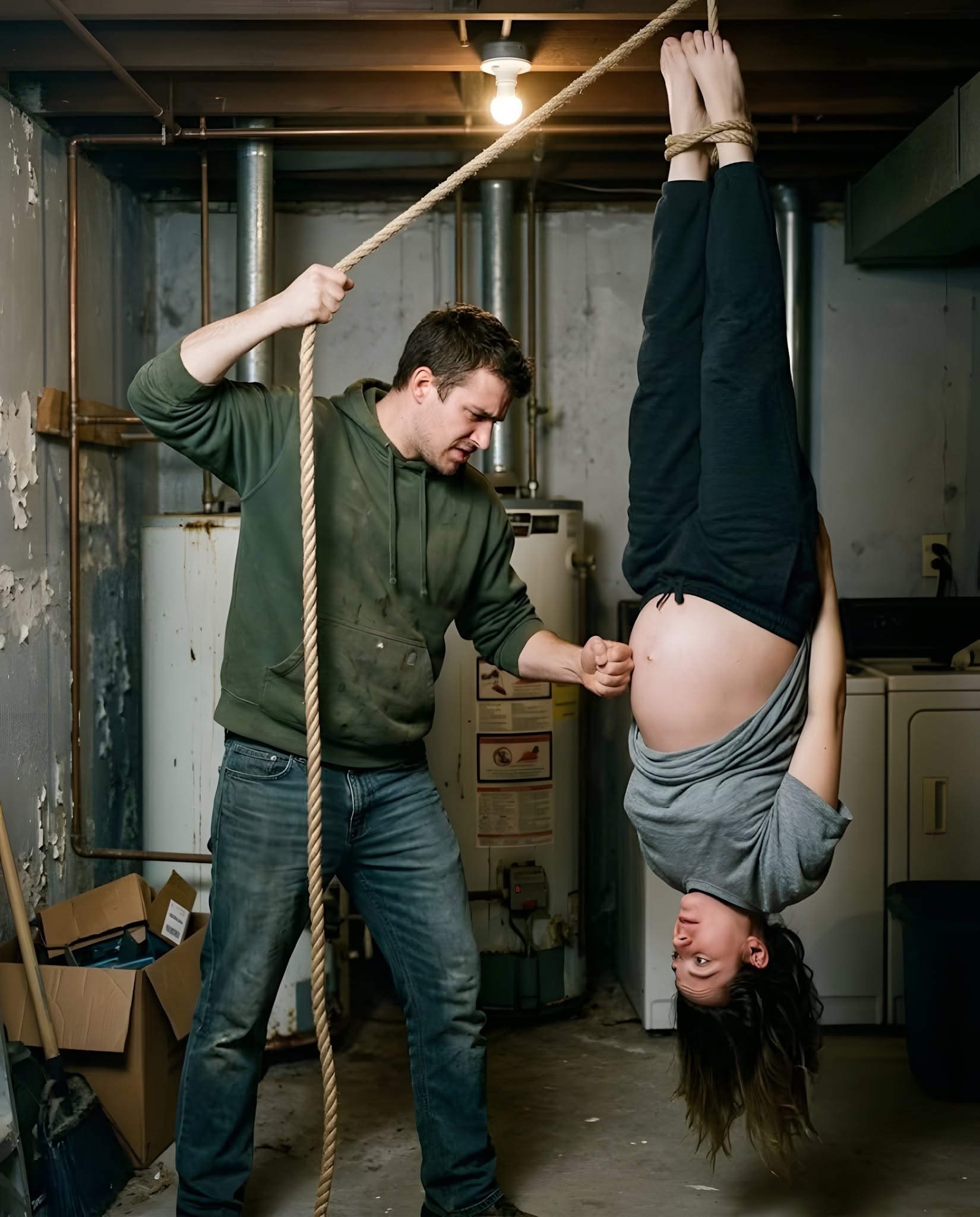
I wanted to forget the utility room.
I wanted to stop remembering the beam across the ceiling.
But then I would think about what would happen if I stayed silent.
Not because I owed anyone a perfect ending.
Because Daniel had spent years telling me what reality was.
This was the first time I had the chance to put my version somewhere he could not erase it.
My statement became part of the record.
So did the doctor's findings.
So did the staff's observations.
The truth no longer existed only inside my memory.
It existed on paper.
That mattered.
Money became another problem.
I could not return to work immediately.
Emily picked up extra hours.
She tried not to let me notice how tired she was.
I noticed anyway.
One evening, I saw her asleep at the kitchen table.
A stack of bills sat beside her.
Her head rested on one arm.
I covered her with a blanket.
The old version of me would have felt guilty and said nothing.
Instead, I began looking for things I could manage from bed.
I handled online bills.
I organized grocery orders.
I called the insurance company when claims were delayed.
I kept track of appointments.
Small tasks.
Nothing impressive.
But they reminded me that I still had abilities.
Daniel had made me feel helpless because helplessness made control easier for him.
I didn't need to become completely independent overnight.
I only needed to begin reclaiming pieces of myself.
The physical therapist noticed the difference too.
“You're stronger.”
“I don't feel stronger.”
“You don't have to feel it.”
I smiled.
“That sounds unfair.”
“Recovery usually is.”
I practiced standing.
Walking.
Turning.
Sitting safely.
Each movement was ordinary for someone else.
For me, each was proof that my body still belonged to me.
One afternoon, I stood in front of a mirror.
The brace was gone.
The cane was beside me.
I looked thinner than before.
There were scars.
There were places on my body I avoided looking at.
But I was standing.
I remembered Daniel telling me that my body existed to produce what he wanted.
Now I stood simply because I could.
The thought made me angry.
Not the wild kind of anger that destroys things.
Something quieter.
Something steadier.
I had spent too long thinking anger made me cruel.
Sometimes anger was simply the mind recognizing that something wrong had happened.
I allowed myself to feel it.
Months passed.
Daniel remained under the no-contact order.
Relatives occasionally tried to pass messages.
I refused.
There was no need to know whether he was sorry.
Sorry was not the same as safe.
Sorry did not reverse the injuries.
Sorry did not return the pregnancy.
Sorry did not erase the months when I had been afraid to answer my sister's phone calls.
The case eventually moved forward.
Daniel's attorney continued trying to frame the assault as a crisis.
But there was a problem with that explanation.
Daniel had not behaved like someone who was confused about what he had done.
He had tried to control the narrative immediately.
He had insisted on seeing me.
He had told hospital staff that I was his wife.
He had explained why the baby needed to be a son.
He had blamed my judgment.
He had never described the event as an accident.
The evidence did not need to prove every thought inside his head.
It needed to show what happened.
And it did.
When the prosecutor explained the medical evidence, I sat quietly.
I expected to feel something dramatic.
Instead, I felt tired.
The doctor had once told me that the scans could tell the truth even when my voice failed.
Now they were doing exactly that.
The physical evidence showed what had happened to my body.
My statement showed what had happened before the injuries.
The hospital staff documented Daniel's behavior afterward.
The pieces fit.
No perfect witness was necessary.
No miracle was required.
The truth was already there.
One evening, Emily found me looking through the wooden box.
“You've been doing that a lot.”
“I know.”
She sat down.
“Do you want to tell me what you're thinking?”
I touched the torn paper.
“I keep thinking about the names.”
“The two girl names?”
I nodded.
“I wonder who she would have been.”
Emily didn't answer immediately.
“I wonder too.”
I looked at her.
She didn't tell me it was better this way.
She didn't tell me everything happened for a reason.
She didn't say the kind of thing people sometimes say when they are uncomfortable with grief.
She simply stayed.
That was what I needed.
Later that night, I placed the letter back in the box.
I closed the lid.
Then I turned off the light.
The apartment was quiet.
No footsteps.
No shouting.
No locked door.
I slept.
The next morning, the attorney called.
The case had taken another step forward.
Daniel was prepared to accept responsibility rather than take the matter to trial.
I sat on the edge of the bed.
For a moment, I couldn't speak.
Not because I felt victorious.
Because the word responsibility sounded strange beside his name.
I had heard so many explanations.
Pressure.
Stress.
Confusion.
Anger.
Now there was finally a different word.
Responsibility.
Emily sat beside me.
“What happens now?”
“I don't know.”
“Do you want to find out?”
I thought about it.
“Yes.”
My answer surprised me.
Months earlier, I would have wanted nothing more than to disappear from the entire story.
Now I wanted to hear how the official record would describe what had happened.
Not because I needed revenge.
Because I needed the truth to remain true even when I wasn't there to defend it.
The hearing date was set.
I began preparing myself.
There would be no confrontation in a hallway.
No dramatic speech.
No final argument between husband and wife.
Just a room.
Documents.
People reading words aloud.
And the truth I had once been too frightened to say.
Click Here to continue read next: PART4: When Daniel Finally Faced the Official Record, Rachel Heard the Word That Changed How She Carried Her Loss
The Hospital Door Stayed Locked While Daniel Demanded to See His Wife and the Truth About What Happened Behind It
Part 3 of 8

