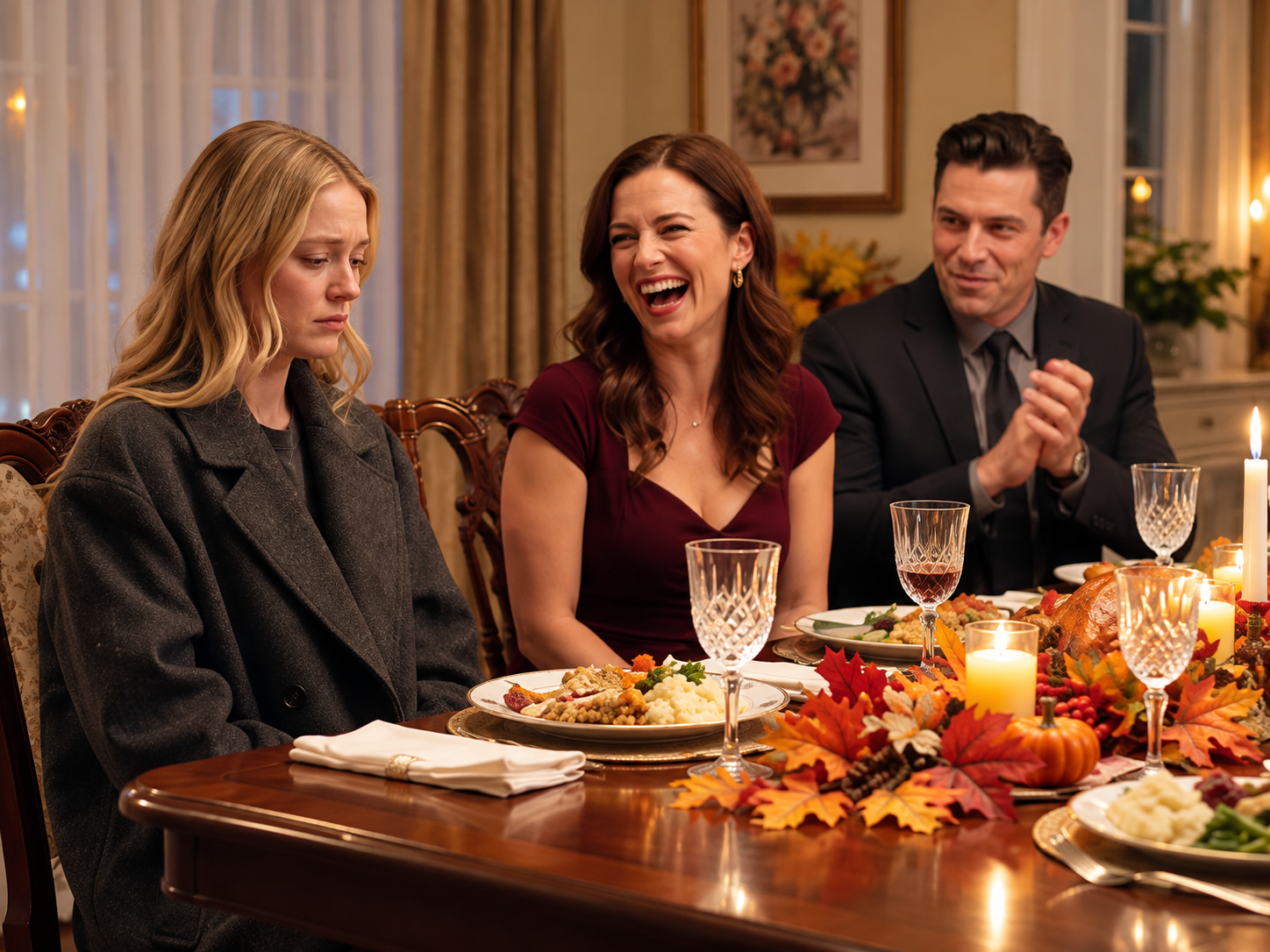
Britney’s second letter arrived several weeks after the first. This time, the envelope contained only two pages, and her handwriting looked less controlled. She wrote that she had been thinking about the credit card, the rent payments, and the way she had spoken to me at Thanksgiving. She admitted that she had treated my financial help as something she could count on indefinitely, rather than as a gift I was free to stop giving.
I read the letter at the kitchen table while Pickles slept on the chair beside me. Britney described how she had justified opening the account in my name. She had told herself she would pay it off before I ever found out, and she had convinced herself that because we were sisters, the difference between my money and hers was not as important as it should have been. The balance grew, and instead of admitting what she had done, she avoided the problem.
Her words were more direct than those in the first letter. She acknowledged that she had asked for my personal information under a false explanation about Lily’s daycare. She did not claim that I had agreed to the credit card. She did not blame the issuer or suggest that I had misunderstood the account.
Then she wrote that she knew an apology could not undo the harm.
For a moment, I felt a familiar urge to rescue her from the consequences of her own admission. I imagined writing back that we could start over, that I would help her make a plan, that the family might eventually find a way to recover from everything. I had been performing that role for so long that it felt almost automatic.
But I stopped before writing anything.
Remorse was not the same as responsibility. An apology could be sincere and still not entitle someone to renewed access to my life. Britney had acknowledged what she had done, but the credit damage, legal consequences, and years of financial dependence did not vanish because she now understood that she had gone too far.
I placed the letter in the same folder as the first. I did not send a reply. I needed to see whether her acknowledgment would remain meaningful when it no longer brought her an immediate benefit.
The estate case continued to occupy a separate part of my life. My attorney had obtained additional financial records connected to the sale of Grandma Dot’s house and was examining the available information about the trust. The records supported the concern that my parents had benefited from transactions that should have been handled according to the will. The legal team was tracing the funds and pursuing the remedies available through the civil case.
There were still gaps. Some transactions had occurred years earlier, and not every record was complete. The attorney explained that the case would require a careful account of what could be established, what remained uncertain, and what recovery might be possible. I appreciated that he did not promise to restore the entire inheritance overnight.
At work, I approached my assignments with the same discipline. I had learned that a suspicious pattern was a reason to investigate, not a reason to skip verification. When a claim contained conflicting dates, I checked the supporting documents. When a witness gave an account that differed from the records, I documented the discrepancy rather than deciding in advance which version I preferred.
The work helped me maintain perspective. My family’s actions had been personal, but the principles required to address them were not unique to me. Evidence mattered. Records mattered. People deserved a fair process, even when the allegations were serious. I could insist on accountability without turning my anger into an excuse to make unsupported claims.
One afternoon, my attorney called to discuss a proposed next step in the estate case. The legal team had identified a possible avenue for seeking recovery of funds associated with the disputed transactions. They needed my authorization to proceed and wanted to explain the potential costs, risks, and expected timeline.
I listened, asked questions, and reviewed the documents before signing. I had learned not to let urgency replace understanding. My parents had once used the language of family duty to make me act before I considered what a decision would cost me. I would not repeat that pattern simply because the person asking for action was now my own attorney.
After the meeting, I took a walk through my neighborhood. The weather was cool, and the trees along the sidewalk had begun to shed their leaves. I passed a small bakery with a chalkboard outside advertising apple turnovers and cinnamon rolls. The smell of warm pastry drifted through the open door, and I found myself thinking of Grandma.
She had taught me to make apple cake in her kitchen, measuring ingredients by feel before I understood why the proportions mattered. She had let me scrape the mixing bowl and had insisted that I taste the batter before adding more sugar. Her lessons had been about baking, but they had also been about patience: observe first, make a small adjustment, and do not ruin the whole batch by trying to fix everything at once.
I bought a pastry and carried it home. I ate it at the kitchen table beside Grandma’s framed recipe card, then opened my notebook and wrote down the things I wanted to do over the next year. I wanted to continue building savings, maintain the condominium, and consider a professional course that could help me advance in my career. I also wanted to travel somewhere without worrying that my absence would leave someone unable to pay a bill.
Those plans were not extravagant. They were ordinary ambitions I had repeatedly postponed because my family had trained me to believe that my own future was always less urgent than their latest problem.
I began setting aside a specific amount each month for personal savings, separate from the money reserved for the mortgage and ordinary expenses. The amount was modest, but I transferred it automatically and left it alone. I did not announce the change to anyone. It was enough that I knew I was building a financial life that did not depend on whether my relatives approved.
At the correctional facility, Britney was learning that the routines of her life no longer belonged entirely to her. I knew only what she chose to share in her letters and what could be confirmed through the legal proceedings. I did not pretend to understand her daily experience, and I did not make her imprisonment into a private victory. The outcome was serious, and it had consequences for her children as well as for her.
I could feel sadness about those consequences without accepting responsibility for the crime that had led to them. I had not opened the account. I had not asked her to use my identity. I had not concealed the statements at my parents’ address. Reporting what happened was not the same as committing the offense.
When Britney wrote that she missed the children, I felt sympathy. I hoped they had stable care and adults who would put their needs first. But I did not send money to replace the support I had once provided to Britney’s household. Any help I considered for the children would have to be arranged carefully and transparently, without giving their parents renewed control over my finances.
My parents continued to communicate through occasional letters and legal representatives. Dad still resisted the suggestion that the estate had been mishandled, while Mom continued to emphasize the pressures they had faced after Grandma died. Neither had provided an explanation that reconciled the will, the questionable power of attorney, and the property records. Their legal arguments would be considered in the civil proceedings, but I no longer treated their personal appeals as substitutes for answers.
The hardest part was accepting that I might never receive the apology I wanted. I had imagined my father looking at the records and admitting that he had lied. I had imagined my mother acknowledging that she had allowed the family to take advantage of me. I had imagined Britney understanding the difference between asking for help and stealing my identity.
Some of those admissions had begun to appear in writing, but none could restore the relationship to what I once believed it was. An apology could acknowledge a wrong. It could not return the years in which I had lived according to a false understanding of my family.
One evening, I took Grandma’s quilts from the cedar chest and spread one over the back of the couch. The fabric was worn in places, and one corner had a small repair Grandma had made herself. I ran my fingers over the stitches, remembering her hands guiding mine when I was a child.
For years, I had thought the most important thing she left me was the inheritance. Now I understood that the inheritance had been one expression of her care, not the whole of it. She had wanted me to have a future of my own. The money mattered because it could help me build that future, but the lesson mattered even if the legal process recovered less than I hoped.
I returned to the notebook and added another line: Do not confuse being needed with being loved.
I did not write it as a rule for judging every person who asked me for help. People genuinely needed help all the time, and generosity remained important to me. The line was a reminder that a relationship should allow me to say no without being mocked, threatened, or punished. It was a reminder that giving had to remain a choice.
The next morning, I woke before my alarm, fed Pickles, and prepared for work. The condominium was still quiet. My phone contained no urgent requests, and there was no transfer waiting to be made on behalf of someone who had decided my paycheck belonged to them.
The estate case would continue. The credit dispute still required careful follow-through. Britney’s imprisonment was a reality I could not change, and my parents’ response remained beyond my control. I would keep the records, cooperate with the legal process, and make decisions based on what I could verify.
I was not finished grieving, but I was finished pretending that the only way to be a good person was to keep paying for other people’s choices.
Click here to continue reading: PART 8: When My Family Finally Realized I Would Not Return to My Old Role, I Had to Decide What Justice Meant for the Life I Was Building
My Father Raised His Glass to Insult Me at Thanksgiving, Unaware That the Daughter He Mocked Had Been Paying for Nearly Everything He Owned
Part 7 of 20