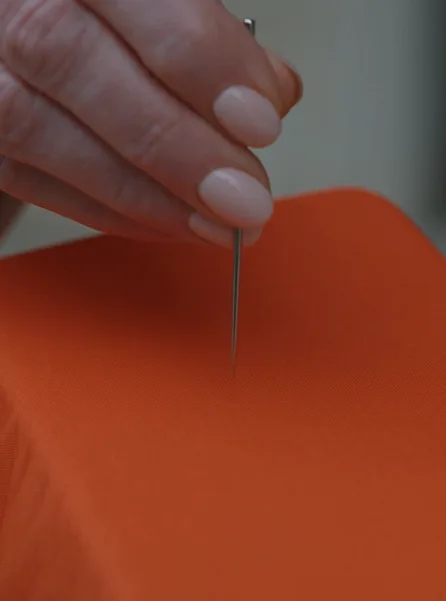
STORY TITLE: What happened to one bright-orange swimming vest before a three-year-old entered the pool—and why could that tiny detail change everything? At first, nothing appears unusual. The little girl is told she can go swimming. She enters the water alone. Someone watches her from the deck. Then two housekeepers notice something that makes them stop and silently communicate with each other. One stays near the child. The other makes a private phone call. What did they see that the little girl’s father needed to know immediately?
PART 1 TITLE: The Little Girl Reached the Pool Smiling, Unaware That Two Housekeepers Had Spotted Something Wrong With Her Bright-Orange Swimming Vest
“Daddy said I could swim!”
Three-year-old Lily announced it to the garden as she hurried toward the pool, her small sandals slapping against the stone path. The afternoon sun glittered across the water, and a row of white loungers stood beneath striped umbrellas. Everything looked peaceful, almost staged for a family photograph.
But from the far side of the patio, Maria stopped folding a towel.
Lily was already reaching for the pool gate.
“Sweetheart, wait a moment,” Maria called.
The little girl turned, her curls bouncing against her cheeks. “I’m going swimming.”
“I heard you. Just wait for me, darling.”
Lily looked toward the house, where the glass doors reflected the garden. “Daddy said yes.”
Maria set the towel down and walked faster. She had worked in the household long enough to know that Lily’s enthusiasm could carry her farther than her judgment. At three, the child understood permission as a promise that the world would cooperate. If she had been told she could swim, she expected the water to be waiting for her.
The pool gate stood open.
Maria frowned. She remembered closing it after the gardeners had finished working that morning. Perhaps someone had carried supplies through and forgotten to latch it. She made a mental note to check the lock later, then focused on Lily, who had reached the first step.
The little girl wore a pale-blue swimsuit and a bright-orange swimming vest. Against the blue water, the color was almost startling. It was the sort of vest adults bought because it was easy to spot from across a pool.
Maria had seen Lily wear it before.
She had also seen the child struggle to keep it in place when she twisted, reached, or tried to climb out of the water.
“Let’s check your vest first,” Maria said.
Lily looked down at herself. “It’s on.”
“I can see that. I just want to make sure everything is fastened.”
The girl lifted both arms impatiently. “I’m ready!”
Maria crouched beside her. The vest looked ordinary at first glance, its orange fabric bright in the sunlight. She ran her fingers along the front fastening and examined the straps. One of them appeared to sit differently from the way she remembered, but Lily was wiggling so much that Maria could not immediately tell whether the vest had simply twisted around her body.
“Hold still for one second.”
“I want the water!”
“I know. One second.”
Maria checked the side buckle. It was closed, but the strap seemed unusually loose. She pulled it gently, expecting the vest to settle against Lily’s torso. Instead, the fabric shifted upward, leaving more room around the child’s waist than Maria was comfortable with.
Her expression changed.
“Who put this on you, Lily?”
“I did.”
“You put it on yourself?”
Lily nodded proudly. “I can do it.”
Maria glanced toward the house. “Did someone help you with the straps?”
The little girl shook her head, already turning back toward the pool.
Maria was about to lift the vest away from her body when Lily slipped past her and stepped onto the shallow ledge. Her toes entered the water. She squealed at the coolness and reached for the handrail.
“Lily, wait!”
The child took another step.
Maria moved immediately, catching her hand before she could venture farther. Lily protested, pulling backward with all the stubborn strength her small body could manage.
“You said I could swim!”
“You can swim when we’re ready.”
“You’re stopping me!”
“I’m checking something first.”
Lily’s face crumpled. The disappointment was genuine, immediate, and enormous in the way only a small child’s disappointment can be. Maria softened her voice, but she did not release the girl’s hand.
“I know you’re excited. I promise I’m not trying to spoil your fun.”
From the service corridor, another housekeeper emerged carrying a basket of clean towels. Her name was Denise, and she had been working in the house for nearly two years. She knew Lily’s routines well and could usually persuade the child to cooperate with a song or a silly question.
“What is all this commotion?” Denise asked with a smile.
“Lily wants to get in the pool,” Maria replied. “I’m checking her vest.”
Denise set the basket on a nearby chair and approached. “Well, let’s see what our little swimmer is wearing today.”
Lily brightened. “Orange!”
“I can certainly see that,” Denise said.
She crouched on the other side of the child. At first, her expression remained friendly. Then she noticed Maria’s hand resting against the loose side strap.
Denise’s smile faded.
“Has she been in the water already?” she asked quietly.
“No,” Maria replied. “Not yet.”
Denise examined the vest without tugging at it. The fastening sat closed, but one of the adjustment straps had been threaded through the buckle incorrectly. It looked secure from a distance. Up close, the loose end hung at an angle that suggested it had been pulled free and fastened again without being tightened properly.
Denise glanced at Maria.
Neither woman spoke for a moment.
Lily, unaware of the change, was busy pointing at a yellow ball floating near the pool steps.
“I want that one.”
“We’ll get it in a moment,” Maria said.
Denise leaned closer to her colleague. “That isn’t how we left it.”
Maria’s eyes moved to the buckle. “Are you sure?”
“I checked it yesterday. I remember tightening both sides.”
Maria felt a cold uneasiness settle in her stomach. A loose strap could have an innocent explanation. Lily might have tugged at it herself, or someone might have adjusted the vest without understanding how it was supposed to fit. Yet the child had said she put it on herself, and the pool gate had been left open.
One detail might be nothing.
Together, they were becoming harder to ignore.
Denise looked toward the house. “Where is her father?”
“Inside, I think.”
“Can you keep her here?”
Maria nodded.
Denise picked up the basket of towels and pretended to arrange them on the chair. As she did, she took another careful look at the vest. The orange fabric was clean, and there were no obvious tears. The buckle itself appeared intact. The problem was the way the strap passed through it: a small, easily overlooked mistake that could allow the vest to ride upward when the child entered the water.
Maria had seen enough to know that Lily should not be allowed to swim until the equipment had been properly checked.
“Lily,” she said gently, “we’re going to take a little break before swimming.”
The girl’s lower lip pushed forward. “But Daddy said yes.”
“I know. We’ll talk to Daddy.”
“No! I want to swim now!”
Lily tried to pull away again. Maria knelt and gathered her into a careful hug, keeping her away from the pool edge.
“I hear you, sweetheart. But I need to make sure your vest fits properly. That’s how we keep you safe.”
Lily twisted in her arms, frustrated and confused. “It’s my swimming vest!”
“Yes, it is.”
“And it’s orange!”
Denise almost smiled at the declaration, but her attention remained on the buckle. She had noticed something else: the loose strap did not simply appear untightened. It had been folded back on itself and pushed through the fastening in a way that made it look closed without holding the fabric firmly.
Someone unfamiliar with the vest might have made the mistake accidentally.
Someone who knew the fastening might have done it deliberately.
Denise did not know which explanation was correct. She only knew that a three-year-old was standing beside a pool, believing herself ready to swim, while two adults were no longer certain that her safety equipment would do its job.
She moved a few steps away and took out her phone.
Maria noticed but did not ask what she was doing. Their eyes met briefly, and Denise gave the smallest nod.
It was enough.
Maria lifted Lily away from the pool edge and carried her toward the shaded patio. The child protested loudly, kicking her legs and demanding to be put down. Maria held her securely, speaking in a calm voice even as her own thoughts raced.
She did not want to frighten Lily. She did not want to accuse anyone without evidence. But she could not ignore the possibility that the vest had been altered before the child arrived.
Behind them, Denise stepped into the narrow passage beside the house, where the sound of the pool pump drowned out most conversation.
She called the number saved in her contacts for Lily’s father.
The call rang once.
Twice.
Then a man’s voice answered.
“Denise? Is everything all right?”
Denise looked through the glass doors toward the patio. Maria was seated beneath the umbrella with Lily on her lap, keeping the child safely away from the water. The orange vest remained fastened around the girl’s torso, its loose strap visible even from a distance.
“Mr. Carter,” Denise said quietly, “I need you to come to the pool. Please don’t tell Lily why yet.”
There was a pause.
“What’s happened?”
Denise swallowed. “Lily is safe. Maria is with her. But we found something wrong with her swimming vest, and I don’t think she should be in the water until you see it.”
The line went silent for a moment.
Then Daniel Carter’s voice changed.
“Stay with her. I’m coming now.”
Denise ended the call and stood motionless for a second, phone still pressed against her palm.
Across the patio, Lily had stopped crying. She was looking at Maria with wet eyes, trying to understand why a simple afternoon swim had suddenly become a serious matter.
“Did I do something bad?” she whispered.
Maria’s heart tightened.
“No, sweetheart. You haven’t done anything wrong.”
“Then why can’t I swim?”
Maria brushed a curl away from Lily’s forehead.
“Because the grown-ups need to make sure everything is safe first.”
Lily considered this, then rested her head against Maria’s shoulder. Her small hand reached for the orange vest and tugged at the loose strap.
Maria gently moved her hand away.
“Let’s leave that alone for now.”
The vest shifted upward again.
Maria and Denise exchanged another look.
This time, neither tried to hide her concern.
END PART 1
PART 2 TITLE: The Father Arrived Expecting a Simple Explanation, but the Housekeepers Showed Him a Small Fault That Could Have Put His Daughter in Danger
Daniel Carter came through the rear doors so quickly that he nearly collided with a gardener carrying a watering can. He had been reviewing paperwork in his study when Denise’s call interrupted him. Her careful choice of words had frightened him more than an outright alarm might have done. She had said Lily was safe, but she had also asked him not to explain the situation to the child before he arrived.
He crossed the patio with his phone still in his hand.
“Where is she?”
Maria stood beneath the umbrella, holding Lily close. The little girl looked up at her father and immediately stretched out both arms.
“Daddy! They won’t let me swim!”
Daniel crouched and lifted her onto his knee. “I can see that. Are you hurt?”
Lily shook her head. “Maria took me away from the water.”
“Did you fall?”
“No.”
“Did you get in the pool?”
“Just my toes.”
Daniel looked at Maria. She gave him a small shake of her head, indicating that Lily had not gone farther than the ledge. Relief crossed his face, but it lasted only a moment. Denise was standing near the table, her phone tucked away, and her expression was serious.
“What did you find?” he asked.
Denise glanced at Lily. “Could we check the vest somewhere away from the pool?”
Daniel nodded. He carried his daughter to a cushioned bench on the covered terrace, where Maria sat beside them. Denise followed, bringing a clean towel and a spare swimming vest from the storage cupboard.
Lily watched the new arrival with suspicion.
“Why do I need another one?”
“We’re just checking the fit,” Daniel told her. “It won’t take long.”
“But this one is mine.”
“I know, sweetheart.”
Daniel examined the orange vest. He had bought it after Lily began asking to swim whenever they visited the garden pool. He remembered reading the label and choosing a size intended for her weight. He had assumed that was enough, provided the vest was fastened before she entered the water.
Now he could see that the right size meant little if the straps were not secured correctly.
Denise knelt in front of him.
“Look at this side buckle,” she said.
Daniel bent closer. The strap had been threaded back through the fastening, but it was folded in a way that prevented the buckle from gripping it properly. The end looked as though it had been pulled through and then tucked back, creating the appearance of a closed strap.
“What does that mean?” he asked.
“It means the vest may not stay in the right position when Lily moves in the water,” Denise replied. “I wouldn’t let her swim in it until someone checks it properly.”
Daniel’s expression tightened. “Could she have done this herself?”
“It’s possible,” Maria said. “She told us she put the vest on alone. She may have pulled at the straps while trying to fasten it.”
Lily lifted her chin proudly. “I can do it myself.”
Daniel gave her a gentle smile. “You certainly try, sweetheart.”
Then he looked back at the buckle.
“But the strap has been folded through the fastening in a very particular way.”
Denise nodded. “That’s what concerned me. It doesn’t look like an ordinary loose adjustment. I can’t say how it happened, only that it isn’t secure.”
Daniel turned the vest in his hands. The orange fabric looked cheerful and harmless, exactly as it had when he bought it. He could not see a tear or a broken clasp. The danger lay in a small detail that someone could easily miss if they checked only whether the buckle appeared closed.
He felt a wave of guilt. He had told Lily she could swim, assuming that the usual preparations would be enough. He had not checked the vest himself that afternoon, and he had not known the gate was open.
“Why didn’t either of you bring her straight to me?” he asked, then immediately regretted the sharpness of his voice.
Maria answered calmly. “We wanted to keep her away from the pool first. Denise called you as soon as we saw the strap.”
Daniel nodded. “You did the right thing.”
Lily had begun to lose patience with the conversation. She swung her legs against the bench and pointed toward the garden.
“Can I swim now?”
“Not yet,” Daniel said.
Her face fell.
“Why?”
“Because we need to make sure your swimming vest is safe.”
“But I want the yellow ball.”
“We can play with the ball on the grass for now.”
“I want the water!”
Daniel drew her closer. He understood her frustration, but he would not allow her disappointment to hurry a decision that concerned her safety. He had seen enough to know that the vest needed a proper examination before it could be used again.
He asked Denise whether she had noticed anything else unusual around the pool.
“The gate was open,” Maria replied. “I thought the gardeners might have left it that way.”
Daniel looked toward the gate. It stood several feet from the steps, the latch visible in the afternoon light. He remembered asking the gardener to trim the shrubs near the fence that morning. The workers had needed access, but he had expected the gate to be secured afterward.
“Did either of you see who opened it?”
Both women shook their heads.
“No,” Denise said. “We only noticed it was open when Lily headed toward the water.”
Daniel looked at Lily’s small hands resting on the orange fabric. The child had no understanding of the danger the adults were discussing. She knew only that she had been promised a swim and that the grown-ups had interrupted her plans.
He did not want to frighten her by suggesting that someone had tried to hurt her when they did not yet know that. At the same time, he could not treat the loose fastening as a trivial inconvenience.
“Let’s take the vest off,” he said. “Then we can look at the straps properly.”
Maria helped Lily remove it while Daniel kept the spare vest nearby. Once the orange vest was off, Denise laid it flat on the bench. Daniel examined the buckle from both sides and photographed the way the strap had been threaded before anyone changed it.
He asked the women to describe exactly what they had seen. Maria explained that she had stopped Lily before the child moved beyond the shallow ledge. Denise described the folded strap and the way it failed to tighten when she tested it gently.
Neither woman claimed to know who had caused the problem.
That mattered to Daniel. He had heard stories of people jumping to conclusions after discovering something suspicious, and he did not want his fear for Lily to become an excuse to accuse someone without evidence. But he also knew that waiting for certainty could be dangerous if the equipment was unsafe.
He placed the vest in a clean bag and set it aside for inspection. He would not discard it, repair it, or let anyone use it again until he understood what had happened. He also asked the household staff to preserve any available security recordings from the patio and the pool gate.
Denise looked relieved that he had taken the concern seriously.
“I didn’t want to frighten you,” she admitted. “But I couldn’t let Lily go into the water with that strap like that.”
“You were right to call me.”
Maria glanced toward the garden. “She was so excited. I hated having to stop her.”
Daniel looked at his daughter, who was now trying to climb down from the bench.
“Keeping her safe is more important than letting her swim on schedule.”
Lily tugged at his sleeve.
“Daddy, are you angry with me?”
His expression softened immediately.
“No, sweetheart. Not at all.”
“Did I break my vest?”
“We don’t know how the strap got that way. But you didn’t do anything wrong by wanting to swim.”
She leaned against him, reassured by the familiar warmth of his voice.
Daniel asked Maria to take Lily to the play area away from the pool while he spoke with Denise. Before leaving, Maria checked that the garden gate between the patio and the lawn was secure. She did not want Lily wandering back toward the water while the adults were distracted.
When they were alone, Daniel asked Denise whether the vest had been used recently.
“Yes,” she said. “Lily wore it during her last swim. I remember helping her afterward, and I checked the straps before putting it away.”
“Were they secure then?”
“As far as I remember, yes. I tightened both sides and hung it in the storage cupboard.”
Daniel studied her face. “Are you certain?”
Denise paused. “I’m certain I checked it. I don’t want to say more than I can remember about the exact position of every strap.”
He appreciated her honesty. The difference between a clear memory and a confident guess could become crucial if the problem turned out to be more than a simple mistake.
He asked her to write down what she remembered while the details were fresh. He would do the same, noting when he had last seen the vest and who had access to the pool storage area. They would preserve the information rather than trying to construct an explanation from incomplete memories.
When Denise left, Daniel remained on the terrace with the bagged vest beside him. He could not stop thinking about the folded strap. It was a small defect, almost invisible unless someone looked closely, but it had changed the meaning of the afternoon.
Lily had been told she could swim. She had approached the pool believing the adults had made the necessary preparations. If Maria had not stopped to check the vest, the child might have entered the water wearing equipment that could not hold her securely.
Daniel looked toward the open gate.
One oversight could explain both problems. The vest might have been fastened incorrectly by a child, and the gate might have been left open by a worker. Yet the two details together demanded attention, particularly because Lily had been allowed to approach the water alone.
He picked up his phone and called the household security manager.
“I need the pool-area recordings preserved,” he said. “Please include the storage cupboard, the rear doors, and the gate if those cameras cover them.”
The manager asked whether something had happened.
“Nothing that I can prove yet,” Daniel replied. “But I found a safety problem, and I want to understand how it occurred.”
He ended the call and looked through the glass doors toward the garden.
The afternoon had begun with a child’s excitement. Now Daniel was faced with a question he could not dismiss: had Lily’s vest simply been fastened badly, or had someone handled it after it was checked?
Until he knew, the pool would remain off-limits.
END PART 2
PART 3 TITLE: The Security Footage Revealed Who Had Entered the Pool Area Before Lily, but One Missing Moment Left Daniel Facing a More Difficult Question
Daniel returned to the security room after putting Lily down for a nap. He had asked the security manager to preserve the recordings, and the man had confirmed that the relevant files were protected from automatic deletion. The system covered the patio doors, the path to the pool, and part of the storage area, although the camera nearest the pool gate did not capture every corner.
Daniel wanted to see what the recordings could establish before he allowed his imagination to fill in the gaps.
The security manager brought up the patio feed first. The image showed the garden in the late morning, with workers moving between the shrubs and the service path. A gardener carried a hose through the gate, then returned several minutes later with an empty bucket. The gate remained open after he left the frame.
Daniel made a note of the time.
“That explains how the gate could have been left open,” he said.
“It might,” the manager replied. “We need to check whether anyone else used it afterward.”
They continued watching. A member of the household staff crossed the patio with clean linens, followed by a delivery worker who entered through the side passage. The camera did not show anyone approaching Lily’s swimming vest during those moments, but the storage cupboard was partly outside its field of view.
Daniel asked the manager to check the corridor camera.
The second recording showed the storage area more clearly. Several people passed through during the day, carrying towels and cleaning supplies. The cupboard door opened briefly when Denise put away the laundry. Later, another person entered the corridor, paused near the cupboard, and continued toward the kitchen.
The angle did not reveal whether that person opened the cupboard.
Daniel leaned closer to the screen. “Can you identify who that is?”
The manager adjusted the image, but the person’s face remained unclear. The camera had captured the back of a head and part of a shoulder, not enough to establish identity with confidence.
“Not from this recording,” he said.
Daniel sat back. The footage had given him a timeline, but it had not answered the central question. Several people had access to the general area, and the camera did not show the vest itself at every moment.
He asked for the patio recording to be replayed from the time Lily first appeared. The image showed Maria noticing the child near the gate and hurrying toward her. Denise arrived moments later. The women exchanged a glance, then moved Lily away from the water.
Daniel watched the exchange again. Their behavior was immediate and coordinated, but there was nothing secretive about it beyond their understandable concern. Maria stayed with Lily while Denise made the call.
He felt grateful that they had acted without waiting for him to arrive.
The security manager paused the video at the moment Maria reached for Lily’s hand.
“Would you like a copy of this section?”
“Yes. Preserve the full recording as well. I don’t want only a short clip that could leave out something important.”
The manager nodded.
Daniel asked whether the pool gate had a sensor that recorded when it opened or closed. The manager checked the system and found that the gate had no electronic access log. It had a simple latch, and the nearest camera did not always show whether it had been secured.
That meant they could not establish exactly when it had been left open.
Daniel wrote down the limitation. He did not want to mistake the absence of a recording for proof that someone had deliberately opened the gate. The footage was useful, but it could not answer every question.
When he left the security room, he found Maria in the play area with Lily. The child was building a tower of wooden blocks, carefully placing one on top of another. When the tower fell, she burst into laughter and immediately began again.
Daniel watched from the doorway for a moment. It was a relief to see her behaving like herself, unconcerned with the questions that had occupied the adults all afternoon.
Maria looked up. “Did you find anything?”
“Some of the recordings help establish who was in the area. But they don’t show exactly what happened to the vest.”
Maria nodded. “I was afraid of that.”
“Did you notice anything different about the vest when you last put it away?”
She thought for several seconds. “I remember tightening the straps after Lily’s last swim. She was wriggling, so I checked them twice. I can’t tell you whether someone changed them afterward.”
“That’s what we’ll need to establish.”
Maria glanced at Lily. “She could have pulled at the buckle herself.”
“She could have. We shouldn’t rule that out.”
“But the way the strap was folded…”
Daniel understood her hesitation. It was possible for a child to make a mess of a fastening while playing with it. It was also possible for an adult to thread it incorrectly. Without knowing who had last handled the vest, the appearance alone could not establish intent.
He thanked Maria for explaining what she remembered and asked her to write it down in her own words. He did not want her memory influenced by repeated conversations or by guesses about who might be responsible.
Later, Denise came to him with a small detail she had remembered. On the previous afternoon, she had returned the orange vest to the cupboard after checking it. The cupboard door had been closed, but she could not remember whether she had locked it. The cupboard had no separate lock, and other staff members sometimes stored towels on the same shelves.
“Did you see anyone take the vest out?” Daniel asked.
“No. I only remembered that I put it away. I don’t want to accuse anyone, because I didn’t see anyone touch it afterward.”
Daniel appreciated the distinction. “You’re doing the right thing by telling me what you remember without guessing.”
He asked Denise to add the detail to her written account and thanked her for speaking up. The problem might still have an innocent explanation, but he wanted every relevant observation preserved.
That evening, Daniel examined the spare vest. It was the same size as the orange one and had a similar arrangement of straps. He followed the manufacturer’s instructions, checking how the straps passed through the buckles and how the vest should fit against a child’s body. The instructions emphasized that flotation equipment needed to be correctly fitted and that an adult should supervise a child at all times near water.
He read the directions twice.
The orange vest’s strap had not simply been loose. It had been threaded in a way that allowed the buckle to appear closed while failing to hold the adjustment firmly. Daniel could reproduce the loose fit if he deliberately folded the strap incorrectly, but that did not tell him how it had happened in the first place.
He photographed the mechanism and recorded his observations. Then he placed the vest back in its bag and waited for the next step in the inspection process.
The following morning, the security manager contacted him with an additional finding. A camera covering the rear service corridor had recorded a brief movement near the storage cupboard, but the image quality was poor. The timestamp suggested the cupboard area had been accessed sometime after Denise’s last confirmed check of the vest.
Daniel asked to see the recording.
The figure approached the cupboard and paused. A hand moved near the door, but the person’s body blocked the view. After several seconds, the figure left the frame. There was no clear image of the vest being removed, no identifiable face, and no way to tell whether the person had even opened the cupboard.
“Can you enhance it?” Daniel asked.
“We can adjust the brightness, but it won’t create details the camera never captured.”
The manager tried anyway. The figure remained indistinct.
Daniel stared at the screen. The recording was not proof of wrongdoing. It was, however, a reason to ask who had been near the cupboard at that time and whether anyone remembered using the area.
He asked the manager to preserve the footage and provide the original file with the system’s timestamp information. He also requested that the staff members who had used the corridor be asked routine questions about their movements, without suggesting that any individual was suspected.
When he spoke with the household staff, he made the purpose clear.
“A safety issue has been found with Lily’s swimming vest. I need to know who may have handled it after it was checked. This is not an invitation to speculate about one another. If you remember touching it, moving it, or seeing someone near the cupboard, please tell me honestly.”
Several people said they had not used the vest. One remembered taking towels from the shelf beside it but did not recall touching the orange fabric. Another said she had passed through the corridor but had been carrying cleaning supplies and could not remember whether she had opened the cupboard.
No one provided a definitive answer.
Daniel did not press them to invent one.
That afternoon, Lily asked again whether she could swim. She stood beside the garden doors holding the yellow ball she had wanted the day before, her expression hopeful.
“Is my orange vest fixed?”
“Not yet, sweetheart.”
“Can I use the other one?”
“Not until I check that one fits you properly and make sure we’re ready.”
She frowned. “But I can swim.”
“You can learn to swim. You still need a grown-up right beside you.”
Lily considered this with great seriousness. “You will come?”
“Yes,” Daniel said. “When we have everything ready, I’ll be there.”
She accepted the answer and ran back toward her toys.
Daniel watched her go, then looked toward the pool. He could not let the desire for a quick explanation distract him from the immediate responsibility. The gate needed to remain secured, the equipment needed to be checked, and Lily could not be left alone near the water.
Yet he also knew that the loose strap had appeared after the vest had previously been checked. Whether it had happened through play, carelessness, or deliberate interference remained unknown.
The security footage had narrowed the timeline but left the most important moment hidden.
Daniel would have to find out who had last handled the vest before he could understand whether the problem was a simple mistake or something more serious.
END PART 3
PART 4 TITLE: Daniel Finally Learned How the Orange Vest Had Been Left Unsafe, and the Discovery Changed the Way He Viewed Everyone Around His Daughter
Daniel began the next morning by reviewing the written accounts from Maria and Denise. He read them separately, comparing the details they had recorded before discussing the incident further. Both women agreed that Lily had not entered the pool before Maria stopped her. Both remembered the loose strap, and both described the way the buckle appeared closed while allowing the vest to shift upward.
Their accounts differed in small details about where they had been standing, but neither claimed to have seen anyone alter the vest. Daniel found their restraint reassuring. They were willing to report what they knew without pretending to know more.
He then reviewed the security manager’s notes. The patio gate had been left open after garden work, and the corridor recording showed an unidentified person near the storage cupboard. Neither fact established that someone had deliberately put Lily at risk. Together, however, they made it clear that the household’s safety procedures had not been reliable enough.
Daniel asked the security manager to arrange a professional inspection of the orange vest and its fastening. He wanted to know whether the buckle was damaged, whether the strap had been threaded incorrectly, and whether the equipment could have shifted because of ordinary wear. He also asked that the original vest remain preserved until the inspection was complete.
The inspection found no obvious break in the buckle itself. The problem was the strap’s position: it had been passed through the fastening incorrectly, creating a loose connection that could not hold the vest securely during movement. The examiner could explain how the fault affected the fit, but the equipment alone could not reveal who had caused it or why.
Daniel listened carefully. The physical finding confirmed that the vest was unsafe in the condition in which Maria had discovered it. It did not establish whether the mistake had been deliberate.
That distinction mattered. Daniel had been frightened enough to imagine someone intentionally putting his daughter in danger, but fear could not serve as proof. He needed to remain open to an innocent explanation while taking the safety issue seriously.
The security manager returned with a clearer copy of the corridor footage. After reviewing the original and the adjusted version, they could see that the unidentified person had paused beside the storage cupboard. The image still did not show the person’s face or establish that the vest had been touched. The timestamp helped narrow the period, but the missing view remained a limitation.
Daniel asked the manager to preserve both versions and provide them to the appropriate reviewer if needed. He did not want an enhanced image mistaken for something more conclusive than it was.
He then met with the household staff again, this time asking whether anyone had adjusted Lily’s vest after her last swim. He emphasized that a mistaken fastening was not automatically evidence of malicious intent. He wanted an honest answer, not a confession shaped by fear of losing a job.
For several moments, no one spoke.
Then a younger staff member named Paul raised his hand slightly. He explained that he had moved several items in the storage cupboard while helping organize the towels. He remembered seeing the orange vest hanging from a hook, but he could not recall handling its straps. He had not used it, and he had not seen anyone deliberately change it.
Daniel thanked him for coming forward. Paul’s account offered another possible explanation for why someone had appeared near the cupboard, but it did not resolve the question of the fastening. Daniel asked him to write down exactly what he remembered and not to add guesses.
The investigation into the vest’s condition had reached a point where the safety failure was clear but the intention behind it remained uncertain. Daniel decided not to turn that uncertainty into a personal accusation. He would keep the equipment out of use, correct the gate procedures, and ensure that every adult responsible for Lily understood that she must never approach the pool alone.
He also made one change that mattered immediately: no one would be expected to supervise Lily near the pool while simultaneously handling other household duties. A designated adult would remain with her, close enough to intervene, and the gate would stay latched whenever the pool was not in active use under supervision.
Maria and Denise supported the decision. They had not wanted to create a crisis; they had wanted to prevent one. Daniel thanked them for noticing the fault before Lily entered the water and for communicating with each other rather than dismissing their concern.
Later that afternoon, Daniel sat with Lily on the grass and helped her roll the yellow ball between them. She laughed when it bounced off his knee and rolled toward a flower bed. The ordinary sound lifted some of the tension that had followed him through the past few days.
“Can I swim tomorrow?” she asked.
Daniel smiled gently. “We’ll see how everything is ready. And when you do, I’ll be right beside you.”
“Promise?”
“I promise I’ll be there to help keep you safe.”
He did not promise that she would swim the next day, because the equipment still needed to be replaced with something appropriate and correctly fitted. Instead, he offered what he could genuinely guarantee: she would not be left alone to manage the risks of the pool.
Lily seemed satisfied. She rolled the ball back toward him, then ran after it when it veered off course.
Daniel watched her with a mixture of affection and lingering unease. The orange vest had seemed like a simple piece of children’s equipment. Its bright color had made it easy to spot, and its buckles had looked ordinary. Yet one small error in the way the strap was threaded had been enough to make it unreliable.
The most important discovery was not that someone had certainly tried to harm Lily; the available evidence did not establish that. It was that the vest had been unsafe, the pool gate had been left open, and the adults responsible for the child’s safety had nearly allowed ordinary assumptions to replace careful checks.
Daniel would not ignore those facts merely because the person responsible for the loose strap could not be identified with certainty.
He arranged for the orange vest to remain out of use and obtained a replacement appropriate for Lily’s size, following the manufacturer’s instructions. He checked the fit before it was used, and he made sure the pool gate was secured. The new routine was not based on fear of a particular person. It was based on the recognition that a child’s safety should never depend on everything going right by chance.
When Lily eventually returned to the pool, Daniel remained beside her. He checked the equipment, kept her within arm’s reach, and guided her into the shallow area. Maria stayed nearby, while Denise watched from the patio. The child squealed at the cool water and splashed her hands, delighted that the interruption had finally ended.
Daniel did not take his eyes off her.
The orange vest remained in its bag, preserved as a reminder of the small fault that had forced everyone to pay attention. No evidence had established a deliberate attempt to harm Lily, and Daniel refused to accuse someone without proof. But the discovery had changed his understanding of safety inside his own home. Good intentions were not enough; equipment had to be checked, gates had to be secured, and concerns had to be taken seriously when they were first raised.
Maria and Denise had noticed a detail that could easily have been dismissed. One stayed with Lily. The other made the call. Their quiet cooperation gave Daniel the chance to intervene before the child entered the water wearing an unsafe vest.
As Lily played, Daniel felt gratitude for the two women who had trusted their judgment instead of letting the afternoon proceed as though nothing were wrong. He knew the unanswered question about who had last handled the strap might remain unresolved. He also knew that he did not need a dramatic accusation to understand what mattered most.
His daughter had been kept out of danger because someone stopped to check.
And from that day forward, he would make certain that no one in his household treated such a warning as a minor inconvenience.
END PART 4
PART 5 TITLE: The Orange Vest Was Put Away for Good, but a New Detail From the Storage Room Made Daniel Question Whether the Problem Had Been an Ordinary Mistake
Lily’s first swim after the incident lasted less than fifteen minutes. Daniel stayed beside her in the shallow section, checking that the replacement vest fitted properly and keeping one hand close enough to support her if she lost her balance. Maria remained nearby, and Denise watched from the shaded patio. The pool gate was secured, and nobody was allowed to leave Lily unattended near the water.
For Lily, the afternoon was a triumph. She splashed with both hands, chased the yellow ball along the surface, and announced that she could swim all the way to the steps without help. Daniel praised her efforts without allowing her confidence to carry her beyond his reach. When she finally climbed out, she wrapped herself in a towel and demanded a snack.
For Daniel, the experience was less simple. He was relieved that his daughter could enjoy the water again, but every time she moved toward the pool, he remembered the loose orange vest. The inspection had confirmed that its strap was incorrectly threaded. What remained unresolved was how the fastening had come to be that way after Denise remembered checking it.
He had decided not to accuse anyone without proof. That decision still felt right. Yet the uncertainty did not make the safety failure less serious, and he could not simply return to the old routine and hope that nothing similar happened again.
After Lily went inside, Daniel asked the security manager to meet him in the office. He wanted to review the timeline once more, not because he expected a hidden answer to appear on the screen, but because the household needed a reliable account of what had been checked and what remained unknown.
The manager brought the original recordings and his written notes. They began with the morning garden work, then followed the movements through the rear corridor. The gate had been left open after the gardener passed through. The storage cupboard had been accessed later, but the camera did not show the orange vest clearly enough to establish whether anyone had touched it.
Daniel stopped the recording.
“Can we tell who opened the cupboard?”
“Not from this angle,” the manager replied. “We can see someone pause near it, but we cannot confirm that the door was opened.”
“And the face?”
“Not identifiable.”
Daniel nodded. He did not want the manager to stretch a vague image into a conclusion. The footage was useful only if its limits were understood. He asked for a written record of those limits to accompany the preserved files.
When he returned to the household office, he found Denise sorting folded towels. She looked up and asked whether the review had produced anything new. Daniel told her it had not identified who handled the vest, but he wanted to make sure the sequence she remembered was recorded accurately.
Denise put down the towel in her hands. “I keep thinking I should have locked the cupboard.”
“The cupboard doesn’t have a lock,” Daniel reminded her.
“I could have checked the vest again before Lily went outside.”
“You had checked it before. You cannot inspect every item every minute of the day.”
“But if I had looked at it that morning, I might have seen the strap.”
Daniel understood her guilt. She had noticed the fault before Lily entered the water, and she was now imagining all the ways she might have prevented even the near miss. He told her that the responsibility for household safety would be shared and that no single worker should be expected to anticipate every possible problem alone.
Denise thanked him, though her expression remained troubled. She had been the one to make the call, and she was glad she had done so. Still, the thought that Lily might have entered the water without the loose strap being noticed had left her shaken.
Later that day, Paul approached Daniel in the corridor. He wanted to clarify his earlier statement about the storage cupboard. He remembered moving towels from the lower shelf on the day before Lily had been stopped at the pool. The orange vest had been hanging nearby, but he did not remember taking it down.
“I don’t want you to think I touched it and then forgot,” Paul said. “I honestly can’t say whether my sleeve caught it or whether I moved it while I was reaching for the towels.”
Daniel asked him not to speculate. If Paul remembered anything specific, he should write it down. If he did not, there was no value in turning uncertainty into an invented memory.
Paul nodded, visibly relieved that Daniel had not accused him. He completed a short account of what he remembered and returned to his duties.
The conversation left Daniel with another possibility to consider. The vest might have been disturbed while someone was moving supplies. A strap could have been pulled, folded, or threaded incorrectly through accidental handling. That explanation was plausible, but it was not proven. Daniel decided to treat it as one possibility among several rather than as the answer.
That evening, he moved the orange vest to a secure cupboard reserved for equipment that needed inspection. He attached a note stating that it was not to be used until the circumstances surrounding its condition had been documented. The replacement vest was stored separately, and the staff were shown how to check its straps and fit before Lily entered the pool.
The next morning, Lily discovered the note on the cupboard door and asked what it meant.
“Why is my orange vest hiding?”
Daniel crouched beside her. “It isn’t hiding, sweetheart. We’re keeping it aside because it wasn’t fitting properly.”
“Can you fix it?”
“We’ve had it checked, but we’re not going to use it again.”
Lily frowned. “But orange is my favorite.”
“I know. You can have other orange things. We’ll find you something safe to wear when you swim.”
She considered the answer, then accepted it with the flexibility of a child whose attention was already turning toward breakfast. Daniel watched her leave the room and felt another wave of relief. The orange vest had become a symbol of the incident for the adults, but for Lily it was still only a bright piece of equipment she had liked wearing.
That afternoon, Victoria arrived at the house to speak with Daniel. She had not been involved in the poolside incident, but she had heard about the vest and the questions being asked about the storage cupboard. She wanted to know why the household was treating an ordinary equipment problem as though it were a serious event.
Daniel explained that the vest had failed an inspection because the strap had been incorrectly threaded, and that the pool gate had also been found open. He told her that no one had established deliberate interference and that he would not accuse anyone without evidence.
Victoria gave a small, dismissive laugh. “Children pull at things. Staff move equipment around. It sounds like an accident.”
“It may have been,” Daniel replied. “But we have to understand what happened before we dismiss it.”
“Surely you can’t investigate every loose strap in the house.”
“This one was on a three-year-old who was about to enter a swimming pool.”
Victoria’s expression changed slightly. She had expected him to agree that the matter was being exaggerated. Instead, he remained firm.
Daniel continued. “Maria and Denise noticed the problem and stopped her. If they had ignored it, Lily might have entered the water with equipment that could not hold her securely.”
Victoria looked toward the garden. “But she didn’t enter the water.”
“Because they intervened.”
The answer ended the argument. Victoria had no response that could make the near miss irrelevant. She changed the subject and asked about Lily’s recovery from the fright, but Daniel did not forget the way she had dismissed the danger before asking any questions about the child.
After Victoria left, Daniel found Maria in the kitchen. She had heard part of the conversation and seemed relieved that he had not minimized the discovery.
“I don’t want anyone blamed unfairly,” she said. “But I also don’t want the staff to think they should keep quiet when they notice something wrong.”
“Neither do I,” Daniel replied. “You did exactly what I needed you to do. You stopped Lily and told me what you found.”
Maria nodded. “I was worried you might think we were making a fuss.”
“I would rather hear about a problem that turns out to be harmless than discover too late that someone ignored a real danger.”
For the first time since the incident, Maria smiled. She had worked in the house long enough to know that raising concerns could sometimes be mistaken for criticizing the way things were managed. Daniel’s response made it clear that he wanted safety concerns reported, not concealed.
That evening, he wrote a short set of pool-safety instructions for the household. The gate would remain closed whenever the pool was not in use, and an adult would accompany Lily at all times. Her flotation equipment would be checked for correct fit and fastening before every swim, but it would never be treated as a substitute for direct supervision. Any damaged or incorrectly fitted equipment would be removed from use and reported.
The instructions were simple, but Daniel made sure everyone understood them. He did not want the new rules to become a sheet of paper that nobody read. He asked the staff to demonstrate how they would secure the gate and check the equipment, then invited questions about anything unclear.
Maria and Denise participated carefully. Paul asked where inspection items should be stored, and Daniel showed him the designated cupboard. The routine was now more deliberate than before, but it was also clearer. Nobody needed to guess who was responsible for a particular task.
Later, after Lily was asleep, Daniel returned to the office and looked once more at the bag containing the orange vest. He had hoped that reviewing the recordings and speaking with the staff would provide a definitive explanation. Instead, the evidence had narrowed the possibilities without resolving them.
He could accept that uncertainty without accepting unsafe practices. The important discovery was that the vest had not been properly secured, and the important decision was to make sure Lily would not be placed in the same position again.
Still, he wondered whether the fault had been accidental. He did not yet have an answer, and he would not manufacture one.
END PART 5
PART 6 TITLE: A Routine Check of the Pool Equipment Raised a Question Nobody Had Thought to Ask, and Daniel Realized the Orange Vest Was Not the Only Thing Worth Examining
The new safety routine began working almost immediately. Every morning, a member of staff checked the pool gate and reported whether the latch was secure. Before Lily approached the water, Daniel or another designated adult examined her equipment and stayed beside her throughout the swim. The household became more careful about small tasks that had previously been treated as automatic.
Lily adapted to the changes with little difficulty. She liked choosing which towel to use and enjoyed being allowed to carry her yellow ball to the patio. Sometimes she complained that the adults were taking too long, but Daniel reminded her that swimming began only when everything was ready. She would pout for a moment, then turn her attention to another game.
Daniel was relieved by how ordinary her days had become. Yet he could not forget that the orange vest had been found incorrectly fastened only moments before she entered the pool. He had made the immediate safety changes, but the unanswered question about the equipment remained.
One morning, while checking the storage area, Daniel noticed that the poolside equipment shelf was not arranged as he remembered. A spare towel had been placed over the hook where the orange vest had previously hung, and a small container of maintenance supplies sat beside the cupboard. Neither item was unusual, but the arrangement made him wonder whether the area had been used for more than storing towels.
He asked the security manager whether any maintenance work had been done near the pool during the relevant period.
The manager checked the work schedule. The gardeners had trimmed shrubs and cleaned the patio, but no one had been assigned to repair the pool equipment. A maintenance worker had visited the property earlier in the week to check a loose outdoor light, though the record did not indicate that he had entered the storage cupboard.
Daniel wrote down the information. It did not connect anyone to the vest, but it helped distinguish routine work from unrecorded activity.
He then asked Denise whether she had ever stored cleaning supplies near the orange vest.
“Sometimes we keep extra towels there,” she replied. “But the maintenance items usually stay in the other cabinet.”
“Did you move anything before you found the strap?”
Denise thought carefully. “I moved towels. I don’t remember touching the maintenance container.”
Daniel thanked her. He did not want the staff to feel that every imperfect memory would be treated as evidence against them. He needed accurate accounts, and accuracy required people to be comfortable saying when they did not remember.
Later that afternoon, the security manager brought him a more complete access log for the service corridor. The system recorded movement through the rear doors but not every cupboard opening. The log showed that several people had passed through the area during the period before Lily approached the pool. None of the entries established that anyone had altered the vest.
Daniel reviewed the list, then set it aside. He had been hoping that the records would provide a clear answer, but they did not. The absence of a definitive link was frustrating, yet it was better than accusing someone based on proximity alone.
When he went outside, he found Lily standing with Maria beside the secured pool gate. She was holding the yellow ball against her stomach and watching the water.
“Is it swimming time?” she asked.
“Not yet,” Maria said. “We’re waiting for your father.”
Daniel checked the gate, then examined Lily’s replacement vest. The straps were correctly threaded, the buckles were fastened, and the fit was appropriate. He still stayed close to her in the water, supporting her when she wanted to practice kicking.
Lily laughed as the ball floated away from her hands. She paddled toward it with Daniel beside her, and the sound of her laughter made the garden feel less burdened by the memory of the incident.
After the swim, Daniel thanked Maria for following the procedure. She said it was easier now that everyone knew exactly what was expected. Before, she had sometimes assumed that another adult had checked the gate or that the vest had been adjusted earlier. The new routine removed the need for assumptions.
That observation stayed with Daniel. The incident had not only exposed a problem with one strap. It had shown how quickly responsibility could become vague when several people shared a task. A gate might be left open because everyone assumed someone else would close it. Equipment might be considered ready because somebody had checked it yesterday. A child could end up near the water before anyone confirmed that the necessary safeguards were in place.
Daniel decided that the pool would remain under a clear supervision plan, even after the incident faded from everyone’s immediate memory.
That evening, Victoria returned to the subject of the vest. She asked whether Daniel had discovered who had handled it and whether the household staff were being questioned again.
“No one has been identified as responsible for the strap,” Daniel said. “The available records don’t establish who last touched it.”
Victoria seemed to relax. “Then you should stop looking for something that may not have happened.”
“I am not accusing anyone. I’m making sure the equipment problem is documented and that it doesn’t happen again.”
“But you keep revisiting the same issue.”
“Because it involved Lily’s safety.”
Victoria shook her head. “You are letting a small mistake take over the household.”
Daniel’s expression hardened. “A small mistake can have serious consequences when a three-year-old is beside a pool. We were fortunate that Maria noticed the problem before Lily went farther.”
Victoria looked away. She did not argue further, but Daniel could see that she still considered the precautions excessive. He decided not to continue the conversation. He had no need to persuade every person to feel the same level of concern; he needed everyone to follow the safety rules.
Over the following week, the orange vest remained in storage. Daniel arranged for it to be retained with the inspection notes, and the replacement equipment was checked before each use. No further problems were found. The pool gate stayed closed when the water was not in use, and Lily was never allowed to approach the pool alone.
The household gradually relaxed. Staff members returned to their routines, and Lily became more interested in her toys than in the old vest. Daniel was grateful for the normality, though he knew that safety depended on continuing the precautions even when nobody was frightened anymore.
One afternoon, Denise came to him with a question about the orange vest’s care label. She had noticed that the manufacturer’s instructions recommended checking the straps and buckles regularly and replacing equipment if its condition could not be confirmed. She wondered whether the vest should be discarded rather than kept as an inspection item.
Daniel agreed that it should never be used again. He would retain it only until the inspection documentation was complete, then dispose of it according to the manufacturer’s guidance. He thanked Denise for noticing the detail.
As she left, Daniel looked at the bag on the shelf. The bright orange fabric was visible through the clear plastic, still cheerful despite the questions attached to it. He had initially thought that identifying the person who had handled it would provide closure. Now he understood that the more important outcome was preventing another unsafe situation, regardless of whether the original mistake had been accidental.
Still, he could not entirely dismiss the unusual way the strap had been folded. It was not enough to prove deliberate interference, but it was enough to remind him that careful observation mattered. The household would not treat the matter as resolved simply because no culprit had been identified.
That evening, he watched Lily play on the lawn. She chased the yellow ball, stumbled onto the soft grass, and got up laughing. Daniel felt the tension in his shoulders ease. She was safe, and the adults around her were more attentive than before.
The unanswered question about the vest remained, but it no longer controlled the household’s decisions. Daniel had learned to separate what was known from what was suspected, and to act decisively on the facts that mattered.
He would not accuse someone without proof.
He would not ignore a warning because its cause was uncertain.
And he would not let the next small detail go unnoticed simply because the last one had failed to provide a complete answer.
END PART 6
PART 7 TITLE: When Daniel Reviewed the Household’s Safety Records, He Discovered That the Most Important Change Was Not Finding Someone to Blame but Changing Who Took Responsibility
By the end of the month, the orange vest had become an item in the inspection cupboard rather than part of Lily’s swimming routine. Daniel had retained it while the documentation was being completed, and the replacement equipment had proved reliable. The gate was checked daily, and the staff knew who was responsible for supervising Lily whenever she went near the pool.
The changes were working, but Daniel wanted to make sure they would last. He asked the security manager to review the household’s general safety procedures, not to search for a culprit, but to identify tasks that depended too heavily on assumptions. The manager agreed and began checking the pool gate, storage arrangements, and the way maintenance work was recorded.
Their review found several ordinary weaknesses. The pool gate had no system to confirm that it had been latched after workers passed through. The equipment cupboard was used for towels and other items, making it difficult to know when something had been moved. Staff members sometimes assumed that equipment checked on one day would remain ready for use the next.
None of those findings proved that anyone had deliberately interfered with Lily’s vest. They did, however, show how easily an unsafe condition could go unnoticed. Daniel asked the manager to recommend practical changes that would reduce reliance on memory and informal habits.
The manager proposed a simple checklist for the pool area. The gate would be checked at the start and end of each work period, and any maintenance activity would be recorded. The cupboard would be reorganized so that swimming equipment was kept separately from cleaning supplies and spare linens. Any equipment found damaged or incorrectly adjusted would be removed from use until it had been inspected.
Daniel approved the recommendations. He wanted the process to be easy enough for staff to follow consistently, rather than so complicated that people would ignore it.
Maria and Denise helped reorganize the cupboard. They moved towels to a separate shelf and placed the replacement swimming equipment in a clean, clearly marked section. The orange vest remained apart from the items approved for use. When they finished, Denise checked the labels and made sure everyone knew where to find the inspection notes.
Lily watched them from the doorway.
“Are you cleaning my swimming things?”
“Just organizing them,” Maria replied.
“Can I help?”
Maria smiled. “You can help choose which towel you want after your swim.”
Lily immediately began pointing at the folded towels, delighted to have been given a job. The adults let her participate in the harmless task while keeping her away from the equipment that still required inspection.
Daniel saw the exchange and felt grateful that the incident had not taken away Lily’s enjoyment of the garden. She was learning that safety checks were part of swimming, not a punishment imposed because she had done something wrong.
Later, the security manager presented the completed review. It listed the confirmed problems and the changes made to address them. It also stated that the available footage did not identify who had incorrectly threaded the orange vest’s strap. The report did not claim that the fault had been deliberate, nor did it dismiss the possibility that equipment had been mishandled.
Daniel read the document carefully. He wanted the record to be accurate, even if it ended without a clear explanation of the original mistake. He signed the acknowledgment that the recommendations had been implemented and asked for the report to be retained with the safety records.
When Victoria visited that afternoon, she noticed the new checklist beside the pool doors.
“What is all this paperwork?” she asked.
“Pool-safety procedures,” Daniel replied.
“Surely the staff know how to close a gate.”
“They do. The checklist makes sure it is actually closed, rather than assumed to be closed.”
Victoria glanced at the page. “You are treating the house like a public swimming facility.”
“I am treating a three-year-old’s safety as something worth checking.”
She looked irritated, but Daniel did not soften the answer. He had once believed that a familiar household did not need formal procedures for ordinary tasks. The orange vest had taught him that familiarity could make people careless, especially when several adults assumed someone else had already checked.
Victoria changed the subject, asking whether Lily would be swimming that day. Daniel said she could, provided the routine checks were completed and an adult remained with her. Victoria remarked that Lily had always been adventurous and that children needed room to learn.
“Children can learn without being left to manage risks they don’t understand,” Daniel replied.
Victoria did not answer. She watched Lily run across the lawn, then turned back toward the house.
Daniel wondered whether she truly understood why the incident had frightened him. The vest had not been proven to have been altered deliberately, and he was not going to accuse her or anyone else without evidence. But the lack of a proven culprit did not make the near miss less real. A child had been ready to enter the water wearing equipment that did not fit securely, and the adults had been fortunate that Maria noticed.
That evening, Daniel asked Maria and Denise to join him briefly in the sitting room. He wanted to thank them formally for raising the concern and to make clear that their decision had been correct.
“You noticed a problem, and you acted before Lily entered the water,” he said. “You did not wait for someone else to tell you whether it mattered. That is exactly what I need from everyone in this household.”
Denise looked relieved. “We were worried we might have overreacted.”
“You did not. You were careful. The inspection confirmed that the vest was not properly secured.”
Maria nodded. “I was afraid you might think we were making an issue out of nothing.”
“I would rather you raise a concern that turns out to be harmless than stay silent about something that could hurt Lily.”
The women thanked him. Neither asked for special recognition, and Daniel did not make the moment into a celebration. He simply wanted them to know that speaking up was not a threat to their jobs. It was part of protecting the child entrusted to their care.
After they left, he went to the nursery. Lily was sitting on the floor with a picture book open in front of her, pointing at animals and inventing names for them. She looked up when he entered and held out the book.
“Daddy, look. This one is swimming.”
Daniel sat beside her. The picture showed a small duck floating on a pond.
“Yes,” he said. “It’s swimming.”
“Can I swim tomorrow?”
“If the weather is good and we’ve checked everything, yes.”
“And you come with me?”
“I’ll be there.”
She seemed satisfied and returned to her book. Daniel watched her for a moment, thinking about how little she understood of the concern that had surrounded her orange vest. She did not need to know every unanswered question. She needed adults who would keep her safe and give her honest reassurance without making her carry their fear.
The next day, Daniel reviewed the pool checklist with the staff before Lily went outside. Maria checked the gate, Denise confirmed that the replacement vest was correctly fitted, and Daniel remained beside his daughter as she entered the shallow water. The process took only a few minutes. It did not interrupt the afternoon; it made the afternoon possible.
Lily splashed happily and chased the yellow ball, never noticing the care that had gone into preparing the pool. When she climbed out, Daniel wrapped her in a towel and carried her to the patio. She leaned against him, tired and content.
The sight gave him a sense of closure that the investigation into the orange vest had not provided. He still did not know who had last handled the strap, but he knew that the household had changed the conditions that allowed the problem to go unnoticed. The gate would be checked, the equipment would be inspected, and the child would never be left alone beside the water.
That was not a substitute for knowing exactly what had happened. It was the practical response required by what they did know.
Daniel returned the checklist to its place beside the pool doors. He checked the latch one more time and listened for the click that confirmed it had caught. Then he walked back to the patio, where Lily was asking Maria to help her dry her hair.
The afternoon was peaceful again, but the peace no longer depended on assuming that nothing could go wrong.
END PART 7
PART 8 TITLE: The Orange Vest Never Returned to the Pool, but the Quiet Decision Daniel Made Ensured That Lily’s Near Miss Would Not Be Forgotten
The final review of the orange vest produced no dramatic revelation. The inspection confirmed that the strap had been threaded incorrectly and that the vest should not be used in that condition. The available recordings and staff accounts did not establish who had last handled it or whether the mistake had been deliberate. Daniel accepted the conclusion because it reflected the limits of the evidence, not because it answered every question he had.
He had hoped to learn exactly how the problem began. Instead, he learned that an unsafe condition could exist without anyone being able to identify its cause with certainty. He could either let that uncertainty frustrate him indefinitely or make sure the same weakness could not place Lily at risk again.
He chose the second path.
The orange vest remained out of use until the inspection documentation was complete. Daniel then arranged for it to be disposed of according to the manufacturer’s guidance, rather than repaired and returned to the cupboard. He did not want an item with an uncertain history to become part of Lily’s swimming routine again. The replacement equipment had been checked, fitted correctly, and stored separately from cleaning supplies and other household items.
The safety procedures remained in place. The pool gate was checked whenever staff entered or left the area, and Lily was always accompanied by an adult near the water. The household no longer relied on a casual assumption that someone else had secured the gate or checked the equipment earlier in the day.
Maria and Denise continued to watch Lily carefully, but they did not treat her as though she were fragile. She was allowed to play, explore the garden, and enjoy the pool when the conditions were safe. Daniel wanted her to grow confident without being left to manage risks she was too young to understand.
One afternoon, Lily ran toward him carrying her yellow ball.
“Daddy, swimming time!”
Daniel smiled. “Have we checked everything?”
She nodded solemnly, repeating the phrase she had heard so often. “Check the gate. Check my vest. Grown-up stays with me.”
“That’s right.”
She held out her hand, and Daniel walked with her toward the pool. Maria had already checked the latch, and Denise had examined the replacement vest. Daniel checked the fit himself before entering the shallow water with Lily. The routine had become familiar enough that it no longer felt like a response to a frightening incident. It was simply how they prepared for swimming.
Lily splashed the water with both hands and laughed when droplets landed on her nose. Daniel supported her while she kicked her feet, then helped her reach the steps. She was delighted with herself, announcing that she was becoming a very good swimmer.
“You’re learning,” he told her. “And we’ll keep practicing together.”
She leaned against him, satisfied with the answer. The orange vest had disappeared from her thoughts, replaced by the ordinary pleasures of a sunny afternoon.
For Daniel, the memory remained more complicated. He remembered Maria stopping Lily before she could move farther into the water. He remembered Denise’s expression when she saw the strap, the quiet exchange between the women, and the phone call that brought him to the patio. Their actions had been small, but each one mattered.
Maria had not dismissed the loose fastening as a minor inconvenience. Denise had not waited until she could prove who was responsible. They had recognized a possible danger and acted within what they knew. Their restraint had also mattered: neither woman had accused someone without evidence, and neither had exaggerated what she had seen.
Daniel had learned to do the same. He could not honestly claim that someone had deliberately altered the vest. He could not identify the person who had last handled it from the available footage. But he could state with confidence that the vest was unsafe when Maria examined it, that Lily had been stopped before entering the pool, and that the household’s procedures had needed improvement.
Those facts were enough to justify action.
Later that week, Daniel thanked the security manager for preserving the recordings and documenting their limitations. He asked that the safety review remain in the household records, along with the inspection report and the revised procedures. If another equipment issue arose, the household would have a clear record of how it had been handled and who needed to be informed.
The manager agreed. He also confirmed that the pool gate had been checked and that the storage area had been reorganized. The household now had a simple way to record maintenance visits and equipment inspections without creating unnecessary paperwork.
Daniel was satisfied. He did not want the incident to become a permanent source of suspicion among the staff. He wanted it to remain a clear lesson about what had happened and what needed to change.
Victoria continued to question whether so much attention was necessary. She said the vest might simply have been fastened incorrectly by a child and that the household had gone too far in reviewing the recordings. Daniel listened, then explained that the investigation had not accused anyone and that the safety changes would remain regardless of the cause.
“If it was an accident, the precautions still make sense,” he said. “If it was something else, the precautions still make sense. Lily’s safety doesn’t depend on us knowing who touched the strap.”
Victoria looked at him for a long moment. She did not agree, but she stopped arguing. Daniel did not need her agreement to maintain the safeguards.
He also refused to let the incident become an excuse to treat every person in the household with suspicion. The staff were not asked to report ordinary movements as though they were evidence of wrongdoing. They were asked to report genuine safety concerns, document what they knew, and avoid guessing about what they had not seen. The distinction helped restore a sense of trust without pretending that the unanswered question had disappeared.
One evening, Daniel found Denise in the garden, collecting towels after Lily’s swim. He thanked her again for calling him when she noticed the strap.
“I wasn’t sure whether you would think I was worrying over nothing,” Denise admitted.
“I would rather you tell me about a possible problem than decide on your own that it isn’t worth mentioning.”
She smiled faintly. “I’m glad I called.”
“So am I.”
Maria joined them a moment later, carrying the yellow ball Lily had forgotten on the patio. She said the child had spent the entire afternoon talking about swimming and had asked whether the adults could come with her every time.
Daniel laughed softly. “That seems like a reasonable request.”
The women smiled, and for a brief moment the afternoon felt entirely ordinary. There was no need to revisit the inspection or the unanswered question about the strap. The child was safe, the procedures were clear, and the adults understood why they mattered.
When Daniel went inside, he found Lily sitting on the floor beside her picture books. She had chosen a page showing a child wearing a swimming vest and was tracing the orange shape with one finger.
“That’s a bright one,” he said.
Lily looked up. “Mine was orange.”
“Yes, it was.”
“Where is it now?”
“We put it away because it wasn’t safe to use.”
She considered the answer. “Will I get another orange one?”
“If we find one that fits you properly and is suitable for swimming, we can look.”
Her face brightened. “A new orange vest!”
Daniel smiled. He could not promise a particular color or make the old vest safe again, but he could offer a new one when the right equipment was available. More importantly, he could promise that the adults would check it before she wore it near the water.
Lily returned to her book, satisfied. Daniel sat beside her and read the next page aloud, letting the conversation move on to ducks, boats, and the things she wanted to see in the garden. He was grateful that she could leave the worry to the adults.
Later, after she had gone to bed, Daniel stepped outside and looked across the patio. The pool was still, and the gate was closed. The checklist rested beside the door, ready for the next day. Nothing about the scene looked unusual, but he understood how much depended on the small tasks people often performed without thinking.
The bright-orange vest had not revealed a proven culprit. It had revealed something equally important: safety could not be based on appearances, assumptions, or the belief that someone else had already checked. A closed buckle was not necessarily a secure buckle. An open gate was not harmless simply because it had probably been left that way by accident. And a child’s excitement did not mean the adults could rush through the preparations.
Daniel would never know with certainty who had last handled the vest. He accepted that the evidence did not support a stronger claim. What he would remember was how close Lily had come to entering the pool before Maria noticed the problem, and how Denise’s quiet phone call had brought him there in time to stop the situation from progressing.
The housekeepers had not needed to solve the mystery before acting. They had needed to recognize that something was wrong, keep the child safe, and tell the person responsible for her care.
That was what they did.
Daniel closed the patio doors and checked the latch. Then he turned off the garden light and went inside, where Lily was sleeping peacefully in her room. He paused beside her bed, watching the steady rise and fall of her breathing.
The near miss had changed his understanding of responsibility. Protecting a child was not only about responding when danger became obvious. It was about noticing the small signs before the danger arrived, listening when someone raised a concern, and changing a routine when the evidence showed that it was not reliable enough.
The orange vest would never be used again. The gate would remain secured. Lily would have an adult beside her whenever she approached the water.
And although the question of who last handled that tiny strap remained unanswered, the most important outcome was clear: two observant housekeepers had taken their concern seriously, a father had listened, and a three-year-old had been kept safe.
END PART 8