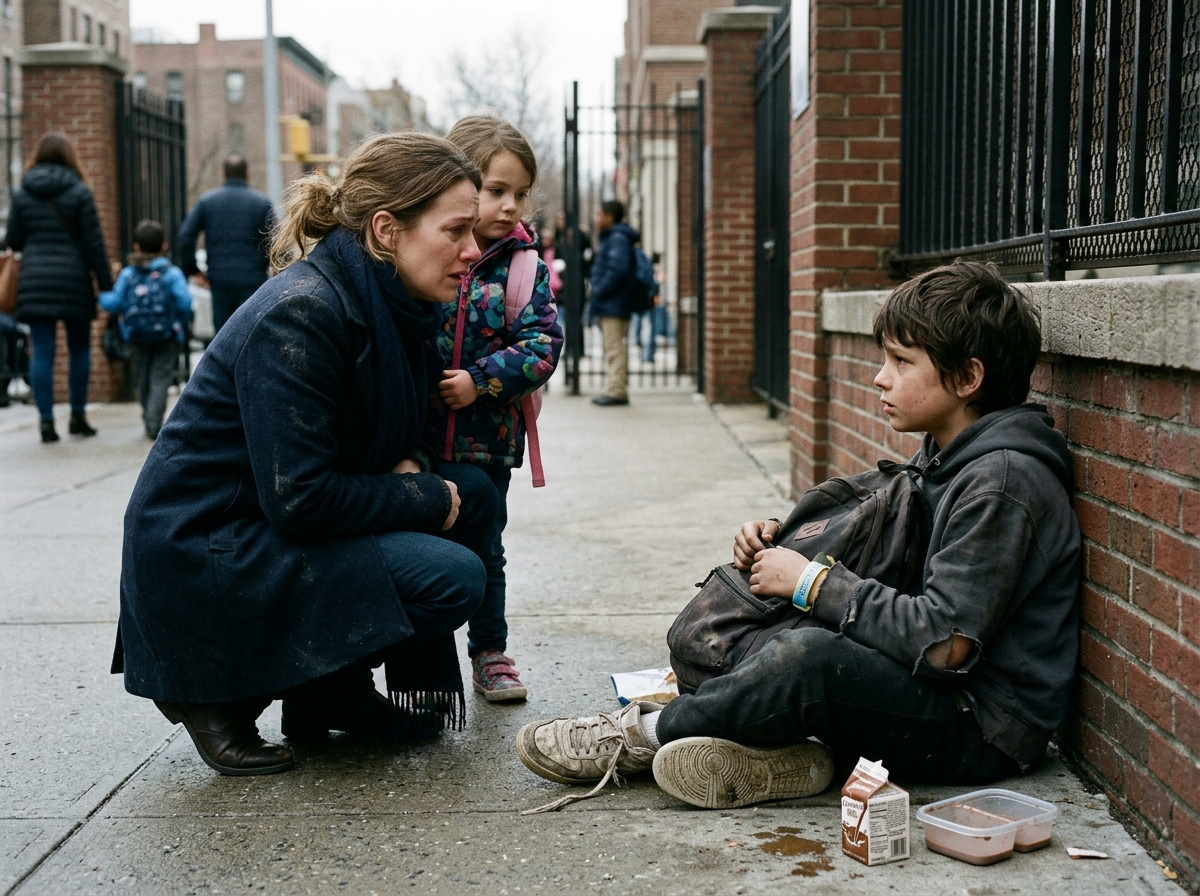
The team confirmed the first stage of the gradual trial for the following week. Noah would spend several nights at Claire’s home, with planned returns to his current placement and scheduled check-ins with Elena. The arrangement would be reviewed regularly, and the adults would not treat the calendar as a guarantee that he would eventually choose to remain permanently. Noah read the schedule several times before agreeing to it. He asked for a copy for his backpack and another to keep beside his bed.
Claire prepared the room without changing everything. She washed the sheets, cleared a drawer, and left the familiar hallway light in place. She did not buy new furniture or fill the shelves with toys. Noah had not asked for a redesigned bedroom. He had asked for a place where his belongings would be safe and where he could decide what to bring. Claire wanted the room to remain flexible enough for him to shape it himself.
When Noah arrived on the first evening of the trial, he carried his backpack, the black sketchbook, a small bag of clothes, and the newborn photograph in its protective envelope. He placed the bag near the bed, checked the schedule, and then examined the drawer Claire had cleared for him.
“Is this all mine?” he asked.
“The drawer is for your things,” Claire said. “You can decide what goes in it.”
He opened and closed it twice. Then he put in two shirts, a pair of socks, and the small notebook he had carried everywhere. He left the backpack beside the bed, where he could reach it easily.
“I'm not putting everything away,” he explained.
“You don't have to.”
“I want to know where it is.”
“You can keep it where you can see it.”
He nodded and returned downstairs. Sophie was setting the table, carefully placing one fork at each setting. She had written the week's schedule on a sheet of paper and added a small drawing beside each day. Claire had asked her not to turn Noah's arrival into a celebration, but Sophie had wanted a way to remember which days he would be home.
Noah examined the paper. “You drew a pancake on Tuesday.”
“That's when we're making pancakes.”
“Why is there a star on Thursday?”
“Because Thursday is a good day.”
“What makes it good?”
“It's Thursday.”
Noah considered this. “That's not a very strong reason.”
“It's my calendar.”
He accepted the explanation, then pointed out that the drawing for Friday looked like a potato. Sophie informed him that it was a cat. He suggested the cat might need medical attention. She threatened to remove him from the calendar, and he replied that he would be happy to leave the potato cat behind.
Claire watched them settle into the evening. Their joking was familiar now, but she noticed that Noah checked the schedule whenever the conversation turned to the next day. Predictability helped him remain calm, and she made sure the written plan stayed in the same place on the refrigerator.
The first night went smoothly. Noah slept, woke once, and went back to bed after checking the hallway light. In the morning, he ate breakfast with Sophie and packed his school things. Claire helped him confirm the transportation arrangements, and Elena checked in later that day. Noah reported that the night had been fine. He did not describe it as wonderful or difficult. He simply said it had been fine, which Claire understood was an honest answer.
By the third evening, the ordinary details began to feel less novel. Noah knew which cupboard held the cereal and where Claire kept the spare pencils. He started leaving his shoes beside the chair instead of carrying them upstairs. He argued with Sophie about the television remote and learned that Claire expected both children to help clear the table. These routines were small, but they were also the places where family life could become frustrating.
The first real disagreement came when Sophie asked to borrow the black sketchbook. Noah refused immediately, and Sophie complained that he never let her see anything he drew. Noah snapped that she had no right to look at his private things. Sophie retorted that he acted as though everyone in the house were trying to steal from him.
Claire stepped in before the exchange escalated. She reminded Sophie that Noah’s sketchbook was private and reminded Noah that he could say no without shouting. Neither child was pleased. Sophie took her own drawing to the dining table, while Noah went upstairs with his sketchbook.
A few minutes later, Claire heard him close the bedroom door more firmly than necessary. She waited, then knocked once and asked whether he wanted to talk. He said no. She told him she would be downstairs and left him alone. When he came down later, he did not apologize, but he returned the pencil he had borrowed from the shared basket and sat at the table beside Sophie. They did not speak much during dinner, yet they managed to eat together without another argument.
That evening, Claire spoke with Hannah during the scheduled check-in. She described the disagreement accurately and asked whether they should change anything in the plan. Hannah said the conflict was worth noting, but not unusual. The important question was whether the adults could maintain boundaries, help the children recover, and avoid making Noah feel that one disagreement threatened the whole arrangement. Claire agreed to continue monitoring the situation and to let Noah know he could raise concerns directly.
The following day, Noah seemed quieter. He completed his homework at the kitchen table and checked the calendar several times. When Claire asked whether anything was bothering him, he said he was fine. She did not press. Later, while she was putting away groceries, he came into the kitchen and asked whether he could call Elena.
“Of course,” Claire replied.
He took the phone into the living room and spoke privately. Claire heard only his side of the conversation: “I know it's in the plan,” and later, “I'm not saying I want to stop.” He remained on the call for several minutes, then returned the phone and went upstairs.
At dinner, he barely touched his food. Claire asked whether he wanted something else, and he shook his head. Sophie, noticing his silence, asked whether he was sick. Noah said no, then pushed his chair back and went to the living room. Claire followed after a moment, leaving Sophie with her dinner.
Noah was standing beside the shelf where the newborn photograph rested. He had taken the protective envelope from his bag and was looking at the picture again. His face was tight, and he held the frame so carefully that his fingers barely touched its edges.
“I don't like this,” he said.
Claire stopped a few steps away. “What don't you like?”
“Being here and being there. Everyone keeps saying I can choose, but I have to go back and forth, and I don't know what I'm supposed to feel.”
She let him continue.
“When I'm here, I think about the place I'm leaving. When I'm there, I think about the things I left here. It feels like I'm doing something wrong no matter where I am.”
Claire felt an ache of recognition, though she could not know every detail of his experience. “That sounds exhausting.”
He turned toward her. “You wanted me to come here. Now I'm here, and I keep thinking about leaving.”
“I wanted you to have the chance to try this. I didn't want you to feel that you had to stay.”
“But you look happy when I say I want to come back.”
Claire did not deny it. “I am happy to see you. I also know that my happiness can make it harder for you to tell me when you're unsure. I need to be careful not to make you responsible for how I feel.”
Noah's eyes filled with tears, and he looked furious about it. “I don't want to keep disappointing people.”
“You are not disappointing me by having mixed feelings.”
“You can't know that.”
“You're right that I can't make you believe me just by saying it. But I can keep showing you that you don't have to hide your feelings to stay safe here.”
He shook his head. “I don't even know where home is.”
Claire felt the words settle heavily between them. She wanted to tell him that this house could be his home, that she had a place for him, that he would never have to wonder again. But the question was too important for her to answer on his behalf.
“You don't have to decide that tonight,” she said. “You can miss your current placement and still enjoy being here. You can want to come back and still feel sad when you leave. We can talk with Elena about making the schedule easier if it feels too much.”
“What if I want to go back earlier?”
“Then we'll contact Elena and follow the plan. We won't pretend your feelings don't matter.”
Noah stared at the photograph. “I thought if I slept here and it went well, I'd know.”
“Sometimes a good experience gives you more questions instead of fewer.”
He gave a short, bitter laugh. “That's stupid.”
“It can feel stupid.”
He sat on the floor with the photograph in his lap. Claire lowered herself onto the sofa but did not move closer. For several minutes, he said nothing. She remained with him, allowing the silence to continue without demanding that he turn it into a decision.
Eventually, Noah asked, “Can I call Elena again?”
“Yes.”
He called her from the living room and explained that he felt pulled between the two places. Elena listened and reminded him that the trial was designed to help everyone understand what worked, not to force him to choose before he was ready. They discussed whether he wanted to continue the planned schedule or return to his current placement for the night. Noah chose to stay, but he asked Elena to check in with him the next morning.
When the call ended, Noah looked at Claire. “I'm staying tonight. That doesn't mean I'm sure.”
“I understand.”
“And I don't want you to tell Sophie that I'm sad because of the trial.”
“I won't share your private feelings with her. I can explain that everyone has different feelings about changes without telling her anything you don't want shared.”
He nodded and returned the photograph to its frame. He placed the protective envelope back in his backpack and carried the bag upstairs. Claire did not follow him.
The next morning, Noah spoke with Elena as planned. He said he wanted to continue the trial but needed a more predictable way to move between the two places. The team agreed to review the schedule and see whether the transitions could be made less abrupt. They also reminded Claire that a trial could be paused or adjusted if Noah became overwhelmed. The goal was not to keep the schedule intact at all costs. It was to understand what arrangement best supported him.
Claire spent the rest of the day being careful not to turn every interaction into a question about his feelings. She made lunch, helped Sophie with homework, and asked Noah whether he wanted to draw at the kitchen table or in his room. He chose the kitchen. Later, he and Sophie played a short game, argued over a rule, and worked out a compromise. The sadness did not disappear, but it became one part of the day rather than the whole of it.
That evening, Noah placed his notebook in the drawer for the first time. He left the backpack beside the bed, where it remained visible. When Claire saw the drawer open, she did not comment. Noah closed it himself before going downstairs.
At bedtime, he asked whether they could talk about the next week's schedule before breakfast. Claire agreed. He wanted to know which nights he would stay, when he would return to his current placement, and whether he could have a quiet evening before each transition. She wrote the questions down so they could discuss them with Hannah and Elena.
“You don't have to make the plan easier for me,” he said. “I just need to know what it is.”
“That's exactly what we'll work on.”
He looked toward the hallway light. “I still want to try.”
“I know.”
“But I might still feel sad.”
“Then we'll make room for that too.”
Noah went to bed without asking for a promise that the sadness would disappear. Claire remained downstairs, thinking about how often she had imagined the return of her son as a moment of relief. Instead, the return had brought grief as well as hope. Noah was discovering that a safe place did not erase the pain of the places and people he had known before. He could feel grateful for the room and still miss what was familiar. He could want a future with Claire and still fear the consequences of choosing it.
The trial continued, but the team agreed to adjust the transition schedule and increase check-ins. No permanent decision was made. Claire accepted the slower pace because it was the only pace that respected Noah’s reality. She could offer him a place at the table, a drawer, a bedroom, and a dependable answer when he asked what would happen next. She could not make him feel at home by insisting that he should.
As she turned off the kitchen light, she noticed the calendar on the refrigerator. Sophie had drawn a small house beside one of the trial nights, but Noah had added a simple question mark beside the following day. Claire left both marks where they were. The house represented the possibility of belonging; the question mark represented the freedom to be unsure. Neither needed to be erased for the other to remain.
Click here to continue reading: PART 24: When Noah Asks to Pause the Trial, Claire Faces the Possibility of Losing the Progress She Hoped For and Must Show Him That Choosing Safety Matters More Than Keeping Him Close
The Blue Hospital Bracelet That Made a Mother Stop in the Middle of the Street
Part 23 of 28