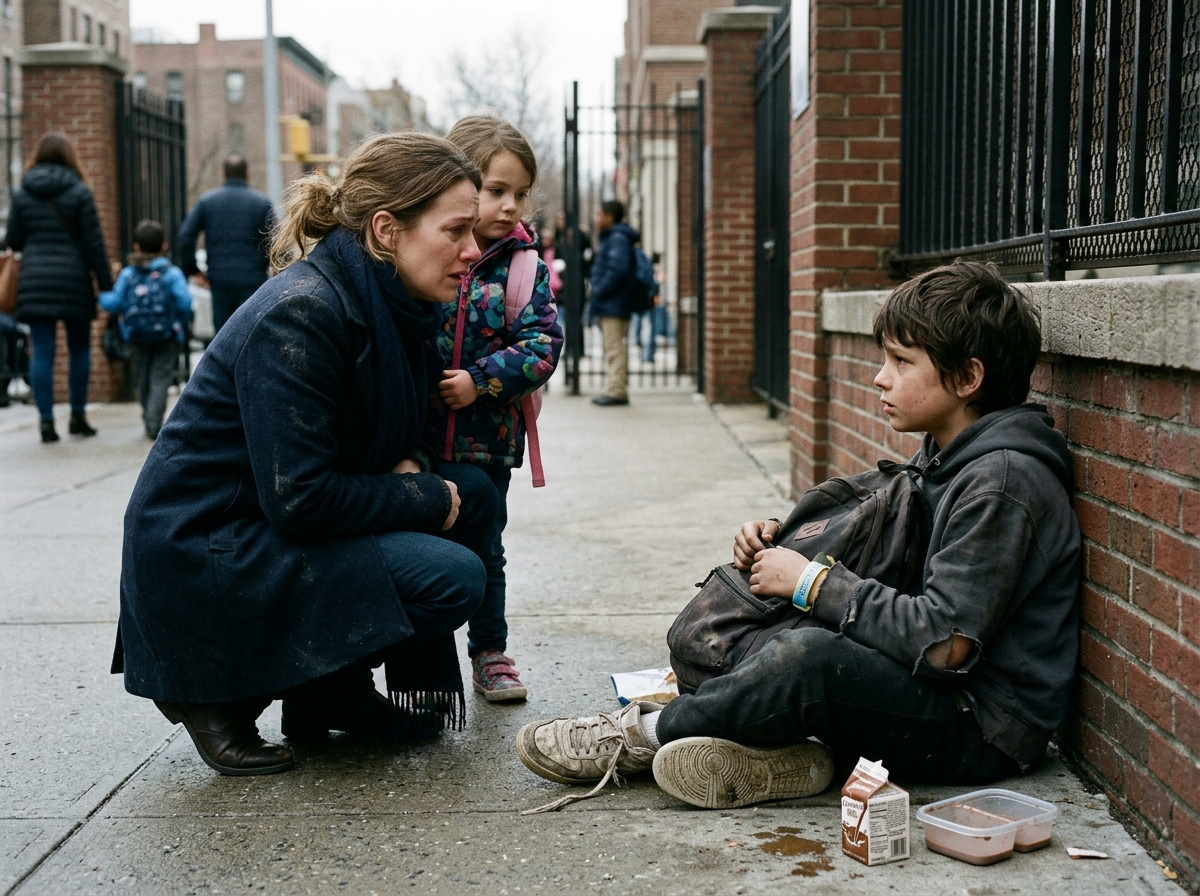
The next Saturday began well enough. Noah arrived with his backpack, the new black sketchbook, and a packet of crackers he had saved from the previous evening. He placed the crackers on the kitchen counter and announced that he had brought his own snack because Claire’s cupboards were “unpredictable.”
“My cupboards contain food,” Claire said.
“They contain food you like.”
“I thought that was generally considered a good thing.”
“It means you don't have enough crackers.”
Sophie appeared beside him. “I like crackers.”
“You like everything,” Noah replied.
“Not broccoli.”
“You ate it yesterday.”
“I changed my mind.”
Noah looked at Claire as if this confirmed a serious flaw in the household. “See? Unreliable.”
They ate breakfast together, and for a while the morning felt easy. Sophie showed Noah a puzzle she had started, and he pointed out that one of the pieces had been placed upside down. She insisted it was a creative choice. He corrected it anyway, then apologized when she complained that he had taken over.
“Fine,” he said. “You can be the puzzle boss.”
“I already am.”
“Then why did you need my help?”
“Because puzzle bosses need assistants.”
He shook his head, but his expression was warm. Claire allowed herself to enjoy the sound of their conversation without imagining what it meant for the future. She was learning that a good morning could simply be a good morning.
After lunch, Noah asked to draw alone in the living room. Sophie wanted to show him a new picture, but Claire reminded her that he had asked for quiet. Sophie looked disappointed, then took her own drawing to the dining table instead. Noah glanced up when she left.
“She didn't get mad,” he said.
“She was disappointed, but she respected what you asked.”
“People can do that?”
“They can.”
He returned to his drawing. Claire went upstairs to fold laundry, leaving the living room door open. She heard pencils moving across paper and the soft sound of Sophie humming at the table. For twenty minutes, nothing happened.
Then Claire heard a sudden scrape, followed by Noah’s voice, sharp and loud. “I said don't touch it!”
She hurried downstairs but stopped at the living room doorway rather than rushing between the children. Sophie stood beside the table, her hands raised in surprise. Noah was gripping his sketchbook, his face flushed.
“I only wanted to see the picture,” Sophie said.
“You always want to see everything!”
“I was just looking!”
“You don't get to look at everything I do!”
Sophie’s eyes filled with tears. Claire felt the instinct to step in and settle the argument quickly, but she remembered what she had promised Noah about privacy and what she had told Sophie about boundaries. She addressed them both calmly.
“Sophie, please give Noah some space. Noah, I'm listening, but I need you to put the pencil down so nobody gets hurt.”
He dropped it onto the table with a clatter. “I'm not going to hurt anyone.”
“I didn't say you were.”
“You acted like I was bad.”
“I asked you to put the pencil down because you were upset and it was in your hand. That doesn't mean you're bad.”
His breathing was fast. He looked from Claire to Sophie, then at the sketchbook pressed against his chest. The anger in his face shifted, revealing something more frightened beneath it.
“You're going to say I can't come back,” he said.
Claire did not answer too quickly. “No. We're dealing with what happened right now. One argument doesn't decide whether you can visit.”
“You don't know that.”
“You're right that I can't make the whole placement decision by myself. The team has to consider your safety and what support you need. But I'm not going to tell them you should lose visits because you got angry.”
He stared at her. “That's what adults do. They say it's okay, then later they tell someone you were difficult.”
Claire felt the truth in the accusation, even though she had no way of knowing every experience behind it. “I will be honest with Elena about what happened. I won't hide it, and I won't describe you as a bad child. I'll say you were upset because Sophie touched something private, and we needed to help everyone calm down.”
Noah's grip tightened around the sketchbook. “She touched it.”
Sophie looked down. “I didn't open it. I just moved it because I couldn't see the picture underneath.”
“That was still mine,” Noah said.
Sophie wiped her cheek. “I'm sorry. I didn't know you would be that upset.”
Noah looked as though he wanted to accept the apology and reject it at the same time. “You could have asked.”
“I should have.”
Claire knelt beside the table, keeping a respectful distance. “Noah, you were right that your sketchbook is private. Sophie should have asked before moving it. And shouting at her frightened her. Both things can be true.”
He shook his head. “So I'm wrong too.”
“You made a choice that hurt her feelings. That doesn't make your boundary wrong, and it doesn't make you a bad person.”
His eyes shone, but he refused to cry. “I don't want people touching my things. I don't want people asking questions. I don't want everyone looking at me like I'm a problem.”
Claire felt the room narrow around the words. “I hear you.”
“No, you don't!” he burst out. “You had a house. You had a daughter. You had everything, and I had to keep all my stuff in a bag because nobody knew where I would be next!”
Sophie went completely still. Claire did too. The sentence had been building for years before Noah ever said it in her living room. She could not repair it with an explanation or make it smaller by telling him she had been frightened when he was born.
“You're right that I had a home while you didn't have the stability you deserved,” Claire said quietly. “And I can't give you those years back. I won't ask you to make me feel better about that.”
Noah looked startled by the absence of an argument. His face twisted with anger again. “Then why do you keep acting like this can work?”
“Because I want to try, and because you have said you want to try too. But wanting it doesn't mean we pretend the past didn't happen.”
“What if it doesn't work?”
“Then we'll have to be honest about that too. We will still make sure you have a safe place and support. You won't be punished for discovering what you need.”
He turned away, shoulders shaking once. “I hate that you get to decide anything.”
Claire felt the words strike deeply, but she did not challenge him. “I understand why it feels that way. I don't get to decide everything. The professionals have responsibilities, and your wishes matter. I do have to help keep everyone safe, including Sophie, but I won't use that responsibility to silence you.”
Sophie had moved to the far side of the dining table. She was crying quietly now, not because Noah had revealed his history, but because she had realized that the argument had reached a place she did not understand. Claire went to her first, asking whether she wanted to sit with her for a minute. Sophie nodded and leaned against her mother.
“I didn't mean to make him feel bad,” Sophie whispered.
“I know,” Claire said. “You made a mistake by moving something that wasn't yours. You apologized, and you can learn from it. You don't have to fix every feeling Noah has.”
“Does he hate me?”
“I don't think this argument tells us that. He's very upset, and he needs some space.”
Across the room, Noah had sat on the floor beside the sofa. He was holding the sketchbook against his knees. Claire did not approach him immediately. She gave Sophie a glass of water and asked if she wanted to draw in her room for a while. Sophie agreed, but before leaving, she looked toward Noah.
“I'm sorry I touched it,” she said. “I won't do it again without asking.”
Noah did not answer. Sophie went upstairs without demanding forgiveness.
Claire remained in the dining room for several minutes, letting the house grow quiet. She wanted to rush to Noah, tell him he could stay, and promise that no one would ever move his things again. But she knew that making absolute promises in the heat of a painful moment would only create new ways to disappoint him. She waited until he looked toward her.
“Do you want me to sit here, or would you rather be alone?” she asked.
“Alone.”
“All right. I'll be in the kitchen. You can come find me if you need anything.”
He did not respond. Claire went to the kitchen and left the doorway open. She washed the dishes slowly, not because they needed that much attention, but because she wanted Noah to know she was nearby without making him feel watched.
Ten minutes passed. Then fifteen. Eventually, Noah appeared in the doorway with the sketchbook tucked beneath one arm.
“Are you telling Elena?” he asked.
“Yes. I'll tell her what happened, including what you said and what led to the argument. I won't make it sound smaller than it was, and I won't leave out why you were upset.”
“Will she think I'm not ready?”
“She may want to discuss what support would help you feel safer. I can't predict every decision she or the team will make.”
Noah's mouth tightened. “That's not a good answer.”
“I know. But it's an honest one.”
He pulled out a chair and sat down. For several minutes, he stared at the table. Then he asked, “Can I have a rule that nobody touches my sketchbook without asking?”
“Yes. We can make that clear to everyone.”
“And my backpack?”
“Yes.”
“And if I say I want to go home, you don't make me explain everything in front of Sophie?”
“We can agree that you'll tell me or Elena, and we'll find a private place to talk. If there's an immediate safety concern, the adults may need to ask questions, but we won't turn it into a public discussion.”
Noah considered the answers. “I still want to come next Saturday.”
“Okay.”
“Even though I shouted?”
“Yes. We'll tell Elena what happened and talk through how to make the next visit safer. You don't have to pretend it didn't happen, and neither do I.”
He lowered his eyes. “I didn't mean to make Sophie cry.”
“I believe you. You were angry and scared, and you shouted. You can be sorry for frightening her without pretending you had no reason to be upset.”
Noah rubbed the edge of the sketchbook with his thumb. “I don't know how to stop being angry sometimes.”
“Then we'll work on that with the people helping you. You don't have to figure it out alone.”
When Elena arrived for the scheduled check-in later that afternoon, Noah asked to speak with her privately. Claire stayed in the kitchen. She heard no details of their conversation, and she did not try to listen. Afterward, Elena explained that Noah had described the incident and had asked to keep his next visit. The team would discuss practical strategies for handling privacy, anger, and conflict. The argument did not automatically end the possibility of future visits, but it did become part of the ongoing assessment, as it should.
Noah left with Elena that evening. He carried his sketchbook in his backpack and took the dark-blue sweatshirt from the shelf. Before stepping outside, he turned back toward Claire.
“I was really angry,” he said.
“I know.”
“I might be angry again.”
“You probably will be sometimes.”
He seemed to wait for the warning that should follow. When none came, he nodded once.
“Saturday?” he asked.
“Saturday, if the plan is confirmed.”
He left without a hug. Claire watched him walk toward Elena’s car, feeling both the ache of what he had said and the relief that he had said it. The visit had not been perfect. It had been difficult, messy, and frightening for both children. But Noah had expressed a boundary, made a mistake, and spoken the truth about his anger without being told that his place in the house had disappeared.
That evening, Claire checked on Sophie. They talked about asking permission, giving people privacy, and understanding that an apology could be sincere even when someone needed time to feel better. Claire did not reveal more of Noah’s history than Sophie already knew. She told her only that Noah had experiences that made it especially important for him to feel in control of his belongings, and that the adults would help the children learn how to share space respectfully.
Before bed, Claire sent Elena a clear account of the incident and asked what support they should put in place for the next visit. She did not describe Noah as ungrateful, difficult, or unready. She wrote that he had been distressed when his sketchbook was moved, that he had shouted, that Sophie had been frightened, and that both children needed help repairing the moment. She also recorded Noah’s request that his belongings remain private.
When she finished, she sat beside the shelf where Noah’s things usually waited between visits. The sketchbook was gone, but the small space it had occupied remained. Claire resisted the temptation to treat its absence as a warning. Noah had taken it because it was his, and he had a right to do that.
She had once believed that love meant making a decision and then living with it. Now she was learning that love also meant allowing another person to disagree, to be angry, to withdraw, and to return without demanding that each step look like gratitude. The next visit would need careful planning. The trust between them had been tested, but it had not vanished simply because the day had become hard.
Click here to continue reading: PART 20: Noah Returns After Their Hardest Visit and Makes a Small Request About the Future, Giving Claire Her First Clear Sign That Trust Can Survive Disappointment
The Blue Hospital Bracelet That Made a Mother Stop in the Middle of the Street
Part 19 of 28