The call came on a Wednesday afternoon, just as I was leaving the office.
Ms. Patel, the safeguarding coordinator, explained that Noah had been involved in a difficult incident near the school entrance. He had not been physically injured, but one of the students who had bullied him earlier had approached him again and made a remark about his clothes.
I felt the familiar rush of anger.
“Was anyone there to help him?”
“A staff member intervened quickly,” she said. “The student has been reported to the headteacher, and we are following the school's procedures. Noah was upset afterward, but he agreed to speak with the safeguarding team.”
“Does he know you called me?”
“He gave permission for us to contact you because he wanted you to know what happened. He also asked us not to share the details with other parents.”
I thanked her for telling me and asked whether Noah wanted me to meet him. She said he had agreed to see me at the family-support office after school, with Elena present.
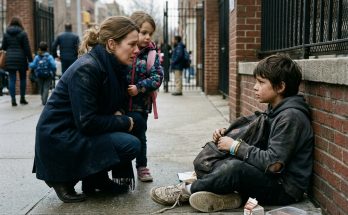
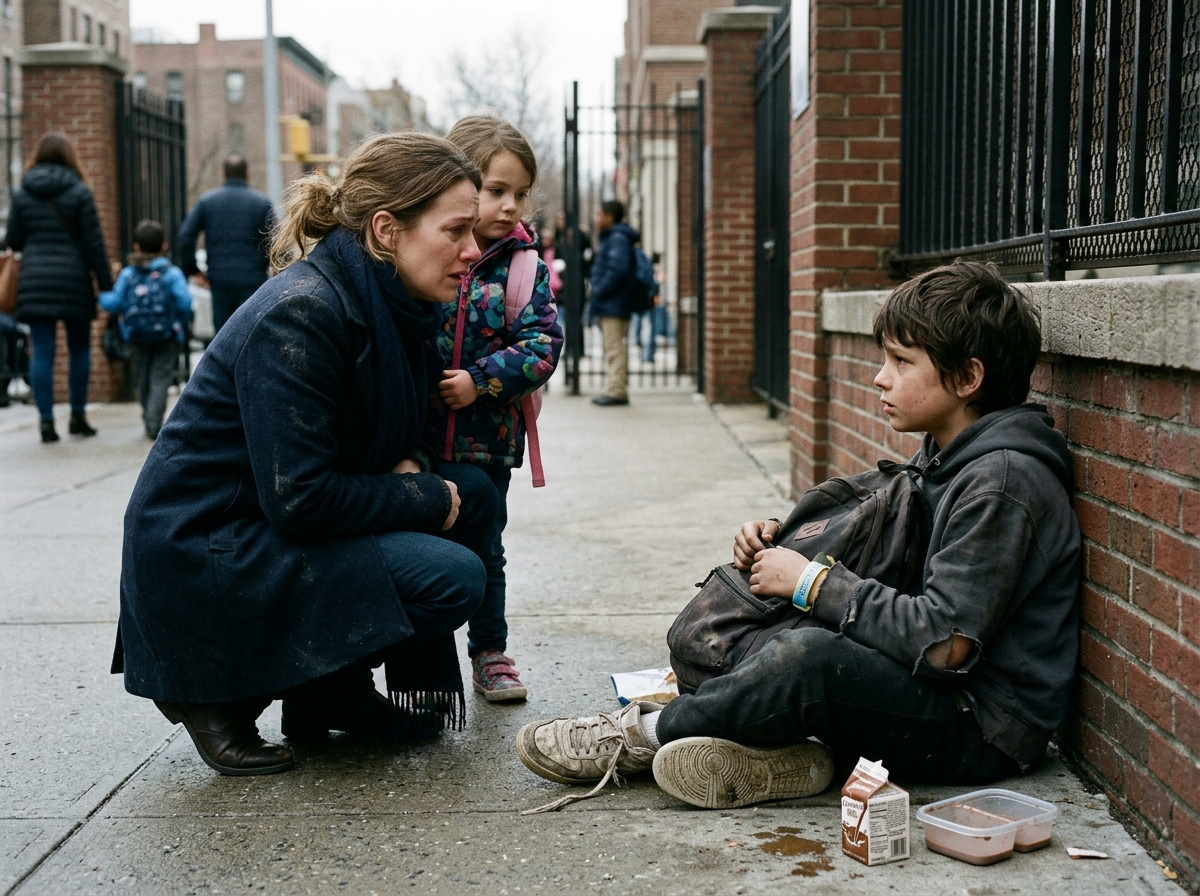
When I arrived, Noah sat in a small room with his backpack on his lap. His sleeve was pulled down over the blue bracelet, and his face was tight with anger.
“I didn't do anything,” he said before I had even sat down.
“I believe you.”
“They started talking about my clothes again. I told them to leave me alone.”
“What happened next?”
He described how one student had made a comment about his hoodie and another had laughed. Noah had tried to walk away, but the first boy had stepped into his path. A staff member noticed the confrontation and separated them before it escalated.
Noah had not struck anyone. He had not threatened anyone. He had simply stood there, shaking with anger, until the teacher arrived.
“They think they can do whatever they want,” he said.
I sat beside him, leaving enough space for him to move away if he wanted.
“What do you want to happen now?”
He looked surprised.
“I don't know.”
“That's okay. We can talk through the options with Elena and the school. You don't have to decide everything today.”
He pressed his lips together.
“I don't want them thinking I'm scared.”
“Being upset doesn't mean you're weak.”
He looked at me sharply.
“Don't say things like that.”
I stopped.
He continued, “People say that when they want you to feel better. It doesn't change anything.”
I nodded slowly.
“You're right. It doesn't change what happened. I'm sorry.”
He looked down at his backpack.
“I just want to go to school without everybody looking at me.”
The request was simple, and I understood that no speech about courage could answer it. He wanted to learn, spend time with other children, and move through the day without becoming a target.
Elena asked whether he wanted to make a formal report about the incident. He agreed, provided he did not have to confront the students directly. The school could investigate, and the adults would be responsible for handling the behavior.
I offered to attend a meeting if he wanted me there, but I made it clear that he could also choose to speak with the school without me.
“I want you there,” he said.
So I went.
At the meeting, the headteacher and Ms. Patel listened while Noah described what had happened. He spoke quietly at first, then more firmly as he explained that he did not want to be singled out because of his clothes or his circumstances.
“I just want them to stop,” he said. “I don't want to be their project.”
The headteacher acknowledged the point.
“We will address the behavior directly. You will not be required to participate in a public discussion about your personal circumstances.”
Noah looked toward me, and I gave him a small nod.
The school agreed to increase supervision in the relevant area, document any further incidents, and provide Noah with a named adult he could approach privately. The students involved would be dealt with through the school's behavior process, and Noah would not be asked to forgive them or take part in a reconciliation meeting.
When the meeting ended, Noah appeared exhausted.
On the way home, he asked whether the school would tell his classmates about his family situation.
“No,” I said. “They have no reason to share private information about you.”
“What if somebody asks?”
“You can choose what you want to tell them. You don't owe anyone your history.”
He looked out of the window.
“Sometimes I want to tell them everything,” he said. “Then I think they'll look at me differently.”
“You can decide what feels right, and you can change your mind. You don't have to tell your story all at once.”
He nodded.
At home, Sophie was waiting with a plate of apple slices. She had heard only that Noah had had a difficult day, and she had asked whether she could prepare a snack for him.
“Would you like some?” she asked.
He accepted a slice.
“Thanks.”
She sat beside him but did not ask what had happened. Instead, she told him about a drawing she had made at school, in which she had accidentally given a fish six legs.
“Maybe it was a special fish,” Noah said.
“That's what I told my teacher.”
“Did she believe you?”
“No.”
“Then your teacher needs more imagination.”
Sophie laughed, and Noah smiled faintly.
Later, when he was drawing at the table, he asked whether he could keep a spare sweatshirt at my house.
“Of course,” I said.
“I don't want to wear the same thing every time I come.”
“We can find something comfortable together.”
He hesitated.
“I don't want you buying a lot of things.”
“We'll start with one or two items you choose. Nothing more unless you ask.”
He seemed relieved by the limits.
The following weekend, we went to a clothing shop with Elena's approval. Noah selected a plain dark-blue sweatshirt and a pair of jeans. He rejected several shirts because the fabric felt uncomfortable, and he took his time checking the seams and sleeves.
I did not rush him.
When he chose the sweatshirt, he held it against his chest.
“This one.”
“Good choice,” I said.
He looked at the price tag, then at me.
“Are you sure?”
“Yes. We agreed to get something you wanted.”
He nodded, but his expression remained serious.
At home, he placed the sweatshirt on the spare-room shelf rather than taking it with him. He said he wanted to leave it there for the next visit.
I watched him arrange it beside his sketchbook.
The incident at school had not been resolved by buying clothes, and I did not pretend it had. The sweatshirt was simply something he had chosen, a small part of his life that he could control.
Before leaving that afternoon, Noah asked whether the school had called again.
“Not since the meeting,” I replied.
“Good.”
He shouldered his backpack.
“Can I tell you if something happens again?”
“Always.”
He looked at me for a moment.
“Even if I'm angry?”
“Especially then. You don't have to make your feelings easier for me before you tell me what happened.”
He nodded and followed Elena outside.
That evening, I wrote down the commitments I wanted to keep: listen before reacting, protect his privacy, involve the professionals when necessary, and never make him responsible for proving that the support he received was worthwhile.
I had once believed that the greatest thing I could offer Noah was a comfortable home. Now I understood that he needed more than comfort. He needed a place where he could speak about injustice without being told to move on, where his anger would not make adults withdraw their care, and where his safety mattered more than anyone's wish to appear generous.
I could not control every encounter he would have outside our home.
But I could make sure he did not have to face the consequences of those encounters alone.
Click here to continue reading: PART 16: When Noah Finally Asked to Stay the Night Again, I Realized the Second Chance Belonged to Him Too
The Blue Hospital Bracelet That Made a Mother Stop in the Middle of the Street
Part 15 of 28