
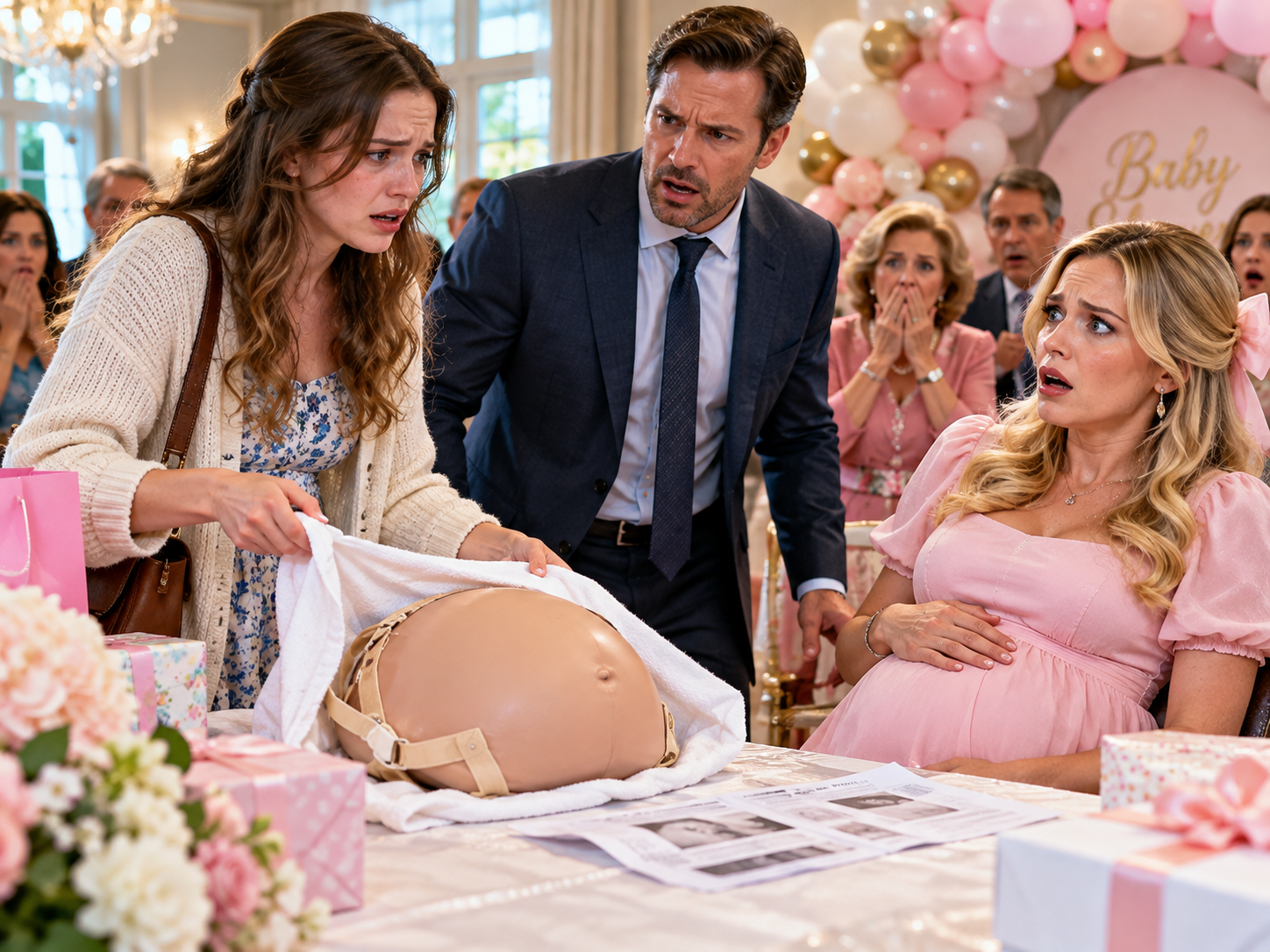
Daniel asked Claire to meet him at their house on a Sunday afternoon. He had been living with his brother for several months, and their counseling sessions had helped them speak more honestly, but they had not resolved whether the marriage could continue. He told Claire he wanted to discuss their future without rushing toward a decision simply because the separation was uncomfortable.
Claire spent the morning cleaning the house. She wiped the kitchen counters, straightened the cushions, and moved a stack of unopened mail from the dining table. Halfway through folding a blanket, she stopped and realized what she was doing. She had spent months trying to control appearances, arranging the house and her words so that other people would see what she wanted them to see. Now she was preparing for a conversation in which the appearance of a tidy home would make no difference.
She put the blanket away and left the rest of the house as it was.
Daniel arrived shortly after two. He carried no overnight bag, and he did not remove his coat immediately. They stood in the entryway for a moment, both uncertain how to greet each other. Claire asked whether he wanted coffee. He said water would be fine. She brought him a glass, then sat opposite him at the dining table.
For several minutes, they discussed practical matters. Daniel had collected most of his belongings, and they needed to decide what to do with the remaining items. They reviewed the household expenses and agreed that each would continue covering the costs they had already arranged to pay until they made a final decision about the house. The conversation was calm, almost ordinary, and that made the emotional distance between them more noticeable.
Finally, Daniel set his glass down.
“I've been thinking about what I need in order to consider staying married,” he said. “I don't want to give you a list of things you can perform for a few weeks. I need to understand whether the way we handle difficult things can actually change.”
Claire nodded. “I want that, too.”
“I know you want the marriage to survive. But wanting it isn't the same as being able to rebuild it.”
“I understand.”
He studied her face. “Do you understand why I haven't come home?”
She took a breath. “Because you don't trust me. You don't know whether I will tell you the truth when I'm frightened, and you don't want to spend your life questioning everything I say.”
Daniel nodded slowly.
“That's part of it. I also don't know whether I can look at our wedding photographs or walk into the nursery without remembering how I felt at the shower. I remember being excited about becoming a father. I remember the way I told my parents. I remember the things I said to you when I believed we were preparing for a baby. I don't know how to separate those memories from what I know now.”
Claire's eyes filled with tears, but she did not interrupt.
Daniel continued. “I keep asking myself whether I missed something. Whether I should have noticed the excuses or the way you avoided letting me come to appointments. Then I remember that I trusted you because you were my wife. I didn't think I needed to investigate the person I loved.”
“You shouldn't have had to,” Claire said.
“No. I shouldn't.”
She folded her hands on the table. “I can't give you back the trust you had before. I can't make the memories feel different. I can only be honest now and accept that you may not be able to stay.”
Daniel looked down at his glass. It was the first time she had acknowledged the possibility of losing the marriage without asking him to reassure her that it would not happen.
“I appreciate you saying that,” he replied. “But I need more than a willingness to accept the consequences. I need to know that you are working on the reason you chose the lie in the first place.”
Claire explained what she had been learning in therapy. She had believed that pregnancy would prove she was a good wife, that she had given Daniel something valuable, and that she had fulfilled an expectation she thought everyone held. Instead of telling him about her fears, she had decided what he would think and acted to prevent a rejection that had never actually occurred.
“When I became afraid of the truth, I tried to control what everyone knew,” she said. “I thought that if I managed the story carefully enough, I could avoid being ashamed. But the more I tried to control it, the more people I involved in the lie. I kept choosing the short-term relief of not confessing over the long-term damage I knew I was creating.”
Daniel listened without looking away.
“I am still ashamed,” Claire continued. “But I'm trying to stop treating shame as an emergency that gives me permission to hide things. I need to learn how to tell you I'm frightened before I turn that fear into something you have to discover.”
He sat quietly for a long time.
“That's what I needed you to understand months ago,” he said. “I needed a partner who could tell me she was scared. I didn't need a pregnancy announcement.”
Claire nodded. “I know.”
“Do you think you would have told me if Sophie hadn't found the prosthesis?”
The question hung between them.
Claire could have said yes. She could have claimed that she would eventually have found the courage, that the shower had been the last straw, or that she had always intended to confess. But those were the same assurances she had given before, and she understood why Daniel no longer trusted them.
“I don't know,” she answered. “I want to believe I would have, but I kept delaying it every time I had the chance. I can't honestly tell you that I would have stopped on my own.”
Daniel closed his eyes briefly. The answer hurt, but he seemed to recognize that it was the first direct response she had given to a question whose true answer she could not guarantee.
“Thank you for not pretending you know,” he said.
They discussed what had happened at the shower. Daniel admitted that he had blamed Sophie in the first moments because he had been overwhelmed and humiliated. He said he regretted speaking to her as though she had caused the damage. Claire apologized for blaming Sophie as well, acknowledging that she had directed her anger at the person who revealed the truth rather than at the choices she herself had made.
Neither of them tried to make the conversation into a declaration of forgiveness. They were acknowledging specific actions and their consequences, one at a time.
Daniel then asked whether Claire still wanted children.
She took a long breath. “I think I do, but I don't want to answer that question as if having a child would prove something about me. I need to understand what I want apart from the fear that I won't be enough if I can't become a mother.”
He nodded. “I want children, too. But I don't know whether I want to try to have them with you right now. And I don't want either of us to make that decision while we are still trying to figure out whether our marriage can survive.”
Claire agreed. For once, she did not interpret his uncertainty as a judgment about her worth. She understood that the decision concerned the relationship they actually had, not the imagined family she had tried to create.
They sat in silence for a while. Outside, a car passed slowly along the street, and somewhere in the house a heating vent clicked as the system turned on. The ordinary sounds reminded Claire that the world had continued during their separation. Their marriage had not become the only thing that existed, even though she had spent months behaving as if losing it would leave her with nothing.
Daniel finally said he was not ready to move home.
Claire's expression tightened, but she nodded.
“I understand.”
“I want to continue counseling. I want to keep talking about what happened, and I want to see whether the honesty we're beginning to practice can last when the conversations become harder. But I can't promise that we will reconcile.”
“I know.”
“I also don't want you waiting for me as though your life has stopped. You need to continue your therapy and build a life that doesn't depend on my decision.”
Claire felt the words land heavily. She had hoped that his willingness to meet meant he was preparing to return. Instead, he was telling her that the future remained open and that she could not turn that uncertainty into another plan designed to control the outcome.
“I will,” she said. “I want to become someone who can face the truth whether or not you come back.”
Daniel looked at her for a long moment, then nodded.
They spent the next hour discussing practical arrangements. Daniel would continue staying with his brother while they worked through counseling. Claire would remain in the house for now. They agreed not to make major decisions about the property or their marriage until they had spoken with the appropriate professionals and understood their options. Neither promised a particular outcome.
Before leaving, Daniel walked through the living room. He stopped beside the shelf where their wedding photograph had once stood. Claire had not replaced it. The pale rectangle was still visible against the wall.
“I don't know what to do with that picture,” she said.
“You don't have to decide today.”
He touched the edge of the shelf, then withdrew his hand.
“I loved that day,” he said. “I meant every promise I made.”
Claire's eyes filled. “I did, too.”
“I believe you loved me. But I don't know how to understand the person you became when you were afraid.”
She wanted to tell him that the person who had lied was not the person she wanted to be, that she had been ashamed and desperate, that she had never intended to destroy their marriage. But she recognized that repeating those explanations would not answer his question.
“I don't know how to explain it completely yet,” she said. “I am trying to understand it myself.”
Daniel nodded once. “Keep doing that.”
Then he left.
Claire did not follow him outside. She stood in the doorway until his car disappeared down the street, feeling the old urge to call him and ask whether he still loved her. She wanted a promise that the conversation had brought them closer to reconciliation. She wanted to turn his willingness to continue counseling into proof that he would return.
Instead, she closed the door and went back inside.
For the rest of the afternoon, she did not call me, text Daniel, or ask Emily whether she thought the marriage could survive. She sat at the dining table with her journal and wrote about the conversation. She recorded the moments when she had wanted to defend herself and the questions she had answered honestly even though she feared the consequences. She did not write that Daniel would come home. She did not write that the marriage was over.
She wrote that she did not know.
It was an uncomfortable sentence, but it was true.
Over the next several weeks, Daniel and Claire continued counseling. Their conversations became more direct, though they remained painful. Daniel began to understand that he could acknowledge Claire's fear without excusing her deception. Claire began to understand that accepting responsibility meant allowing Daniel to remain angry, uncertain, and distant without treating those feelings as problems she had to make disappear.
The family also began to find a different rhythm. Margaret slowly returned to ordinary conversations with Claire, although she was not ready to discuss the baby shower in detail. Sophie and Claire remained cautious with one another, but the accusation that Sophie had destroyed the marriage was no longer repeated. Emily and Claire continued meeting occasionally, rebuilding their friendship at a pace neither could predict.
There was no dramatic reconciliation. Daniel did not return with flowers or announce that love had conquered the past. Claire did not discover a final explanation that made the deception understandable to everyone. They continued facing the consequences of the choices they had made, and some days the work seemed to bring them closer while others reminded them how far apart they remained.
One evening, Daniel told Claire during counseling that he still loved the person he had married, but he could not separate that love from the person who had lied to him. Claire listened without asking him to choose which version was real. She said she was beginning to understand that she could have loved him sincerely and still have hurt him deeply. Both truths could exist together.
That recognition did not determine the outcome of their marriage, but it changed the questions they were asking. They were no longer trying to decide how quickly they could return to normal. They were trying to understand whether a new relationship could be built from the truth, with no invented pregnancy, no fabricated appointments, and no expectation that love would require either of them to ignore what had happened.
When I think about the artificial belly now, I remember how ordinary it looked on the gift table. It was a simple object, made to imitate something deeply meaningful. Its presence exposed the difference between what the family could see and what was actually true. For months, everyone had treated Claire's changing shape as evidence of a pregnancy. We had allowed our excitement to fill in the facts we did not have.
The discovery forced us to confront more than one person's deception. It made us examine how easily we accepted a story because it matched what we wanted to believe. Daniel had trusted his wife, and that trust had been used against him. Sophie had seen something that did not fit and had risked the family's anger to reveal it. Claire had allowed fear to become a plan, then continued the plan long after she understood the harm it was causing.
The future remained uncertain, but the lie was over. There was no child waiting to arrive, no next scan to schedule, and no due date around which the family needed to organize its hopes. There was only the marriage as it really existed, with its affection, its betrayal, and the difficult work of deciding what could survive.
Claire could not make Daniel trust her by asking him to remember their wedding vows. She could not repair the damage by explaining how frightened she had been. She could only continue telling the truth, accepting his choices, and becoming more honest with herself. Daniel could not make the past disappear by forgiving her, and he did not owe her a quick decision. He had to discover whether he could build a future with someone whose deception had changed the way he understood their life together.
That was where their story stood: not at a perfect ending, and not at a final declaration that everything was lost, but at the point where both of them had to decide what truth would require of them. The baby shower had exposed the lie. The months afterward would determine whether anything stronger could be built in its place.
Click here to continue reading: PART 9: The First Honest Weeks of Their Separation Brought No Easy Answers, and Daniel Began to Realize That Forgiveness Would Require More Than Hearing Claire Say She Was Sorry
My Daughter Interrupted a Perfect Baby Shower With One Quiet Accusation, and the Strange Object She Placed on the Gift Table Changed Everything
Part 8 of 20

