
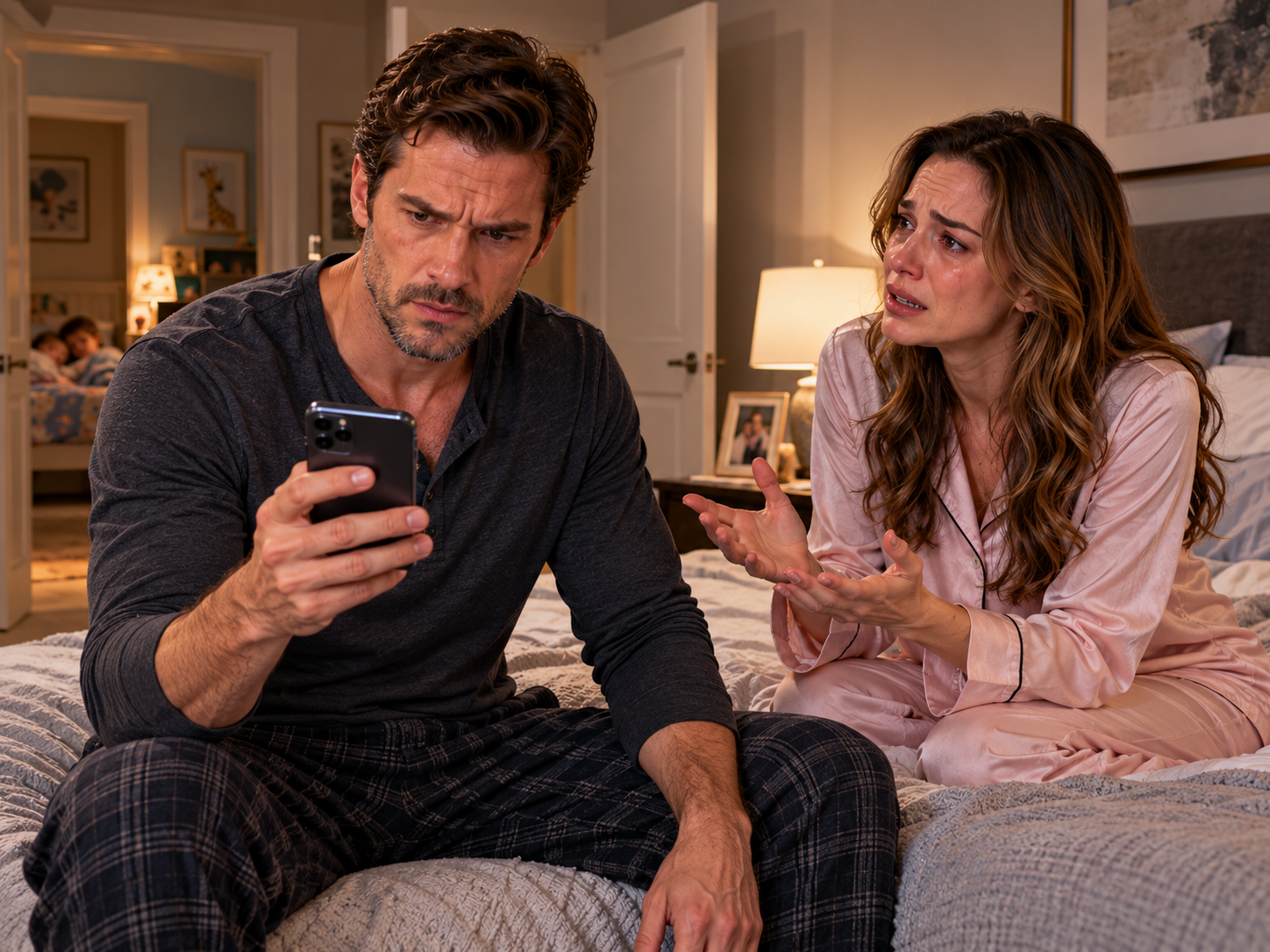
My daughter found the messages accidentally.
It happened while she was helping me organize old digital files.
I had kept an old phone for years because it contained photographs from when the children were small.
We were transferring pictures when she found an archived folder.
She looked at me.
“What is this?”
I knew immediately.
I had forgotten the folder existed.
“Nothing you need to see.”
She hesitated.
“Is it from then?”
“Yes.”
She understood.
She didn't open it.
Instead, she closed the folder.
“I don't want to read it.”
I looked at her.
“Good.”
She smiled faintly.
“Why?”
“Because you already know enough.”
She nodded.
We continued organizing photographs.
After several minutes, she spoke.
“Do you still have the messages?”
“Yes.”
“Why?”
I thought about that.
“For a long time, I kept them because I thought I needed proof.”
“Proof of what?”
“That I hadn't imagined what happened.”
She looked at me.
“That must have been difficult.”
“It was.”
“Do you still need them?”
“No.”
“Then why keep them?”
“I don't know.”
She was quiet.
Then she said, “You should delete them.”
I smiled.
“You're probably right.”
But I didn't delete them that day.
I needed to decide for myself.
That evening, I opened the folder.
There they were.
Words from years ago.
Messages that had once felt like knives.
I read only a few.
Then I stopped.
I didn't need to reread everything.
I knew what they said.
I knew what they meant.
More importantly, I knew what happened afterward.
I closed the folder.
The messages no longer had power over me.
That was when I realized I could delete them.
Not because they were unimportant.
Because they had already served their purpose.
I had spent years believing evidence preserved truth.
Sometimes it only preserves pain.
I deleted the folder.
Then I emptied the trash.
It was strangely ordinary.
No dramatic feeling.
No tears.
No sense of victory.
Just a quiet click.
Gone.
The next day, I told my daughter.
“You were right.”
She smiled.
“About what?”
“I deleted them.”
She looked relieved.
“Good.”
“I thought I would feel something.”
“Did you?”
“Not really.”
She nodded.
“Maybe that's how you know.”
“How I know what?”
“That you're done carrying them.”
I thought about that.
Maybe she was right.
A few weeks later, she asked me whether I regretted ever seeing the messages.
I answered honestly.
“Yes.”
“Why?”
“Because I wish I had never needed to see them.”
“But if you hadn't seen them?”
“I might still have been living in a marriage where I didn't know the truth.”
She nodded.
“So you regret the pain, not the truth.”
“Exactly.”
She sat beside me.
“I think that's different.”
“It is.”
We talked for a long time.
She asked questions about what I remembered from those first weeks.
I told her some things.
Not everything.
She was an adult.
She could understand.
But there were details that no longer belonged to her.
Some parts of a marriage should remain between the people who lived it.
She understood.
“Did you ever want me to know everything?”
“No.”
“Why?”
“Because knowing everything wouldn't have made you safer.”
She looked at me.
“It might have made me angry.”
“Yes.”
“And you didn't want that.”
“No.”
She nodded.
“You protected us.”
“I tried.”
She looked toward the window.
“I think I understand now why you never told us what the messages said.”
“I didn't want your relationship with your mother to become a courtroom.”
She nodded slowly.
“That was wise.”
“I don't know if it was wise.”
“It was.”
I smiled.
“Thank you.”
She laughed.
“You're welcome.”
Later that month, my son asked me about the same period.
He had become more curious as an adult.
“Dad, did you know immediately that you were going to leave?”
“No.”
“What changed?”
“I realized I couldn't rebuild trust while pretending I already had it.”
He nodded.
“That makes sense.”
“Trust requires truth.”
“And time.”
“Yes.”
“And behavior.”
“Yes.”
He smiled.
“You really did learn something.”
“I had no choice.”
He laughed.
Then he became serious.
“Did Mom ever ask you to stay?”
“Yes.”
“Why didn't you?”
“Because wanting someone to stay doesn't erase what happened.”
He nodded.
“That's difficult.”
“Very.”
“Would you have stayed if she had left the job immediately?”
“I don't know.”
“Why?”
“Because the job wasn't the entire problem.”
He looked at me.
“What was?”
“The choices.”
He nodded.
That distinction had always mattered to me.
The coworker was not the only reason the marriage ended.
The workplace was not the only reason.
The affair was not one moment.
It was a series of decisions.
The secrecy.
The messages.
The meetings.
The physical relationship.
The return to the job.
The loss of trust.
Each choice had consequences.
Understanding that helped me stop blaming one person or one location for everything.
My former wife eventually understood that too.
She once told me, “I used to think if the coworker had never existed, none of this would have happened.”
I asked her what she thought now.
“He wasn't the reason.”
“What was?”
“I was responsible for my choices.”
That sentence had mattered.
Not because it changed history.
Because accountability had finally become complete.
Years later, when my daughter discovered the old messages, I worried for a moment that the past might reopen.
It didn't.
She had enough distance.
I had enough distance.
My former wife had enough distance.
The children knew the truth.
The grandchildren knew the family story in age-appropriate pieces.
Nobody needed the messages anymore.
That was when I understood the difference between remembering and reliving.
Remembering allowed you to know where you had been.
Reliving kept you there.
I wanted to remember.
I did not want to relive.
One evening, my daughter called.
“Dad?”
“Yes?”
“I was thinking about something.”
“What?”
“Maybe deleting those messages was important.”
“Why?”
“Because you didn't need them anymore.”
I smiled.
“I think you're right.”
She paused.
“Do you still remember them?”
“Yes.”
“Do you wish you didn't?”
“Sometimes.”
“But you don't need to see them.”
“No.”
She laughed softly.
“That's progress.”
“Probably.”
We said goodnight.
I sat alone afterward.
The phone was quiet.
The house was quiet.
My mind was quiet.
I realized the messages had once represented the moment my world broke open.
Now they were gone.
But the lesson remained.
I had learned to trust behavior instead of promises.
I had learned that love could exist without marriage.
I had learned that forgiveness could exist without reconciliation.
I had learned that children could know the truth without carrying the anger.
And I had learned that letting go did not mean pretending nothing happened.
It meant deciding that what happened no longer needed to occupy every room in your life.
That was enough.
Click here to continue reading: PART 23: When my children asked what I feared most about growing old, I surprised them by admitting it was not loneliness, but leaving them with the wrong lesson
I thought the worst thing I would ever find on my wife’s phone was a secret conversation, until months of messages showed me how deliberately she had chosen another man
Part 22 of 28

