
One year after Harold's death, June returned to the farm.
It no longer belonged to the family.
The farmhouse had been preserved under a conservation agreement.
The fields were leased.
The water rights remained inside the trust.
The scholarship foundation had already funded its first group of agricultural students.
June parked beside the old north gate.
The chain had been replaced.
The cedar posts had not.
She stepped out and rested her hand on the same post where Grandpa had hidden the envelope.
The duct tape was gone.
She smiled.
Some things deserved to be repaired properly.
Thomas arrived ten minutes later.
He had aged visibly during the year, but there was less anger in his face.
“You came early.”
“Grandpa would accuse me of being late.”
“He'd accuse everyone.”
They walked toward the farmhouse.
Inside, the rooms smelled faintly of cedar and old paper.
Harold's chair remained in the study.
So did the blue mug.
June had considered throwing it away.
She couldn't.
Instead, she kept it exactly where he had left it.
Thomas stood beside the desk.
“I never thought I'd see this room again.”
June opened the old ledger.
The pages had been carefully preserved.
She had spent months reading them.
She had learned things she wished she had never known.
She had also learned things that made her love Harold differently.
Not as a perfect man.
He had made mistakes.
He had protected Robert too long.
He had hidden Thomas's existence.
He had sometimes confused control with responsibility.
But he had eventually faced his mistakes.
That mattered.
Thomas touched the ledger.
“What did you decide?”
June smiled.
“I kept it.”
“Why?”
“Because Grandpa wanted the truth preserved.”
“That's all?”
“No.”
She closed the cover.
“I also made copies.”
Thomas laughed.
“Of course you did.”
She had created a secure archive.
The original ledger would remain protected.
Copies would be available to investigators and trustees when legally necessary.
Nobody would ever again be able to say that Harold's records disappeared.
Outside, children were working near the fields.
The scholarship foundation had partnered with local farmers.
Students learned soil management, irrigation, machinery repair, and water conservation.
June watched them through the window.
“The farm is doing something useful again.”
Thomas nodded.
“That would have pleased him.”
“I think so.”
They stood quietly.
Then June heard a vehicle.
Robert stepped out.
He had changed.
Not dramatically.
He still looked tired.
But he no longer carried himself like someone waiting for the next escape route.
He had completed his restitution requirements.
He had begun working for a nonprofit agricultural repair program.
He had not asked June for money.
That mattered more than anything he could have said.
He approached the porch.
“Can I come in?”
June nodded.
Robert stopped beside her.
“I brought something.”
He held out an envelope.
June opened it.
Inside was page 117.
The original.
“I thought you should have it.”
She looked at him.
“Why?”
“Because I took it.”
“You did.”
“I should have returned it sooner.”
“Yes.”
Robert looked toward the fields.
“I don't expect you to forgive me.”
“I already told you.”
“I know.”
“You're still my father.”
His eyes filled.
“That doesn't erase what happened.”
“No.”
“But it means I don't have to pretend you didn't happen either.”
Robert nodded.
That was enough.
Later that afternoon, the family gathered for the final trust meeting.
Mark came.
Carol came.
Thomas came.
Robert attended through a video connection because his travel restrictions had not yet expired.
Vernon opened the meeting.
“There is one remaining provision.”
June frowned.
“I thought we finished.”
“Your grandfather disagreed.”
Vernon handed her another envelope.
June stared at it.
“Another?”
“He prepared it shortly before his death.”
She laughed.
“Of course he did.”
The envelope contained no legal instructions.
Only a handwritten letter.
June read it aloud.
Harold wrote that money could solve certain problems but could not repair character.
He said he had spent much of his life believing that if he worked hard enough, saved enough, and prepared carefully enough, he could prevent his family from suffering.
He had been wrong.
People had to make their own choices.
He could not save them from every consequence.
So he chose instead to leave June the responsibility of deciding what should happen next.
Not because she was the strongest.
Not because she was the smartest.
Because she had shown that she could say no.
June lowered the letter.
Carol was crying.
Mark looked down.
Thomas closed his eyes.
Robert said nothing.
Vernon waited.
June continued.
Harold instructed her to establish a permanent scholarship for students who intended to work in agriculture, water management, or rural infrastructure.
The trust would continue funding those scholarships.
The family would receive no automatic distributions.
If relatives needed help, they could apply through the same process as anyone else.
No exceptions.
Mark looked at June.
“Grandpa really did think of everything.”
June smiled.
“He tried.”
Carol wiped her eyes.
“I owe him an apology.”
June looked at her.
“To Grandpa?”
“To you.”
June did not answer immediately.
Then she nodded.
“Thank you.”
It was not a dramatic reconciliation.
There was no embrace.
No promise that the family would suddenly become close.
Just an acknowledgment.
Sometimes that was more honest.
Thomas looked at the old photograph of the brothers.
“I spent forty years believing Harold stole my life.”
June sat beside him.
“And now?”
He studied the photograph.
“Now I think I helped lose it.”
June shook her head.
“You were both young.”
“We were both stubborn.”
“That part sounds familiar.”
Thomas laughed.
For the first time, the sound did not carry bitterness.
Months later, the scholarship foundation held its first annual dinner.
The room was filled with students, farmers, teachers, mechanics, engineers, and families from the surrounding counties.
A photograph of Harold stood near the entrance.
He was wearing work boots.
Of course.
June stood beside it.
A student approached.
“Was he your grandfather?”
“Yes.”
“What was he like?”
June looked at the photograph.
The easiest answer would have been “kind.”
It would also have been incomplete.
“He was difficult.”
The student laughed.
June smiled.
“He was stubborn. He complained about everything. He kept broken things because he was certain he could fix them. He hated waste. He remembered every dollar anyone owed him.”
The student waited.
“And he loved people.”
June looked again at the photograph.
“Sometimes he loved them badly. Sometimes he loved them wisely. Near the end, he learned the difference.”
The student nodded.
“Sounds like a good man.”
June considered that.
“He tried to become one.”
That answer felt right.
After the dinner, June returned to the empty hall.
The lights had been dimmed.
She stood alone beneath Harold's photograph.
Her phone remained silent.
No Thursday morning call.
No complaint about coffee.
No demand that she come next week.
She missed him.
But the grief no longer felt like an unfinished conversation.
She had said what she needed to say.
She had protected what he entrusted to her.
She had refused the money when taking it would have repeated the family's oldest mistake.
And she had helped build something that would outlive all of them.
June touched the photograph.
“You were right about one thing.”
The room was silent.
“We didn't need another heir.”
She smiled.
“We needed someone to stop.”
Outside, wind moved across the fields.
The same fields Harold had worked.
The same land that had caused arguments, debts, secrets, betrayals, and finally a different kind of inheritance.
June switched off the last light.
She closed the door.
And for the first time since the will had been read, there was nothing left hidden behind it.
The End
Read more original stories on Feel Every Story.
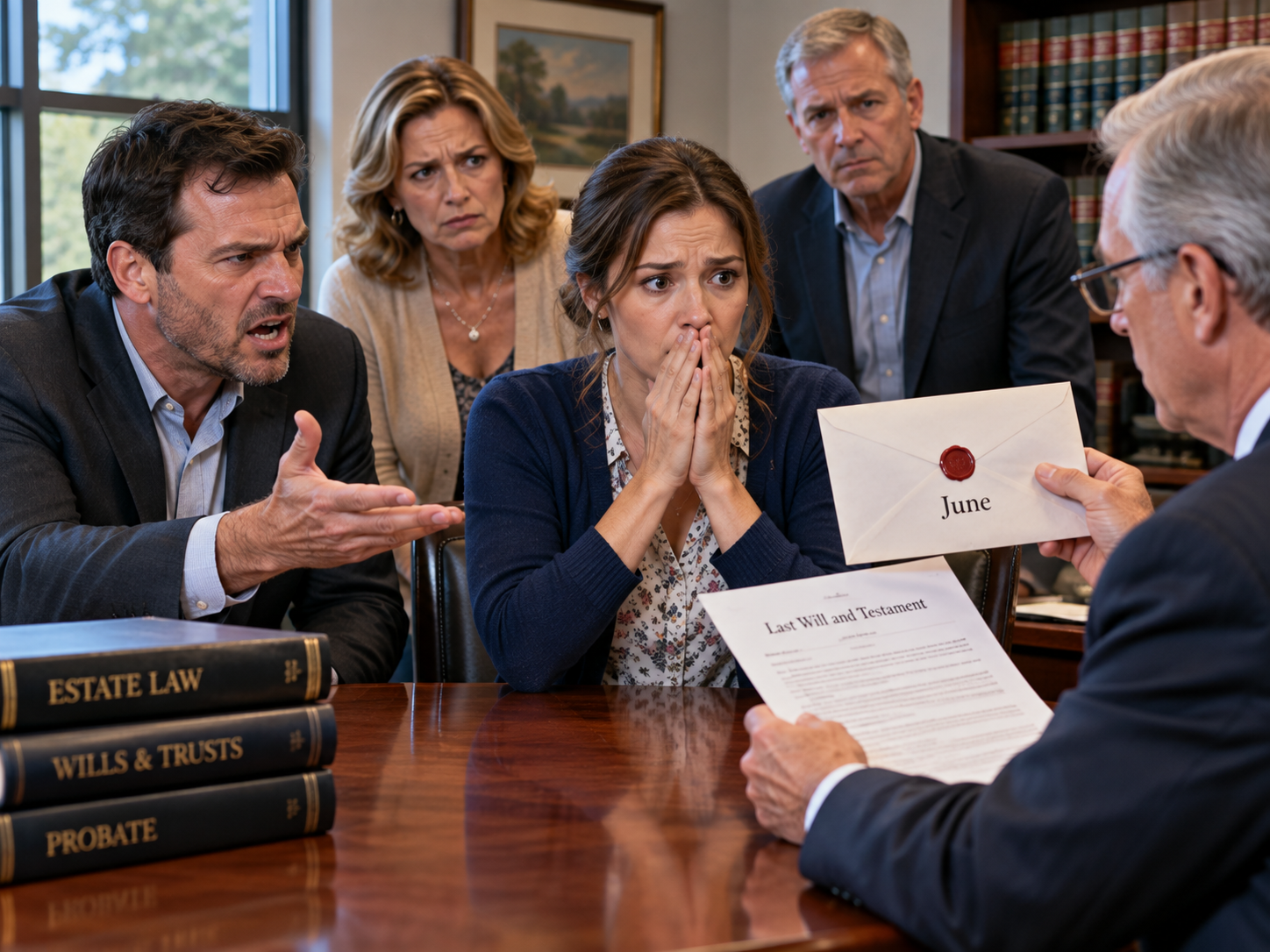
The Will Made Everyone Angry, but the Envelope With June’s Name on It Suggested Grandpa Had Prepared for Something Much Worse
Part 8 of 8

