
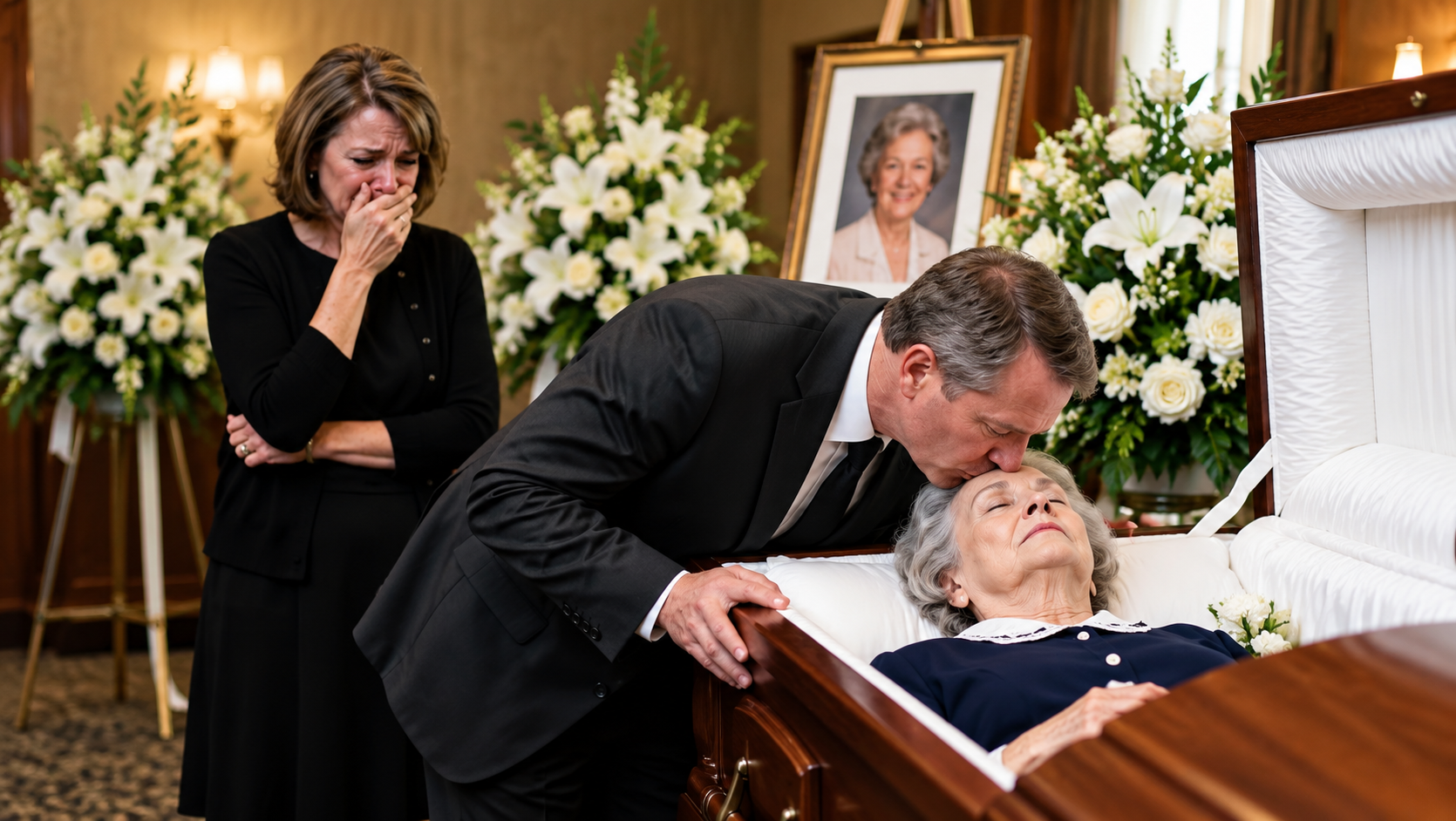
My mother had been dead for several years when I finally understood the full meaning of the red maple.
By then, the anger had softened.
Not disappeared.
Softened.
There were still moments when I wished she had told me the truth before my wedding. There were still moments when I was angry that she had decided what I could handle. I could love her and disagree with her. I could miss her and still believe she had been wrong.
I had finally learned that grief did not require approval.
Neither did love.
Joe and I remained together.
Our marriage was different from the one we had before the secret was discovered. We were less interested in appearing stable and more interested in being honest. We argued differently. We apologized differently. We spoke about difficult subjects sooner.
Sometimes I caught myself thinking about the woman named Clare.
I never met her.
I never asked Joe for details beyond what she had chosen to share.
That was important to me.
Her life was not a chapter that existed to complete ours.
She had her own story.
She had survived something Joe had done.
She had chosen what forgiveness meant for herself.
Her refusal to forgive him had become one of the most important lessons in our marriage.
Joe understood that too.
He continued attending therapy, though less frequently. He remained sober. He volunteered with a program that helped people struggling with alcohol-related violence, but he never used it to make himself look admirable. He told me that helping others did not erase what he had done.
“I don't want to turn my worst mistake into a good-person story,” he once said.
I knew exactly what he meant.
He could not undo the past by collecting good deeds.
He could only live responsibly in the present.
That was harder.
And more honest.
Our daughters eventually married.
Nora moved to Seattle.
Caitlin settled closer to home.
They had children of their own.
When my first grandchild was born, I held her in the hospital and thought about my mother.
I imagined her holding one of my daughters.
I imagined what she might have thought while watching Joe with our children.
For years, I had believed she was waiting for him to fail.
Maybe that was not entirely true.
Maybe she was waiting to see whether he would.
There is a difference.
She had seen one terrible night.
She had no way of knowing whether it represented a permanent danger or a terrible failure followed by genuine change.
So she watched.
For twenty-seven years.
She watched him raise my daughters.
She watched him care for me.
She watched him work.
She watched him remain sober.
She watched him grow older.
And she never destroyed the evidence.
That was the part I finally understood.
My mother had not known what the future would require.
She had prepared for both possibilities.
If Joe had hurt me, the documents would have spoken.
If he had remained safe, they would have stayed buried.
She had prepared for a future in which she might be wrong.
That was not certainty.
It was caution.
And perhaps that was why the secret had survived her.
She knew she might not live long enough to explain herself.
So she left me a path.
I often wondered whether she had intended me to find the documents exactly as I did.
Maybe.
The note in her final letter suggested that she knew there was a possibility.
But I no longer believed she had planned every detail.
My mother was not that sentimental.
She had simply made sure the truth had somewhere safe to wait.
Years later, I returned to Birchwood Lane.
The new owners had renovated the house, but they had kept the red maple.
I stood across the street looking at it.
Its trunk was much thicker.
Its branches reached over the fence.
Children's bicycles rested nearby.
For a moment, I felt as though I were looking at two different times at once.
The young woman who had planted the tree.
The older woman who had died knowing the truth.
The daughter who had discovered it.
The wife who had chosen what to do with it.
All of them seemed connected beneath those branches.
I knocked on the door.
The woman who answered recognized me.
She invited me into the yard.
“I've always wondered about that tree,” she said.
I smiled.
“It's older than it looks.”
She laughed.
“It's beautiful.”
“Yes.”
I did not tell her why.
Some histories belong to the people who lived them.
She asked whether I wanted to see the garden.
I did.
The roses were gone.
The vegetable beds had been replaced with a small play area.
But the maple remained.
I placed my hand on its trunk.
The bark was rough beneath my palm.
For a moment, I remembered the shovel.
The metal container.
The police report.
My mother's handwriting.
Joe's confession.
The fear.
The anger.
The years of uncertainty.
Then I remembered something else.
My mother had once told me that neglected things eventually became difficult things.
At the time, I thought she was talking about gardens.
She had been talking about everything.
Secrets.
Grief.
Marriage.
Fear.
Truth.
Nothing becomes easier simply because you refuse to touch it.
It grows roots.
It spreads.
It becomes part of the ground beneath your life.
The only way to stop it controlling you is to bring it into the light and decide what to do with it.
I left the house before sunset.
Joe was waiting for me in the car.
“How was it?”
“Different.”
“Did they keep the tree?”
“Yes.”
He smiled.
“Good.”
We drove home.
That night, I opened the secure box where I had kept the documents.
The folder was still there.
The old police report.
Clare's letters.
My mother's notes.
Joe's handwritten account from 1996.
The final letter my mother had written to me.
I read the last page again.
She had written that she hoped I would understand that she had never intended to take my choice away forever.
She had only been trying to make sure I had a choice if the day ever came when I needed one.
I finally understood.
That was the gift she had been trying to give me.
Not certainty.
Not a verdict.
A choice.
She could not choose my husband for me.
She could not choose whether I would forgive him.
She could not choose whether our marriage would survive.
She could not even choose whether I would understand her.
But she could leave me enough truth to make my own decision.
And eventually, I did.
I put the letters back in the box.
Then I closed it.
Joe was standing in the doorway.
“Everything okay?”
“Yes.”
“What are you doing?”
“Putting Mom away.”
He understood.
He came over.
I did not give him the box.
It belonged to me.
He did not ask.
Instead, he sat beside me.
For a while, we listened to the house settling around us.
Then he said, “Do you ever wish you hadn't found it?”
I thought about the question.
Years earlier, I would have answered immediately.
Now I didn't.
“I wish Mom had told me herself.”
He nodded.
“But no,” I continued. “I don't wish I had stayed ignorant.”
“Why?”
“Because I don't want a life that depends on not knowing.”
He looked at me.
“I don't either.”
I took his hand.
There were lines across his knuckles now. His hands were older than when I first met him. They had built cabinets, repaired bicycles, planted flowers, held babies, carried groceries, and once belonged to a man who had made a terrible decision while drunk.
Those hands contained a history.
So did mine.
So did my mother's.
We could not rewrite any of it.
But we could decide what came next.
That was what I had failed to understand when I was twenty-six.
I had believed marriage meant trusting someone enough not to question them.
Now I knew marriage required something harder.
The freedom to question.
The courage to hear the answer.
And the humility to accept that love does not make a person incapable of doing terrible things.
It also does not make change impossible.
Joe had not become innocent.
He had become accountable.
That distinction mattered.
My mother had not become blameless.
She had become understandable.
And I had not become the woman who knew exactly what to do.
I had simply become the woman who could choose without being afraid of choosing.
Years after the funeral, I still sometimes dreamed about the red maple.
In the dreams, I was young again.
My mother was in the garden.
Joe was standing near the back door.
I would ask her what was beneath the tree.
She would look at me and say nothing.
Then I would wake.
For a long time, I thought the dream meant there was still something I had not discovered.
Eventually, I understood that it meant something else.
There would always be things we never knew about the people we loved.
No marriage revealed every hidden thought.
No parent could explain every decision.
No document could capture an entire human being.
We could only know what people chose to tell us, what they chose to do, and what we were willing to see.
My mother had spent twenty-seven years protecting a truth.
Joe had spent twenty-seven years trying to become someone worthy of being trusted again.
I had spent years believing their conflict was about dislike.
It had never been.
It had been about fear.
My mother's fear that the man she distrusted might hurt her daughter.
Joe's fear that the worst thing he had ever done would define him forever.
My fear that learning the truth would destroy the life I had built.
All three fears had been real.
None of them deserved to control the rest of our lives.
One spring morning, I planted a young maple in our backyard.
Joe helped me dig the hole.
Our grandchildren played nearby.
Nora brought lemonade.
Caitlin complained that we had chosen a tree that would eventually make the yard messy.
I laughed.
“You sound like your grandmother.”
She smiled.
“I'll take that as a compliment.”
“It is.”
Joe pressed soil around the roots.
Then he stood and looked at the little tree.
“How long before it gets big?”
“Years.”
He nodded.
“Good.”
I understood why.
Some things should take time.
We watered the tree together.
Then we went inside.
The little maple was barely tall enough to cast a shadow.
It held no secret.
It needed no buried box.
It was simply a tree.
That was how I wanted the story to end.
Not with the secret erased.
Not with my mother's choices excused.
Not with Joe transformed into someone who had never made a terrible mistake.
But with the truth finally resting where it belonged.
In the past.
And with the future left open.
My mother had once buried the truth beneath a red maple because she feared I might someday need it.
Years later, I planted another tree because I no longer needed to bury anything.
I had the truth.
I had my choice.
And, finally, I had peace with both.
The End
Read more original stories on Feel Every Story.
At My Mother’s Funeral, I Heard My Husband Whisper a Secret That Made Twenty-Seven Years of Family History Suddenly Look Different
Part 8 of 8

