
The morning I left Chicago for my first trip alone in years, I woke before the alarm and lay still for several minutes, listening to the quiet. My suitcase stood beside the bedroom door, packed the previous evening, and my travel documents were arranged neatly on the desk. There was nothing unusual about the preparations, yet I felt an unfamiliar mixture of anticipation and nervousness. During my marriage, even a short trip had involved conversations about schedules, expenses, and whether Mauro considered the arrangements worthwhile. Sometimes he joined me. Other times he complained about the cost or suggested that I should postpone the trip because something in his business required attention. Eventually, I had stopped making plans that might provoke an argument. Now there was nobody to persuade, nobody to reassure, and nobody whose disappointment I needed to prevent. The freedom felt wonderful, but it also revealed how much of my life I had quietly surrendered.
I made coffee, checked the weather, and reviewed the arrangements one final time. My flight was confirmed, the hotel reservation was in order, and Daniel had the information he needed to handle ordinary business matters while I was away. The company had continued functioning under the improved financial procedures, and I had no reason to expect an emergency. I had deliberately avoided scheduling unnecessary work during the trip. If something genuinely urgent arose, I would respond, but I would not spend the entire journey checking emails. Before leaving, I walked through the house, turned off the lights, and checked the locks. The trust documents remained safely stored, and the property arrangements were unchanged. I placed my keys in my bag, closed the front door, and stood on the porch for a moment. For years, leaving home had sometimes felt like abandoning responsibilities. This time, I was simply taking a break from them.
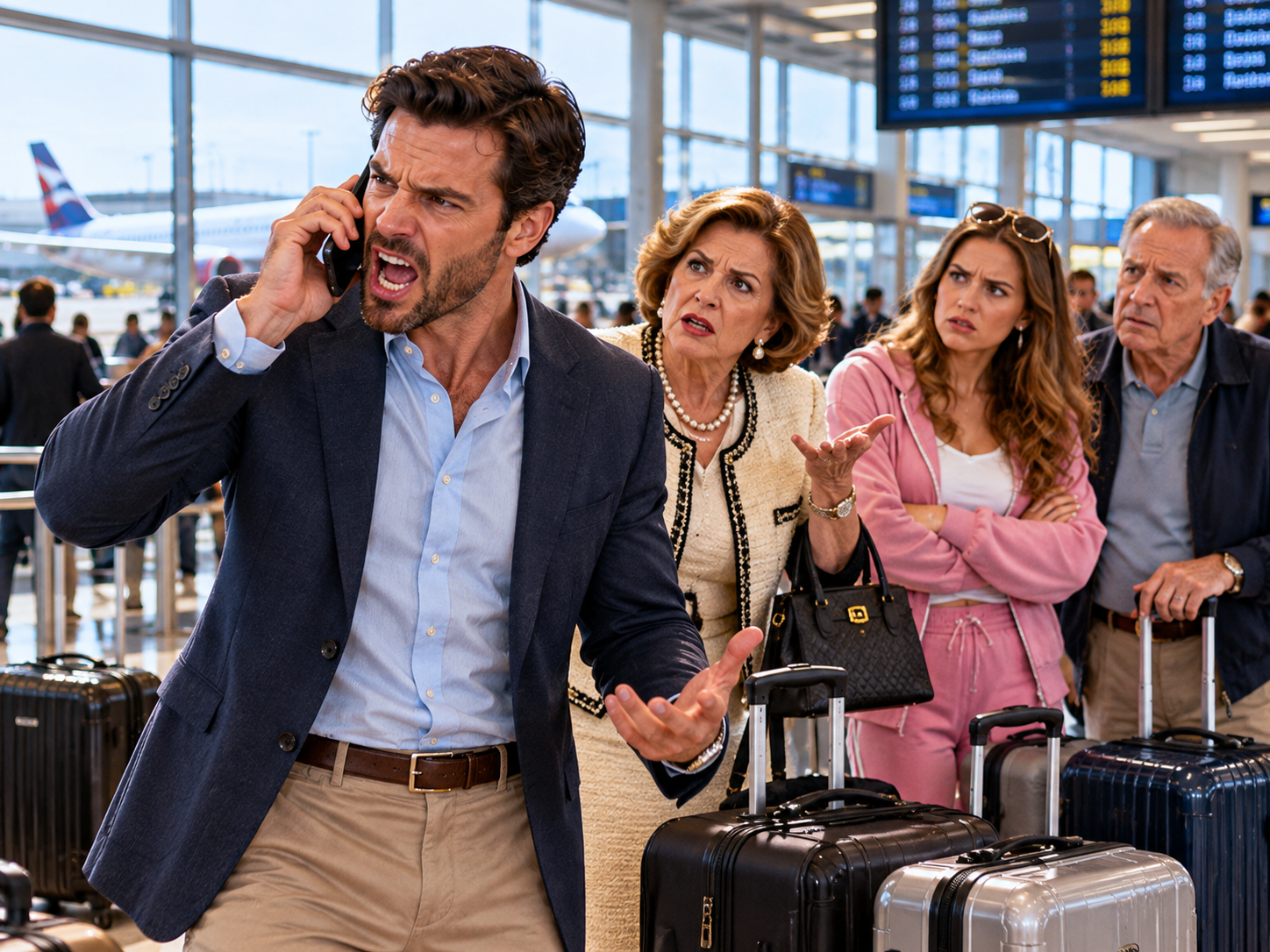
At the airport, I found a seat near the window and watched planes move slowly across the runway. The memory of Mauro's call from Vail surfaced without warning. I could still remember the urgency in his voice, the anger behind his demand that I reactivate the Platinum card, and the threat he had made when I refused. At the time, I had been sitting in my own home, trying to understand how a family vacation had become my responsibility without my consent. The scene had changed the direction of my life because it exposed something I had spent years explaining away. Mauro had not merely made a poor decision. He had assumed that my resources were available to him and that my refusal could be overcome by pressure. Remembering the call still hurt, but it no longer made me doubt the decision I had made afterward.
When the plane took off, I watched Chicago disappear beneath the clouds. I had chosen a quiet destination where I could walk, read, and spend time outdoors without organizing every hour. There were museums I wanted to visit, restaurants I had saved in a list, and long stretches of free time deliberately left unplanned. I had initially worried that traveling alone would make me feel lonely. Instead, as the plane climbed above the clouds, I felt a small but unmistakable sense of possibility. Nobody was waiting for me to solve a problem. Nobody was silently calculating what the trip might cost them. I could decide what to do when I arrived, change my plans if the weather turned, and spend an afternoon reading in a café if I preferred. These were ordinary choices, yet they felt newly precious.
My first day went more smoothly than I expected. I checked into the hotel, unpacked, and walked through the surrounding neighborhood before dinner. I stopped at a bookstore, bought a novel, and ate at a small restaurant where I chose a table beside the window. The food was good, and the server was friendly. Nobody asked why I had come alone or suggested that I should feel uncomfortable about it. I enjoyed the meal slowly, noticing details I might once have overlooked: the warm light above the counter, the conversations at nearby tables, and the sound of rain beginning against the glass. After dinner, I walked back to the hotel beneath an umbrella and felt genuinely content. It was not the kind of happiness that required a photograph or a public announcement. It was a quiet satisfaction that belonged entirely to me.
The following morning, I received a message from Daniel asking whether I could approve a routine business expense. I reviewed the request, confirmed that the supporting documentation was complete, and approved it. He thanked me and said the team had everything else under control. I closed the email and put my phone away. That brief exchange reassured me that I could remain a responsible business owner without being constantly available. I had once believed that if I did not supervise every detail, something would go wrong. The company had grown stronger as we clarified responsibilities and improved our systems. Trusting Daniel and the team to handle ordinary decisions was not negligence. It was part of good leadership. I spent the rest of the morning visiting a museum, where I moved through the exhibits at my own pace without checking the time or wondering whether someone was waiting impatiently for me to finish.
In the afternoon, I sat in a café and opened my notebook. I had brought it because I wanted to record a few thoughts during the trip, but I had not planned what to write. At first, I listed places I had visited and meals I had enjoyed. Then I began writing about the past year: the missing card, the airport confrontation, the legal documents, the independent company review, and the gradual return of peace to my home. I did not write the events as a list of grievances. Instead, I tried to identify what had changed in me. I had become more careful about separating facts from assumptions. I had learned to preserve records instead of relying on memory during emotional arguments. I had also learned that I could say no without explaining myself endlessly. Those lessons had come at a cost, but they were no longer merely painful memories. They had become practical knowledge I could use.
That evening, Jamie sent me a photograph of a dish she had prepared at home. She wrote that she had been trying to learn a few simple recipes and wanted to know whether I had any suggestions. I replied with an easy recipe and a reminder to prepare the ingredients before starting. She thanked me and said she was discovering that planning made cooking less stressful. We exchanged a few messages about food, and the conversation ended naturally. I smiled at the phone before putting it away. Our relationship had not returned to what it had once been, and perhaps it never would. But we were beginning to communicate without treating every exchange as an argument about money or loyalty. I could appreciate that progress without assuming it guaranteed anything about the future.
On the third day, I received a message from Mauro. He had heard from Daniel that I was away and hoped I was enjoying the trip. He did not ask where I was staying or suggest that I should have told him before leaving. I replied that I was having a good time and thanked him for the message. He answered that he was glad. The exchange was brief, and I felt no need to interpret it as a hidden request. Perhaps he genuinely wished me well. Perhaps he was trying to establish a more civil relationship. Either possibility was acceptable. I did not need to decide what it meant. I returned to my notebook and continued writing about the trip, allowing the message to remain a small, courteous moment rather than turning it into the beginning of a new conversation about our marriage.
Later that afternoon, I visited a public garden. The paths were damp from earlier rain, and the trees stood nearly bare against the gray sky. I walked slowly, stopping whenever something caught my attention. At one point, I found a bench overlooking a small pond and sat for almost half an hour without doing anything in particular. During the marriage, I had often treated unstructured time as a problem to be solved. If I was not working, I was planning, organizing, or anticipating what someone else might need. Even my rest had become something I tried to earn by finishing every responsibility first. Sitting beside the pond, I realized that I did not have to justify every quiet moment. I could simply be there, breathing the cold air and watching the water move beneath the wind. No one needed anything from me, and I did not need to manufacture a reason to enjoy the afternoon.
That evening, I called a close friend who had encouraged me to take the trip. She asked whether I was feeling lonely. I told her there were moments when I missed having someone to share an experience with, but the feeling was not the same as wanting my marriage back. I missed companionship, not the constant negotiation that had replaced it. I missed being able to share a joke with someone who knew my history, but I did not miss worrying that a disagreement might turn into a financial demand or a threat. My friend said it was possible to grieve what had been missing while also being grateful to have left what was hurting me. I wrote the thought in my notebook after we hung up. It captured something I had struggled to explain to myself: the absence of Mauro was not the same as the absence of love from my life.
On the fourth morning, I received a call from Patricia. I nearly let it go to voicemail, but I answered because I wanted to know whether something practical had happened. She asked how I was and whether the trip was going well. Her tone was more restrained than it had been during the months following the divorce. I told her I was enjoying the time away. She said she hoped I was getting some rest and then asked whether I might be willing to attend a family gathering later in the season. I told her I could not make that decision during the call, but I would consider any invitation when the details were clear. Patricia accepted the answer without insisting that I promise to attend. We spoke briefly about the weather before ending the call. I was surprised by how ordinary the conversation had been. It did not repair our relationship, but it showed that we could speak without immediately returning to the house or the company investigation.
When I returned to my hotel room, I considered whether I had been too guarded. There was a time when I would have felt guilty for not giving Patricia a more enthusiastic response. I might have promised to attend simply to prevent her from feeling rejected. But I had learned that a promise made to avoid discomfort often created a larger problem later. I could consider the invitation honestly when it arrived and decide based on my own circumstances. That was fairer to both of us than saying yes while secretly hoping for an excuse to withdraw. I did not need to punish Patricia for her earlier behavior, and I did not need to reward her improved tone with an immediate return to family events. Relationships could develop at the pace that trust allowed.
My final full day was spent walking through a neighborhood market and buying a few small gifts for friends. I chose them because they reminded me of the people who had supported me, not because I felt obligated to prove my gratitude through spending. I had become more conscious of the difference between generosity and financial pressure. Generosity was something I chose to offer. Pressure was something another person tried to impose. The distinction had been blurred during the marriage, especially when Mauro or his family described my refusal as selfishness. Now I could give a gift because it pleased me, or decline a request because it did not suit my circumstances, without treating either choice as a verdict on my character. I packed the gifts carefully and spent the evening reading in the hotel lounge before preparing for my return.
On the flight back to Chicago, I opened my notebook and read the pages I had written during the trip. The notes were not profound, and many were simple observations about places, food, and conversations. Yet I could see a change in the way I described myself. I was no longer writing as though every decision needed to be defended against an invisible critic. I was writing about what I liked, what I noticed, and what I wanted to do next. I had not become a different person. I was rediscovering parts of myself that had been pushed aside by years of managing conflict. When the plane began its descent, I looked out at the familiar landscape and felt ready to return home. I had enjoyed being away, but I was also glad to come back to a place that no longer felt like the setting of an unfinished argument.
The house was warm when I arrived. I unpacked, put the gifts away, and checked the mail. There were ordinary bills, a company document Daniel had forwarded for my records, and a postcard from a friend. Nothing demanded immediate attention. I made a simple dinner and ate at the kitchen table, then sat in the living room with my book. I noticed how different the room felt from the days when I had been waiting for Mauro and his family to return from Vail. Back then, the house had seemed full of their expectations even when they were not present. Now it felt like a place where I could choose how to spend an evening. The change had not come from replacing the furniture or erasing every memory. It had come from repeatedly choosing not to surrender my peace whenever someone else wanted something from me.
The next morning, Daniel called with a routine update about the company's quarterly plans. The new project was progressing, and the team had completed the latest documentation checks. He asked whether I had enjoyed my time away. I told him I had and thanked him for handling the business while I was gone. He said the team appreciated the trust and that the systems we had introduced made it easier to keep work moving without unnecessary delays. I was pleased to hear it. I had once feared that stepping back would weaken my control over the company. Instead, clearer responsibilities had made the organization more effective. The same principle applied to my personal life: allowing other adults to take responsibility for their own choices did not mean abandoning them. It meant recognizing where my responsibility ended.
A few days later, Jamie invited me to lunch again. I accepted, and we met at a restaurant near her workplace. She told me that she had begun keeping a separate savings account for travel and unexpected expenses. She said she wanted to avoid depending on family members whenever her plans cost more than expected. I encouraged her to keep the habit and suggested that she build a small reserve before making expensive commitments. She thanked me and said she understood why I had been so firm about the Vail trip. I did not press her to explain further. Her choices were her own, and I was glad she was thinking more carefully about them. We talked about her work and a course she was considering taking, then said goodbye. Our relationship remained cautious, but it was becoming more balanced.
Mauro sent a message later that week asking whether I had enjoyed the trip. I replied that I had. He said he was glad I had taken time for myself and that he had not realized how long it had been since I had gone somewhere without worrying about everyone else's plans. The observation was accurate, and I appreciated that he had noticed. But I did not take it as a promise that our relationship could be restored. Awareness was useful, yet change required more than a moment of understanding. I thanked him for the message and said I hoped he was doing well. He replied that he was working on getting his affairs in order. I wished him success. We left the conversation there, without a demand for a meeting or an invitation to discuss the marriage.
Over the following weeks, I began planning another short break for later in the year. I chose dates that would not interfere with the company's major deadlines and discussed the schedule with Daniel. We reviewed the staffing plan and confirmed that the team could manage routine decisions while I was away. I booked the trip only after checking the costs and making sure the arrangements suited my preferences. The process was simple, but I enjoyed every step. It reminded me that planning could be an expression of freedom rather than an effort to prevent conflict. I was not waiting for Mauro to agree, Patricia to approve, or Jamie to join. I was making a decision about my own time and accepting responsibility for it.
One evening, I took the trust documents from the cabinet and reviewed the file briefly. I had no reason to question the legal arrangements, but I wanted to ensure that everything remained organized and accessible if needed. The documents were exactly where they should be. I placed them back in the cabinet and closed the drawer. I thought about Patricia's threat that she would kick me out of the house when the family returned from Vail. The threat had been powerful because she had delivered it with complete confidence. She had assumed that the family's expectations mattered more than the legal arrangements my grandfather had established. The documents had protected the property, but my response had protected something else. I had stopped allowing another person's certainty to override my own understanding of the facts. That lesson would remain useful long after the argument itself had faded.
The company continued to grow steadily. Daniel and I reviewed a proposal for a new client and agreed to proceed after adjusting the timeline to reflect the team's actual capacity. The decision was not the most ambitious option available, but it was the one we could support with evidence and careful planning. I felt proud of the discipline behind it. In the past, Mauro's confidence had sometimes made me feel that caution was a lack of ambition. I now understood that thoughtful limits could protect opportunity rather than diminish it. The business did not need grand promises to succeed. It needed reliable work, sound decisions, and people who were willing to acknowledge when more information was necessary. Those were the standards I intended to keep.
On a quiet Sunday, I sat at the desk and reread the note I had written before my trip: An apology can acknowledge the past. It cannot decide the future for me. Beneath it, I added another sentence: Peace is not the absence of disagreement; it is the freedom to make a decision without fear. I closed the notebook and looked out the window at the garden. The sentence did not mean I would never feel anxious again or that every relationship would become easy. It meant that I no longer wanted to build my life around preventing other people from becoming upset. I could listen, consider, and respond thoughtfully. I could admit when I was wrong. I could also say no and accept that someone might dislike the answer. That was a healthier foundation for any relationship I might build in the future.
When the next family invitation arrived, I read it carefully and considered the circumstances before responding. Patricia had provided the details in advance and made no demand that I attend. I decided not to go because I already had plans with friends, and I explained that politely. She replied that she understood and hoped we could meet another time. There was no threat about the house, no accusation that I was destroying the family, and no suggestion that my refusal made me ungrateful. I was relieved by the exchange, but I did not treat it as proof that every problem had been resolved. It was simply an example of a boundary being respected. I hoped the pattern would continue, and I knew what I would do if it did not. That was enough.
At the end of the month, I hosted dinner at the house again. My friends arrived with food, and we shared the work of preparing the meal. The conversation moved from business to travel to an amusing story about a delayed train. I laughed more than I had expected, and when the evening ended, I felt tired in the pleasant way that follows a good gathering. After everyone left, I stood in the kitchen and looked at the empty plates. I remembered the Christmas dinners with Mauro's family, when I had sometimes paid for expenses without discussion and then accepted criticism when I declined a later request. Those memories still carried sadness, but they no longer defined what hospitality meant to me. I could open my home because I wanted to share it, not because I needed to earn my place in a family.
Before going to bed, I walked through the house and turned off the lights. The rooms were quiet, the legal documents were secure, and the company was moving forward. My relationships with Mauro's family were imperfect but more respectful than they had been during the immediate aftermath of the divorce. I did not know whether they would continue improving. I did not need to know tonight. I had work I cared about, plans I had chosen, and enough time to discover what I wanted my next chapter to look like. I no longer waited for Mauro to explain the past correctly before allowing myself to enjoy the present. I no longer waited for Patricia to acknowledge the trust before feeling secure in the house. I no longer waited for Jamie to understand every boundary before speaking to her with courtesy.
The trip had taught me something I could not have learned from the trust documents or the accounting report. Those things had protected my property and clarified the facts, but the journey had shown me how to occupy my own life again. Freedom was not merely being alone without conflict. It was being able to choose companionship when I wanted it, solitude when I needed it, and responsibility without taking ownership of everyone else's choices. I could love people without financing every plan, forgive without returning to the marriage, and remain fair without allowing myself to be pressured into silence. The house was still mine to inhabit according to the trust's terms, the company was still mine to lead through responsible decisions, and my future no longer depended on whether Mauro's family approved.
I closed the bedroom door and settled into bed, feeling the ordinary tiredness of a day well spent. There was no need to review messages, rehearse arguments, or imagine what might happen if someone became angry tomorrow. If a problem arose, I would handle it when it arrived. I had the documents, the professional support, the experience, and the confidence to respond. More importantly, I had learned that I did not need to sacrifice my peace to prove that I was a good person. My generosity could remain generous because it was chosen freely. My boundaries could remain firm because they were not punishments. And my life could continue growing, even if some people never fully understood why I had chosen to leave the old one behind.
Click here to continue reading: PART 14: The New Life I Built Did Not Need Their Permission or Their Approval
My Husband Took My Card Without Permission, Unaware That One Call Would Destroy Everything He Thought He Owned
Part 13 of 20

