
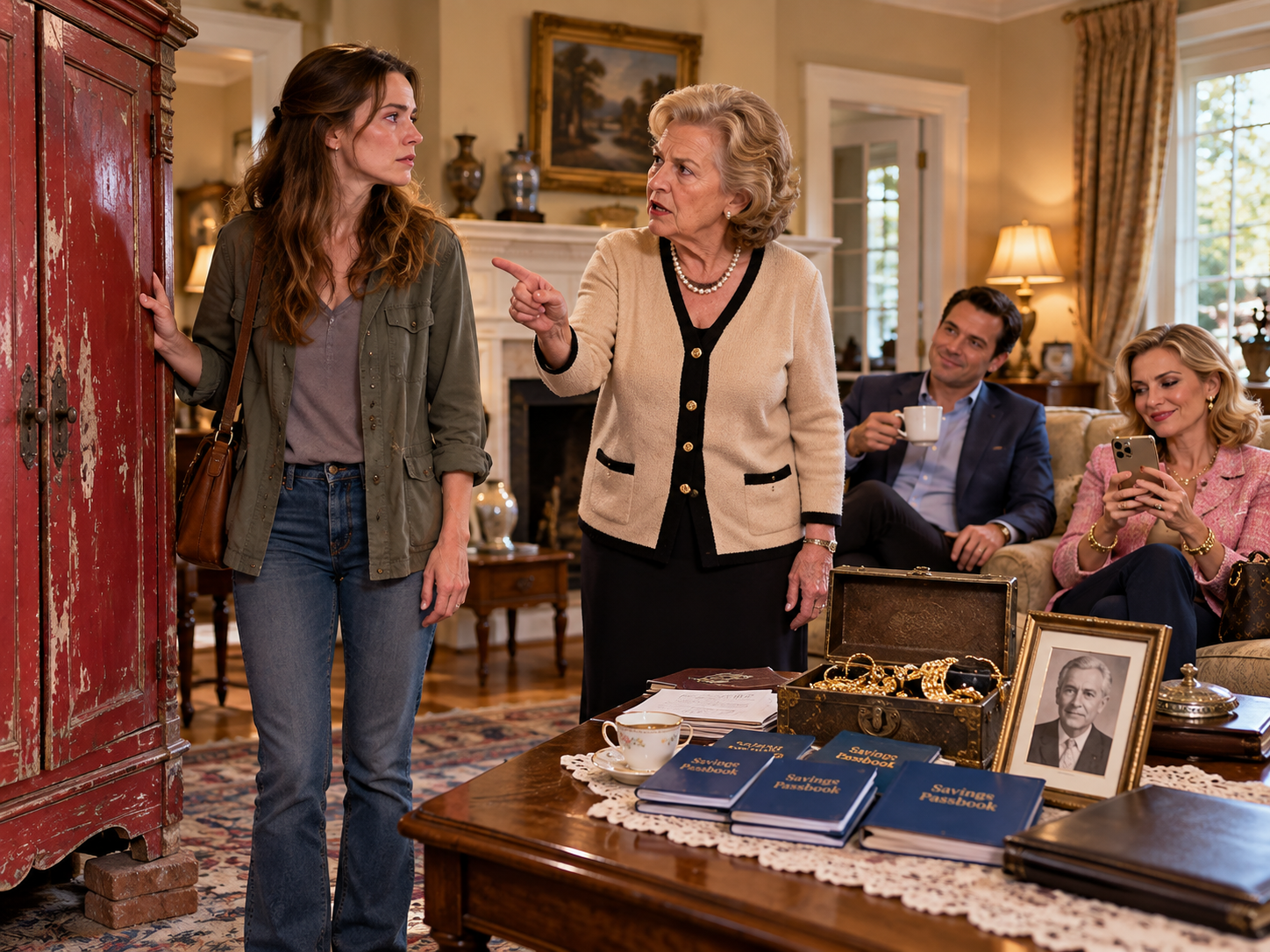
I didn't announce that I was leaving. Not at first. I wanted to be certain I wasn't making a decision simply to punish Callum for the spreadsheet. I also knew that if I raised the subject in the kitchen, Tessa would likely explain how much pressure she was under, and I would find myself reassuring her before I had finished speaking.
Instead, I began looking at the arrangement as if it belonged to someone else.
I had agreed to six weeks. I had brought enough clothes for six weeks. I had left my house in working order, paid my bills, and arranged for a neighbor to collect the mail. There was no practical reason I couldn't return home. The only thing keeping me in Callum's guest room was the fear that leaving would disappoint people I loved.
I had spent five years learning to live without Ray. I had managed the paperwork after his death, sat through holidays when his chair remained empty, and learned to make decisions without turning toward him for a second opinion. I could survive a quiet house again.
What I wasn't sure I could survive was continuing to be welcomed as family only when someone needed something.
The next day, I checked the school’s pickup information. My name was listed as an authorized contact for both children, and beside it was a note stating that I would provide regular transportation on weekdays. I called the office and explained that I was a temporary visitor, not a permanent childcare arrangement. The administrator was kind and matter-of-fact. She asked whether I wanted my name removed entirely or whether I preferred to remain an emergency contact.
I thought for a moment.
“Please remove me from the regular pickup schedule,” I said. “I can remain listed for emergencies, but the parents will need to provide the routine arrangements.”
“Of course,” she replied. “Would you like us to send the updated form to Callum and Tessa?”
“Yes, please.”
It felt strange to make the call. The school secretary hadn't done anything wrong, and I could hear the keyboard tapping as she updated the records. But when we finished, I sat in the car for a moment with both hands on the steering wheel.
I had changed one small thing that belonged to me.
Afterward, I printed the children's activity numbers, the school office number, and the contact details for their pediatrician. I put the pages in a folder and left it on the kitchen counter. I also gathered the receipts for groceries and household supplies I had purchased during my stay. I wasn't planning to demand repayment. I simply wanted to stop pretending I couldn't remember what I had paid for.
My emergency credit card, which Callum had asked to borrow for a bakery supply order when his own card had been declined, was still in the drawer beside the refrigerator. I took it back and slipped it into my wallet. He had promised to return the money as soon as the bakery's next payment cleared. I trusted that he would. But I didn't want my name attached to another expense I hadn't chosen.
That afternoon, Tessa opened the family calendar and found the changes I had made.
She came into the kitchen holding her phone.
“Why did you remove yourself from the pickup schedule?”
“I won't be doing regular school pickups after I leave.”
Her face tightened. “After you leave?”
“I've told you I was staying six weeks. I'm going home.”
She stared at me, then looked at the calendar again as though the words might change if she refreshed the screen.
“We haven't even opened properly yet.”
“You have the preview behind you. The bakery opens Saturday.”
“Exactly. Saturday. This is the worst possible time.”
I set down the dish towel I was folding.
“I know the timing is difficult.”
“Then why would you do this now?”
“Because I'm not staying until December.”
She looked at me for a long moment. “Did Callum show you that budget?”
“He didn't have to. I saw it in the printer tray.”
“That was an internal planning document.”
“It had my name on it.”
“It was a projection, Lenora. It wasn't some contract.”
“No, it wasn't a contract. It was a plan made without me.”
Tessa pressed her lips together. Her mother had appeared in the doorway, holding her binder against her chest.
“We're all under pressure,” Maris said. “No one is trying to take advantage of you.”
“I didn't say you were.”
“You're behaving as if we deliberately insulted you.”
I looked at her. “You have a paid consulting arrangement with Tessa. You know what your time is worth, and you've made sure the bakery recognizes it. I respect that. But my time has been treated as if it costs nothing because I'm family.”
Maris shifted the binder from one arm to the other.
“That's not a fair comparison. I invested in this business. I have experience that Tessa needs.”
“I agree. Your work should be paid.”
“Then you understand.”
“I understand more than you think.” I kept my voice low. “I also understand that looking after two children, making meals, driving all over town, and keeping a household running takes time. I was willing to help. I was never asked to take responsibility for everything through Christmas.”
Tessa let out a breath and looked at the ceiling.
“We didn't realize you felt this way.”
I nearly laughed, but there was no humor in it. The notebook, the canceled coffee, the red blocks on the calendar, and the spreadsheet had all been there. I had tried to speak about one boundary, then another. Each time, the problem had been framed as my reaction rather than the decision that caused it.
“I told you I wasn't available Thursday,” I said. “You put me on the calendar anyway.”
“That was because the photographer changed the shoot.”
“And I canceled my plans.”
“Which was your choice.”
The words stung because they were technically true. I had canceled. I had said yes. I had driven the lunches to the bakery. I had made it easy for them to assume that the next request would be accepted too.
“Yes,” I said. “It was my choice. I'm making a different one now.”
Maris gave a small, dismissive shake of her head.
“Families have to be flexible.”
“Flexibility works when everyone is expected to bend. It doesn't work when one person is always the one bending.”
Tessa turned away and began typing on her phone. I couldn't tell whether she was responding to a bakery message or trying to avoid looking at me.
That evening, Callum came home with a bag of groceries and the tired, distracted expression he had worn for weeks. He found the folder on the counter and saw the updated school information.
“Mom, what's all this?”
“Numbers you'll need when I'm not here.”
He set the grocery bag down.
“Can we talk?”
“We can.”
He glanced toward the living room. Tessa was on the sofa with her laptop open, and Maris was at the table checking something in her binder. Callum lowered his voice.
“I know the budget upset you. I should have spoken to you first.”
“Yes.”
“I was going to.”
“After the opening.”
He looked down. “I thought if we got through the next few weeks, things would calm down.”
“And what would happen then?”
“We'd figure it out.”
“Would you have asked me to stay until December?”
He was silent long enough to answer.
I pulled out a chair and sat. “Callum, I know you love me. I love you too. But I need you to understand what you did. You didn't ask for help and wait for me to decide. You made a plan that depended on me saying yes, then avoided the conversation because you thought I might say no.”
He rubbed both hands over his face.
“I know it sounds bad.”
“It feels bad.”
“I wasn't trying to hurt you.”
“I believe that. But you don't have to intend to hurt someone for your choices to hurt them.”
He sat opposite me. For a while, neither of us spoke. I could hear Tessa typing in the next room and the faint clatter of dishes from the dishwasher.
“Do you want me to talk to Tessa?” he finally asked.
“I want you to take responsibility for the arrangements in your own household. I'm not asking you to choose between your wife and me. I'm asking you not to make me the solution to every problem.”
He nodded, though I wasn't sure how much of it he understood.
The following morning, I began packing in earnest. I folded my sweaters into the suitcase and put my toiletries in a small bag. I checked beneath the bed for the book I had dropped there and found it still open to the same chapter. I closed it and slipped it into the side pocket.
Downstairs, the bakery's opening checklist lay across the island. Tessa had added a new set of tasks to the family calendar, including a weekend's worth of childcare and deliveries. The assignments had appeared under my name without a message or a question.
I stared at them for several seconds.
Then I deleted them.
Tessa found me in the kitchen a few minutes later.
“Did you remove my calendar changes?”
“They were assignments for me. I didn't agree to them.”
“You can't just erase things because they're inconvenient.”
“I can remove my name from work I haven't agreed to do.”
Her eyes narrowed. Maris sat nearby, turning a page in her binder but no longer pretending not to listen.
“I have a business opening in two days,” Tessa said. “Callum has work. My mother has meetings. The kids have school. We need you.”
“You need childcare and delivery help. Those are different things from needing me.”
“What's that supposed to mean?”
“It means you can hire someone for the deliveries. You can arrange a sitter. You can ask Callum to adjust his schedule. You have options. They may cost money or require planning, but they're your responsibilities to manage.”
Tessa's cheeks colored.
“We cannot afford to hire someone for everything.”
“Then you need to decide what you can afford.”
She looked at me as if I had spoken a foreign language.
“This is my house, my kids, and my business, Lenora. I need you to remember who is in charge here.”
The room went quiet. Maris's pen stopped moving. I could see the faint reflection of the kitchen window in the dark screen of my tablet.
For weeks, I had tried to make myself smaller whenever Tessa was stressed. I had told myself she was exhausted, that she didn't mean to sound demanding, that the bakery was a temporary emergency. I had taken every request as proof that I mattered.
But she had just told me, plainly, that this was her household and her responsibility to direct. She was right about the ownership. She was right about the children. She was right that the bakery belonged to her.
And if it was hers to run, then the work of running it could not quietly become mine simply because I was willing to help.
I picked up the tablet, looked at the calendar once more, and nodded.
“You're right.”
Tessa blinked. She seemed ready to answer, but the argument she had expected never arrived.
I turned and walked toward the stairs.
Behind me, Maris said something too softly for me to hear. Tessa didn't reply.
In the guest room, I pulled the suitcase onto the bed and opened the lid. I added the last sweater, tucked the notebook between the pages of my paperback, and zipped the case shut.
Then I sat on the edge of the bed and looked around at the room I had been treating as my place in the family. My suitcase had never been unpacked completely. My clothes occupied one drawer. My shoes stood in a neat row beside the closet. I had made myself comfortable enough to serve them, but not so comfortable that I had stopped being a visitor.
I took a slow breath and stood.
The next morning, I would go home.
Click here to continue reading: PART 4: Two Weeks After I Left, the Receipts Added Up to Nearly $1,850—and My Son Finally Understood
My Name Was Already Written Into Their Future, Though Nobody Had Ever Asked Me to Stay
Part 3 of 20

