
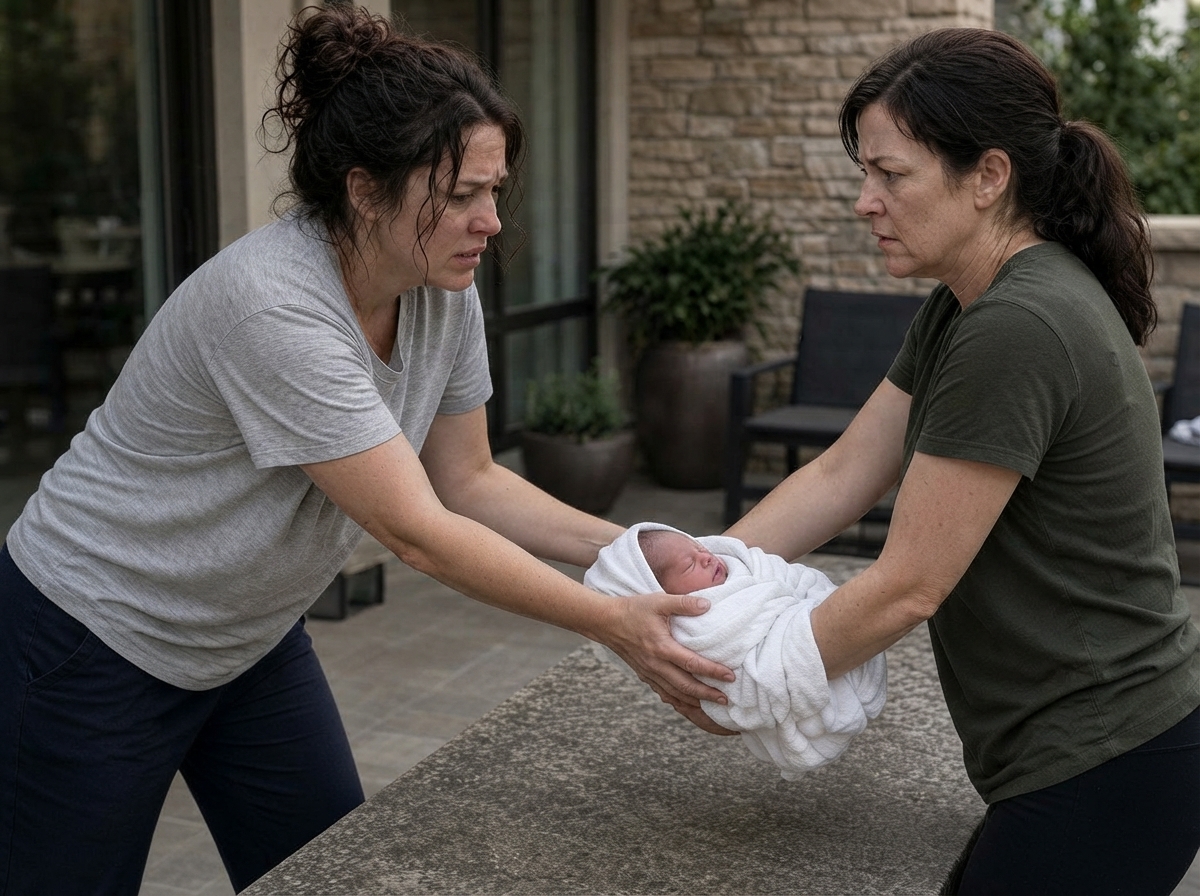
NOTE: The final part resolves the remaining questions, explains Daniel’s last actions, establishes the true outcome of the case, and shows how Emma and her family rebuild their lives after the truth comes out.
The final evidence arrived three months later.
By then, I thought there could be nothing left to surprise me.
I was wrong.
Detective Harris came to my house carrying a thin envelope.
“I think your father wanted you to have this.”
I stared at it.
“What is it?”
“A letter.”
“Another one?”
He nodded.
“Found inside the second ledger.”
I sat down.
My hands were shaking before I even opened it.
The paper was old.
Daniel's handwriting covered the page.
Emma,
If you're reading this, then everything happened faster than I expected.
I don't know whether I'll be here when you read it.
I want you to understand something before you learn the details.
I was never afraid of losing money.
I was afraid of losing the people I loved.
That was why I kept investigating.
Not because I believed I could defeat everyone.
Because I believed you deserved to know the truth.
I stopped reading.
Daniel had written about the hospital.
He knew Reed was manipulating records.
He knew Victor was moving money.
He suspected Robert had become compromised.
He knew Hart was frightened.
And he knew my mother was vulnerable.
But then came the part I had never expected.
He had known about the temporary confusion involving Lily and Amelia before it happened.
Not because he had planned it.
Because he had been warned.
Eleanor had contacted him.
She told him someone intended to exploit a hospital error if one occurred.
Daniel tried to prevent it.
He couldn't.
The identification problem happened.
The hospital corrected it.
But Reed saw an opportunity.
He created the false story afterward.
Daniel wrote:
I am sorry, Emma. I should have told you everything.
I looked at the page through tears.
He knew his silence could hurt me.
He had simply believed that keeping me uninvolved would keep me safe.
He had been wrong.
The letter continued.
Your mother will probably believe she is protecting you. If she becomes afraid, remind her that fear is not proof.
I thought of the bathroom.
The boiling water.
My mother's hands.
The moment I had looked at her and no longer recognized the woman who raised me.
Then I reached the final paragraph.
If I fail, don't spend your life trying to punish everyone who hurt us. Find the truth, protect your children, and build something better.
I closed the letter.
For the first time, I understood that my father's final gift was not evidence.
It was permission.
Permission to stop living inside his fear.
The court reached its final decisions months later.
Victor received a lengthy sentence.
Reed was convicted for his role in the medical-record scheme and related offenses.
Vale received reduced consequences in exchange for substantial cooperation.
Hart faced professional and legal consequences for his misconduct.
Robert was convicted after the financial evidence established his participation.
Margaret cooperated with prosecutors and accepted responsibility for the money she had moved.
The court treated my mother's case separately.
Her actions toward Lily could not be dismissed simply because someone had manipulated her.
She received a sentence that included supervised treatment and restrictions on contact.
I visited her once after sentencing.
She looked at me through the glass.
“I don't want Lily to remember me this way.”
“She won't.”
“How do you know?”
“Because she's going to grow up knowing that people can make terrible mistakes and still choose to change.”
My mother cried.
“Are you saying that about me?”
“I don't know yet.”
She nodded.
“That is fair.”
It was the most honest answer I could give.
Time passed.
Lily healed.
The doctors monitored her skin.
The scars faded.
She was too young to remember the worst day of her life.
That was a mercy.
I remembered for her.
But I refused to let the memory become her identity.
Sophie and Amelia remained close.
The two girls grew up knowing they had shared the same frightening beginning.
They were not sisters by blood.
But that distinction mattered less with every passing year.
Families are not always created by biology.
Sometimes they are created by surviving something together.
Noah became fiercely protective of both girls.
He also developed an annoying habit of checking every locked door.
I teased him about it.
“You're becoming like Grandpa.”
He smiled.
“Grandpa was smart.”
“He was.”
“Then I'm smart too.”
“Sometimes.”
He laughed.
The house changed.
We replaced the bathroom fixtures.
The old basin was removed.
The kettle was thrown away.
The bathroom became ordinary again.
That mattered.
I didn't want a room in my own home to become a monument to fear.
For months, I avoided looking at the place.
Eventually, I stood there one morning while Lily played with a bath toy.
She splashed water.
I froze.
Then she laughed.
I laughed too.
I realized I had been waiting for the memory to disappear.
It never would.
But memories don't always have to remain wounds.
Sometimes they become warnings.
Sometimes they become lessons.
Sometimes they become proof that you survived.
The hospital also changed.
An independent review uncovered additional record problems.
Families were contacted.
Several old cases were reopened.
The hospital implemented new procedures.
Karen testified during the investigation.
She told the truth about everything she had seen.
When I thanked her, she shook her head.
“I should have spoken sooner.”
“Maybe.”
“I was afraid.”
“I know.”
“What finally made you speak?”
I thought about it.
“Probably the same thing that finally made everyone speak.”
“What?”
“Someone decided the truth was more important than being comfortable.”
Karen smiled.
“That sounds like your father.”
“It does.”
One year after the case ended, I visited Daniel's grave.
I brought Lily.
She was old enough to walk now.
She held my hand.
“Who is that?”
“Your grandfather.”
“Where is he?”
I knelt beside her.
“He isn't here the way we are.”
She looked confused.
“But you remember him?”
“Every day.”
“What was he like?”
I smiled.
“He asked too many questions.”
She laughed.
“That sounds like Noah.”
“Yes.”
I touched the gravestone.
“He believed people should know the truth.”
Lily looked at the stone.
“Why?”
“Because then they can choose.”
She didn't understand.
Not yet.
But one day she would.
I placed flowers beside the grave.
Then I told her something else.
“Your grandfather loved you before he ever met you.”
“How?”
“Because he knew you were coming.”
She smiled.
I cried quietly.
Not from grief alone.
From gratitude.
My father had never gotten to hold Lily.
But he had fought for her.
He had protected her future without ever knowing what her face would look like.
That was enough.
Later that evening, I opened the box containing his letters.
I found the original photograph of Lily and Amelia.
For years, I had hated it.
Now I understood what it represented.
Not a stolen identity.
Not a broken family.
A moment when a mistake could have become a weapon.
The weapon failed.
The truth survived.
I placed the photograph beside Daniel's final letter.
Then I added Noah's blue key.
Three objects.
A photograph.
A letter.
A key.
Each had once been part of a mystery.
Now they were simply pieces of history.
My mother eventually completed her sentence and entered a supervised rehabilitation program.
Our relationship remained cautious.
But it changed.
She learned not to make decisions for me.
She stopped telling me what I needed to believe.
When she was afraid, she said she was afraid.
When she didn't know something, she said she didn't know.
That was a bigger change than any apology.
One afternoon, she asked:
“Do you trust me?”
I thought carefully.
“I trust what you do now.”
She nodded.
“That is enough.”
It was.
Trust wasn't something she could demand.
It had to be rebuilt.
Piece by piece.
The same way the truth had been rebuilt.
Piece by piece.
I never learned exactly what happened to Eleanor in her final days.
The investigation into her death found no conclusive evidence that it was anything other than an accident.
That uncertainty remained.
I accepted it.
Not every question receives an answer.
Sometimes the honest ending is admitting what we don't know.
That lesson mattered too.
For years, I had believed certainty would make me feel safe.
It didn't.
Facts did.
Evidence did.
Honesty did.
But certainty about everything was impossible.
I didn't need to know every detail of the universe.
I needed to know what was true about my own life.
Lily was my daughter.
No one had stolen her.
My mother had harmed her.
My father had tried to protect her.
Reed had manipulated records.
Victor had orchestrated financial fraud.
Vale had assisted.
Robert had betrayed Daniel's trust.
Hart had failed in his duty.
Karen had eventually told the truth.
And I had survived.
Those facts were enough.
Years later, when Lily was old enough to understand the full story, I told her.
Not all at once.
Not the frightening details.
But gradually.
I told her that someone had once tried to make our family believe a lie.
She asked:
“Why?”
“Because they wanted something.”
“What?”
“Money.”
She frowned.
“People hurt babies for money?”
“Some people make terrible choices.”
She thought about that.
“Was Grandma bad?”
I paused.
“Your grandmother made a terrible choice.”
“Is she still Grandma?”
“Yes.”
Lily smiled.
“Then people can make mistakes and still be family?”
I felt tears in my eyes.
“Yes.”
That was the truth I had needed to learn.
Family wasn't about pretending nothing terrible had happened.
It was about deciding what to do after something terrible happened.
We chose honesty.
We chose boundaries.
We chose accountability.
And eventually, we chose healing.
Not forgetting.
Healing.
On the anniversary of the day everything began, I woke before sunrise.
The house was quiet.
I walked into the kitchen.
The old fruit bowl was gone.
The basin was gone.
The kettle was gone.
But sunlight came through the window.
I stood there for a long time.
Then I heard footsteps.
Noah entered.
“You're awake early.”
“So are you.”
He shrugged.
“I wanted breakfast.”
I smiled.
“What do you want?”
“Pancakes.”
“Of course.”
Lily appeared behind him.
“Pancakes!”
I laughed.
Within minutes, the kitchen was noisy.
Flour covered the counter.
Milk spilled.
Someone dropped a spoon.
Normal life.
Beautiful, ordinary life.
I looked at my children.
For so long, I had thought the story was about the day everything nearly went wrong.
It wasn't.
It was about what we did afterward.
The truth didn't erase what happened.
It didn't bring my father back.
It didn't undo Lily's pain.
It didn't make my mother innocent.
It didn't repair every relationship.
But it gave us something the people behind the conspiracy had tried to take.
Choice.
We could decide who we trusted.
We could decide what boundaries we needed.
We could decide how to raise our children.
We could decide what kind of family we wanted to become.
And we could decide not to repeat the silence that had nearly destroyed us.
That was my father's final lesson.
That was Noah's first lesson.
And that became Lily's inheritance.
Not money.
Not the trust.
Not the photographs.
The truth.
Because the day my mother stood over my newborn daughter with a kettle of boiling water, I thought my family had been destroyed.
I was wrong.
That was the day the lies finally became impossible to ignore.
The truth had been buried for years.
But it had never disappeared.
It waited in notebooks.
Photographs.
Recordings.
Letters.
And in the memory of people who were finally brave enough to speak.
Most importantly, it waited in a frightened child's willingness to say:
Something is wrong.
And in a mother's decision to listen.
That was where our story truly began.
Not with the boiling water.
Not with the hospital.
Not with the money.
Not with the conspiracy.
With listening.
And after everything we had survived, I knew one thing for certain.
I would never stop listening again.
The End
Read more original stories on Feel Every Story.
The Moment I Realized My Mother Was Not Cleaning My Baby, I Understood That Something Much Darker Had Been Happening Inside Our Family
Part 8 of 8

