
Years passed.
The scholarship program grew.
It eventually became independent from our family.
That was important to me.
I didn't want it to become a monument to one family argument.
It became its own organization, run by people who cared about education and opportunity.
Ryan continued building his career.
Clare opened a small consulting practice.
My parents moved again, this time into a quiet apartment near a park.
Diane continued volunteering with family-support programs.
She never stopped apologizing for what she had done.
But eventually, the apologies became less necessary because her behavior had changed.
That was how I knew she meant it.
My mother became the person who asked the most questions about my work.
My father became the person who gave unsolicited advice about everything.
Some things never changed.
One morning, I received a message from Ryan.
Family dinner Sunday?
I replied.
What's the occasion?
His answer came quickly.
None.
I smiled.
That was exactly the point.
We had finally reached the stage where nobody needed an excuse to gather.
Sunday arrived.
My parents' apartment smelled like roasted vegetables and coffee.
Clare brought dessert.
Ryan arrived late.
Diane complained that he was always late.
He apologized.
Grandpa's chair remained empty near the window.
We never removed it.
Nobody had suggested it.
It simply stayed there.
I sat across from it.
For a moment, I remembered the letter he had written years earlier.
You don't have to become successful to deserve a seat at the table.
I finally understood how true it was.
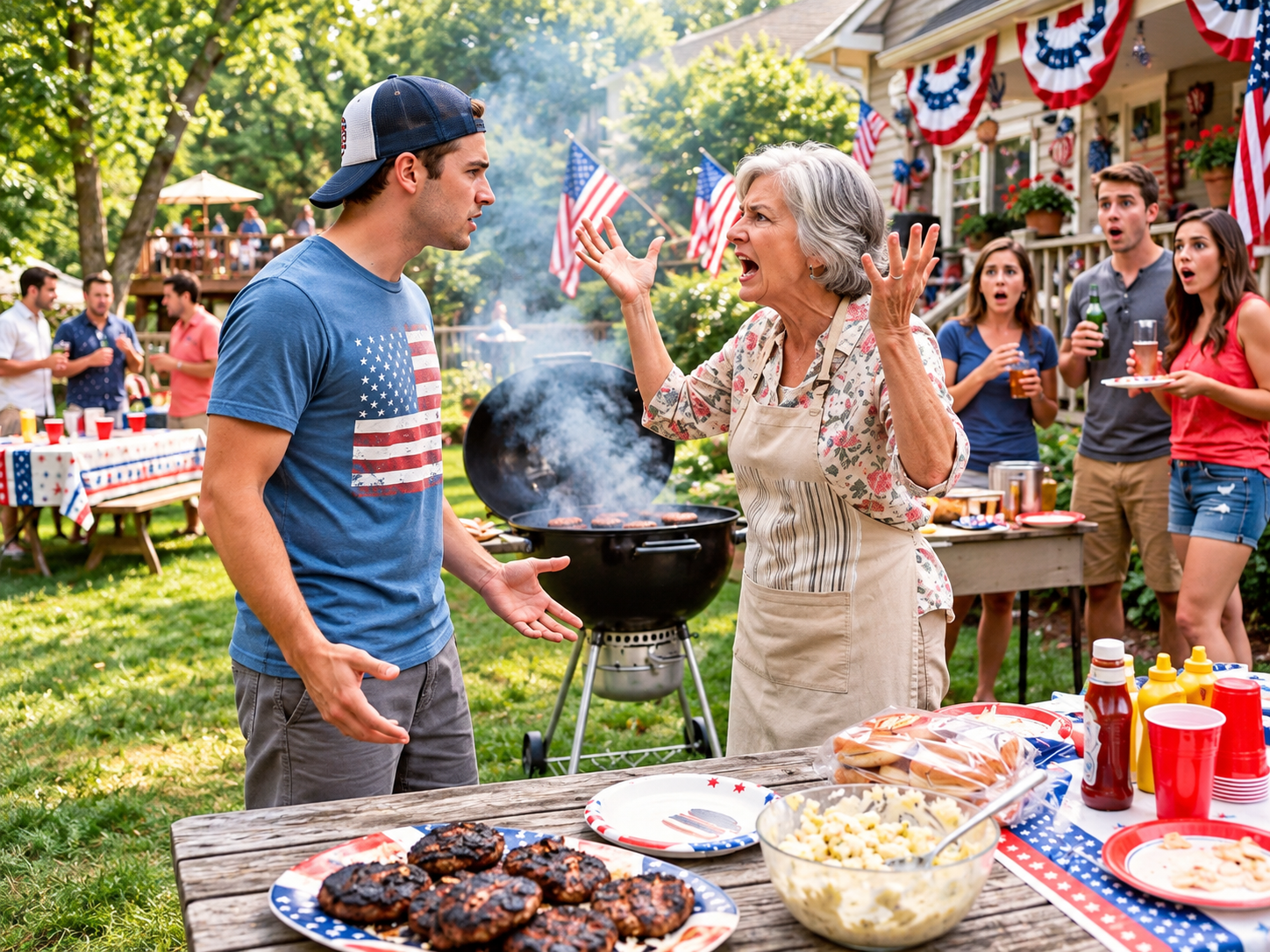
After dinner, my mother brought out an old photograph.
It was from the reunion.
The one where everything had started.
There we were.
Ryan smiling.
Diane beside him.
My father looking uncertain.
Grandpa standing behind his chair.
And me near the edge of the photograph, holding a plastic cup.
I stared at it.
“I hated this picture.”
My mother laughed.
“I know.”
“I thought it showed everything wrong with us.”
“And now?”
I looked again.
“It shows where we started.”
She nodded.
Diane sat beside me.
“I almost threw it away.”
“Why didn't you?”
“I thought someday we'd want to remember that we changed.”
I smiled.
“Good decision.”
Ryan leaned over.
“Can I see?”
He studied the photograph.
“I look ridiculous.”
“You always did.”
He laughed.
Then he noticed something.
“Look at Grandpa.”
We all looked.
He wasn't looking at Ryan.
He wasn't looking at Diane.
He was looking at me.
I hadn't noticed that before.
I stared at the picture.
Grandpa had been watching me.
Not judging.
Watching.
Perhaps he had been trying to understand me long before I understood myself.
My mother touched my arm.
“He knew.”
I nodded.
“I think he did.”
The photograph went into a frame.
Not because it was beautiful.
Because it was honest.
Later that evening, I walked outside.
The air was cool.
The street was quiet.
I thought about the person I had been years earlier.
The man who had worked in a leaking apartment.
The man who had delivered groceries at night.
The man who stared at a ninety-nine-dollar payment and cried.
The man who believed one day his family might finally understand.
I wanted to tell him something.
You don't have to wait.
Keep going.
Not because they will applaud.
Not because you will become rich.
Not because you will finally prove them wrong.
Keep going because the life you're building belongs to you.
I stood beneath a streetlamp.
My phone buzzed.
A message from my mother.
Did you get home safely?
I smiled.
Almost.
Then another.
Love you.
I looked at the words.
Years earlier, I would have stared at them searching for some hidden qualification.
Now I simply believed them.
I replied.
Love you too.
That was all.
No speech.
No argument.
No proof.
Just four words.
The next morning, I returned to work.
My new project was much smaller than my previous company.
It was a platform designed to connect young people with paid apprenticeships.
The idea had started during the scholarship program.
I wanted students to have access not only to education, but to real work.
I had investors interested.
I turned most of them down.
They wanted rapid growth.
I wanted sustainable growth.
I had learned something about ambition.
It was easy to confuse expansion with purpose.
I didn't need another company that consumed every waking hour.
I wanted something useful.
Something durable.
Something I could hand to a team someday and say, “Take care of it.”
Ryan helped with the early hiring.
Clare reviewed contracts.
My parents donated to the scholarship fund.
Diane volunteered at student workshops.
The family was no longer measuring who had accomplished the most.
We were building things together.
One afternoon, a young applicant came into my office.
She was nervous.
She had excellent grades but almost no work experience.
“I don't think I'm qualified,” she said.
I looked at her résumé.
“You applied.”
“Yes.”
“Why?”
“Because I thought I might be.”
I smiled.
“That's enough to start.”
She looked surprised.
“What if I fail?”
“You might.”
She looked alarmed.
I laughed.
“Failure isn't the opposite of qualification.”
She relaxed.
“Then what is?”
“Refusing to learn.”
She nodded.
I offered her the apprenticeship.
She cried.
I nearly did too.
After she left, I sat alone for a while.
That was the moment I understood why my grandfather had wanted me to move beyond the old story.
The best thing I had built was not the company.
It was not the acquisition.
It was not the money.
It was the ability to give someone else the chance I had once needed.
A chance without humiliation.
An opportunity without comparison.
A seat at the table before they had anything to prove.
Years earlier, my family had thought my worth could be measured by a job title.
Then they thought it could be measured by money.
Then they learned neither was true.
I learned the same lesson about myself.
There would always be someone richer.
Someone younger.
Someone more accomplished.
Someone with a better title.
If my identity depended on winning those comparisons, I would never be free.
Freedom came when I stopped competing in a contest nobody had the right to define for me.
That was what the family dinner had really changed.
It didn't make me successful.
It didn't make my relatives suddenly perfect.
It simply forced all of us to stop pretending.
The family finally saw that Ryan's success didn't diminish mine.
I finally saw that their approval didn't create my value.
Diane learned that loving her son didn't require comparing him to anyone.
My parents learned that protecting their children from failure could sometimes hurt more than failure itself.
Ryan learned that being celebrated didn't require someone else to stand beneath him.
And Grandpa left us the simplest lesson of all.
People remember how you made them feel long after they forget what you accomplished.
The house was gone.
The old arguments were mostly gone.
The family roles we had inherited were gone too.
What remained was choice.
Every gathering was a choice.
Every apology was a choice.
Every opportunity to repeat an old pattern was a choice.
And slowly, we chose differently.
One year after Grandpa died, we held another scholarship ceremony.
Twenty-three students had become nearly a hundred.
My parents sat in the front row.
Ryan stood beside the stage.
Diane helped a nervous student prepare her speech.
I looked across the room.
For a second, I imagined Grandpa sitting in his old chair.
I could almost hear him.
Don't keep proving yourself.
Build what comes after.
So I did.
And when the ceremony ended, I didn't stay behind to count the applause.
I walked outside.
The evening sky was turning dark.
Students and their families filled the parking lot.
People were laughing.
Parents were taking photographs.
A young man ran past me holding a certificate above his head.
His mother chased after him, laughing.
I stood there and watched.
I had once believed the greatest victory would be making my family admit they were wrong.
It wasn't.
The greatest victory was reaching a point where I no longer needed them to.
I had a career I was proud of.
People I loved.
Work that mattered.
A family that had learned, imperfectly, how to love without keeping score.
And peace.
Not the dramatic kind.
The ordinary kind.
The kind that arrives when you no longer wake up wondering whether you are enough.
I took out my phone.
There was a message from Ryan.
Dinner next week?
I typed back.
Of course.
Then I put the phone away.
The first dinner had been about comparison.
The last one was simply dinner.
That difference said everything.
I never forgot the moment I told my family I had signed Ryan's paycheck.
At the time, I thought I was finally showing them what I was worth.
Years later, I understood that I had been wrong.
My worth had never been hiding in a paycheck.
It had never been hiding in an acquisition agreement.
It had never been hiding behind a job title or a bank account.
It was there when I was broke.
It was there when I was uncertain.
It was there when nobody believed me.
It was there before anyone applauded.
And once I understood that, the old family comparison lost its power forever.
I didn't need to be the most successful person at the table.
I only needed to be myself.
And finally, when I sat down with my family, I no longer wondered whether I deserved the seat.
I knew I did.
Not because I had earned millions.
Not because I had signed anyone's paycheck.
Not because I had proved anyone wrong.
Because I had always belonged there.
And this time, everyone else knew it too.
The End
Read more original stories on Feel Every Story.
The Family Celebration Was Supposed to Humiliate Me Until One Quiet Sentence Changed Who Everyone Was Looking At
Part 8 of 8

