The first sign that something was wrong was a plate of cold pasta.
Sophie was standing at the kitchen counter at four-thirty on a Friday afternoon, eating leftovers straight from the refrigerator with a fork. She had not bothered with the microwave. She had not put the food on a plate. She was simply standing there, chewing quickly, one hand resting against the edge of the counter.
That alone would not have frightened me.
Children do strange things with leftovers. Eleven-year-olds forget plates exist. Sometimes they eat cold pizza because it tastes better that way. I would have laughed about it on any other Friday.
But Sophie always heated her food.
She was careful about little things. She liked her toast browned evenly. She cut apples into thin slices. She complained if soup was too hot and waited patiently for it to cool. Cold pasta, eaten standing up as though she had been waiting all day for the chance to get food into her stomach, did not fit.
I closed my laptop.
“Hey,” I said. “Did you eat lunch today?”
Her fork stopped halfway to her mouth.
For a second she stared at the refrigerator door.
Then she swallowed.
“My lunch account was empty.”
The room seemed to become quieter.
“What do you mean, empty?”
“It said I didn't have money.”
“When?”
She shrugged.
“Monday.”
I looked at her.
“Monday?”
She nodded.
I was standing only a few feet away from my daughter, but suddenly the distance between us felt enormous.
“You haven't eaten lunch at school since Monday?”
Sophie lowered her eyes.
“No.”
Five days.
Monday, Tuesday, Wednesday, Thursday, Friday.
Five school lunches gone.
Five times she had sat at a cafeteria table while other children opened containers and unwrapped sandwiches and traded snacks. Five times she had decided that whatever was happening inside her stomach was easier to tolerate than telling me there was a problem.
I pulled out the chair beside the counter.
“Come sit with me.”
She did.
The explanation came quietly. On Monday, she had gone through the lunch line and her student account had shown a negative balance. The school payment system had not processed the monthly transfer correctly. The lunch aide had told her there was an issue and moved her aside so the other students could continue through the line.
Sophie had been embarrassed.
So when her friends asked why she wasn't eating, she had told them she wasn't hungry.
The next day she did the same thing.
Then again.
And again.
By Friday, she had apparently decided that hunger was something she could simply manage.
“Why didn't you tell me?” I asked.
She looked at me as though the answer were obvious.
“You were working.”
It hurt more than I expected.
I did work from home, but that week my attention had been swallowed by a deadline. I had been moving between spreadsheets, video calls, emails, and the kitchen without really seeing the people inside my house.
I had asked Sophie whether she had homework.
Whether she needed anything.
Whether her science project was finished.
I had asked all the questions that were easy to ask.
I had not asked whether she had eaten lunch.
That night I called the school and the payment company. I made sure the account was fixed and placed enough money into it to keep the problem from happening again. I also sat across from Sophie while she ate roast chicken, potatoes, and salad, pretending not to watch every bite.
She noticed anyway.
“You can stop looking at me, Mom.”
“I wasn't looking.”
“You were.”
I smiled.
“Okay. Maybe a little.”
She smiled back.
That should have been the end of the crisis.
It wasn't.
After Sophie went upstairs, I stood alone in the kitchen and stared at the dishes in the sink.
My mother was the person I normally called when something happened.
That habit had been built over thirty-eight years.
So I picked up my phone.
Margaret Bennett was sixty-seven. She lived fifteen minutes away in the colonial house where I had grown up. Six years earlier, after my father died, her financial situation had changed dramatically.
My father had handled everything.
Bank accounts.
Insurance.
Investments.
Bills.
My mother had trusted him completely with money, and when he died, she suddenly had to face a financial system she had barely touched in four decades.
I stepped in.
I paid the property taxes.
I paid utilities.
I covered insurance and repairs.
I paid for landscaping and cleaning.
And every month I loaded a grocery card with $2,800.
For one person.
At first, I had not questioned it.
My mother had just lost her husband. I was doing well financially. She liked cooking, and I wanted her to have some comfort after everything that had happened.
She bought organic vegetables.
Imported cheese.
Expensive olive oil.
Good cuts of meat.
Wine for Sunday dinners.
Sometimes flowers ended up on the grocery card, even though flowers were not exactly groceries.
I knew.
I simply never said anything.
For six years, I had told myself that was what love looked like.
That evening, I told my mother about Sophie.
I told her about the payment error.
I told her Sophie had gone without lunch for five days.
I told her how I had found her eating cold pasta because she was so hungry she could not wait to heat it.
I expected concern.
Instead, there was a pause.
Then my mother said, “She could have eaten crackers.”
I waited.
“Crackers?”
“Children don't need a full meal every time they're hungry,” she said. “You're making this much bigger than it is.”
Something inside me went still.
I had heard versions of those words all my life.
When I was frightened as a child, I had been dramatic.
When I cried as a teenager, I was too sensitive.
When I objected to something as an adult, I was making an issue out of nothing.
But this time she was talking about Sophie.
My eleven-year-old daughter had gone five days without lunch.
And my mother's answer was crackers.
“You're right,” I said.
She sounded relieved.
“See? You understand.”
“People survive.”
I ended the call.
I sat at the kitchen table without turning on another light.
The refrigerator hummed behind me.
Outside, a car passed on the road, its headlights moving briefly across the wall.
I thought about Sophie.
Then I thought about my mother.
Then I thought about the grocery card.
$2,800 every month.
$33,600 a year.
More than $200,000 over six years.
I opened my banking app.
There it was.
The card connected to my mother's grocery account.
Monthly allowance: $2,800.
My thumb hovered over the screen.
I could tell myself I was angry.
I could tell myself I was reacting emotionally.
Or I could admit something harder.
The card had stopped being simply an act of help a long time ago.
It had become an arrangement neither of us questioned.
I was paying.
She was spending.
And neither of us was asking whether the arrangement was still healthy.
I pressed the button.
Cancel Card.
The confirmation appeared immediately.
I put my phone down.
For the first time in six years, I had changed something without first asking my mother whether I was allowed to.
I went upstairs.
Sophie was already asleep.
I stood in her doorway for a moment, watching the blanket rise and fall with her breathing.
Then I closed the door softly.
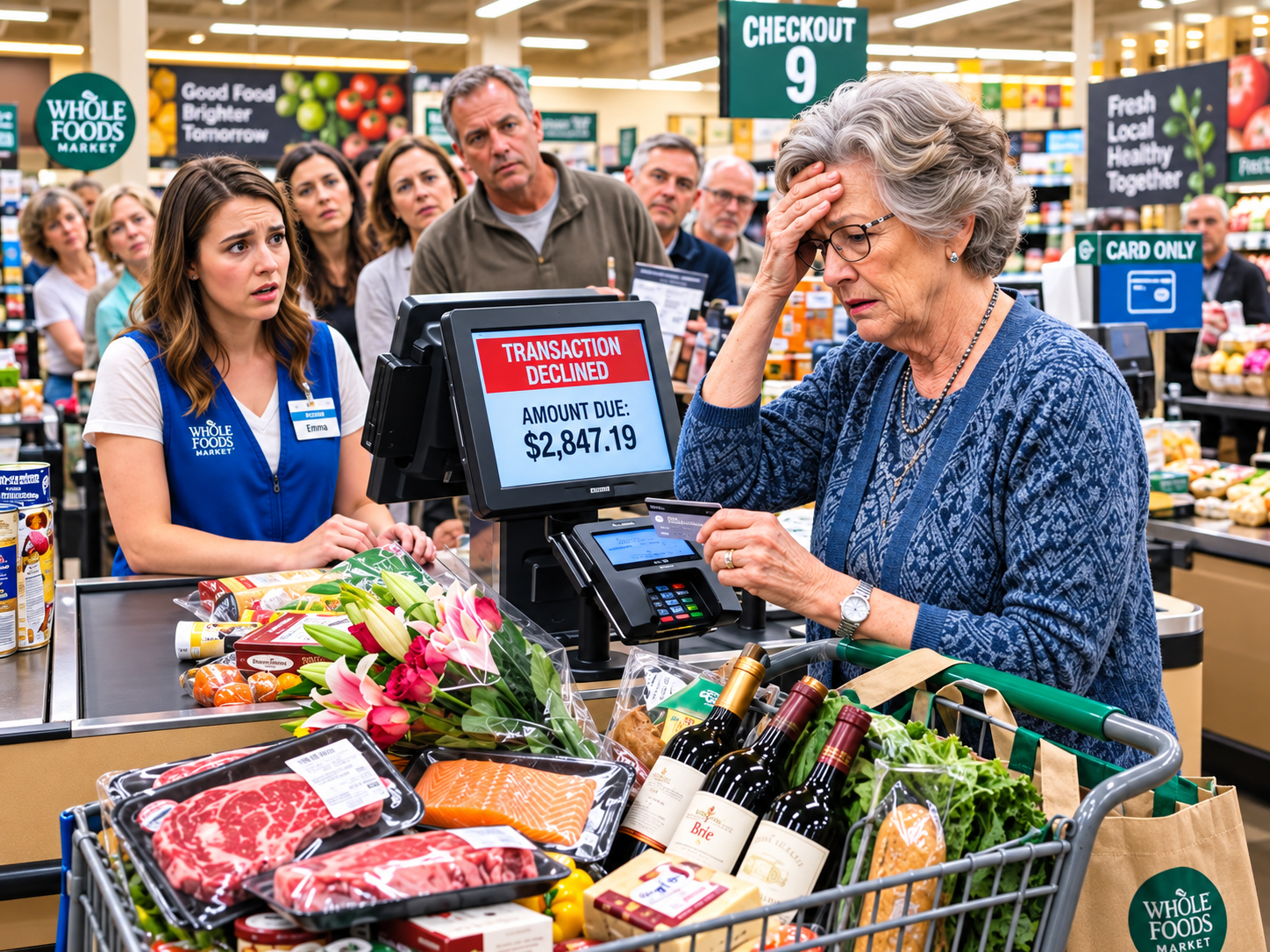
On Sunday morning, my phone rang at 10:17.
I knew who it was.
Sunday was my mother's shopping day.
I watched the phone vibrate across the kitchen counter.
She called again.
Then again.
By noon, she had called four times.
I did not answer.
At one o'clock, I sent a message.
I know the card was declined. I canceled it Friday night. We'll talk this week about what happens next.
Her reply appeared almost instantly.
What do you mean you canceled it? Call me right now.
I turned the phone face down.
Then I made grilled cheese and tomato soup for Sophie.
She sat across from me and talked about her friend Priya's rescue dog, which apparently was terrified of its own reflection.
She laughed.
I laughed with her.
And while she talked, I realized that the real question was no longer whether I should have canceled the card.
The question was what I was finally going to say to my mother when she demanded that I put everything back exactly as it had been.
I had spent six years avoiding that conversation.
Now it was waiting for me.
Click Here to continue read next: PART2: My Mother Demanded an Explanation, but the Conversation Forced Both of Us to Face What Six Years Had Become
Five Quiet Days at the Cafeteria Changed What I Thought I Knew About My Daughter and My Mother
Part 1 of 8