
The evening light had turned the grass gold when Delilah and I sat on the porch.
Noah was in the yard with his dinosaurs.
He had decided they were having a meeting.
Every few minutes, he moved one figure closer to another and announced a new rule.
I didn't understand the rules.
Neither did Delilah.
We listened anyway.
“He's happy,” she said.
“Yes.”
“I keep wondering whether he'll remember.”
“Maybe some of it.”
She looked at him.
“I hope he remembers this part more.”
I knew what she meant.
Not the car.
Not the night they were forced out.
Not the fear.
This.
A yard.
A toy dinosaur.
His mother's voice.
His grandmother nearby.
A place where he could make a mess without becoming frightened.
Delilah rested her elbows on her knees.
“I've been thinking about something.”
“What?”
“If you hadn't found us, I don't know what I would have done.”
“You would have figured something out.”
She shook her head.
“I don't know.”
I looked at her.
“You don't have to know.”
She smiled faintly.
“That's what I used to think.”
“What?”
“That I had to know everything before I could make a decision.”
She looked toward the yard.
“I thought I had to know whether Evan would change. Whether Judith would calm down. Whether things would improve. Whether leaving would hurt Noah.”
She took a breath.
“I kept waiting for certainty.”
“And did you ever get it?”
“No.”
She laughed softly.
“I just got tired.”
That was the truth.
Sometimes people don't leave because they suddenly become certain.
Sometimes they leave because staying has finally become more frightening than the unknown.
Delilah had reached that point.
The orange juice had been small.
The reaction had not.
Judith's anger.
Evan's ultimatum.
The boxes.
The car.
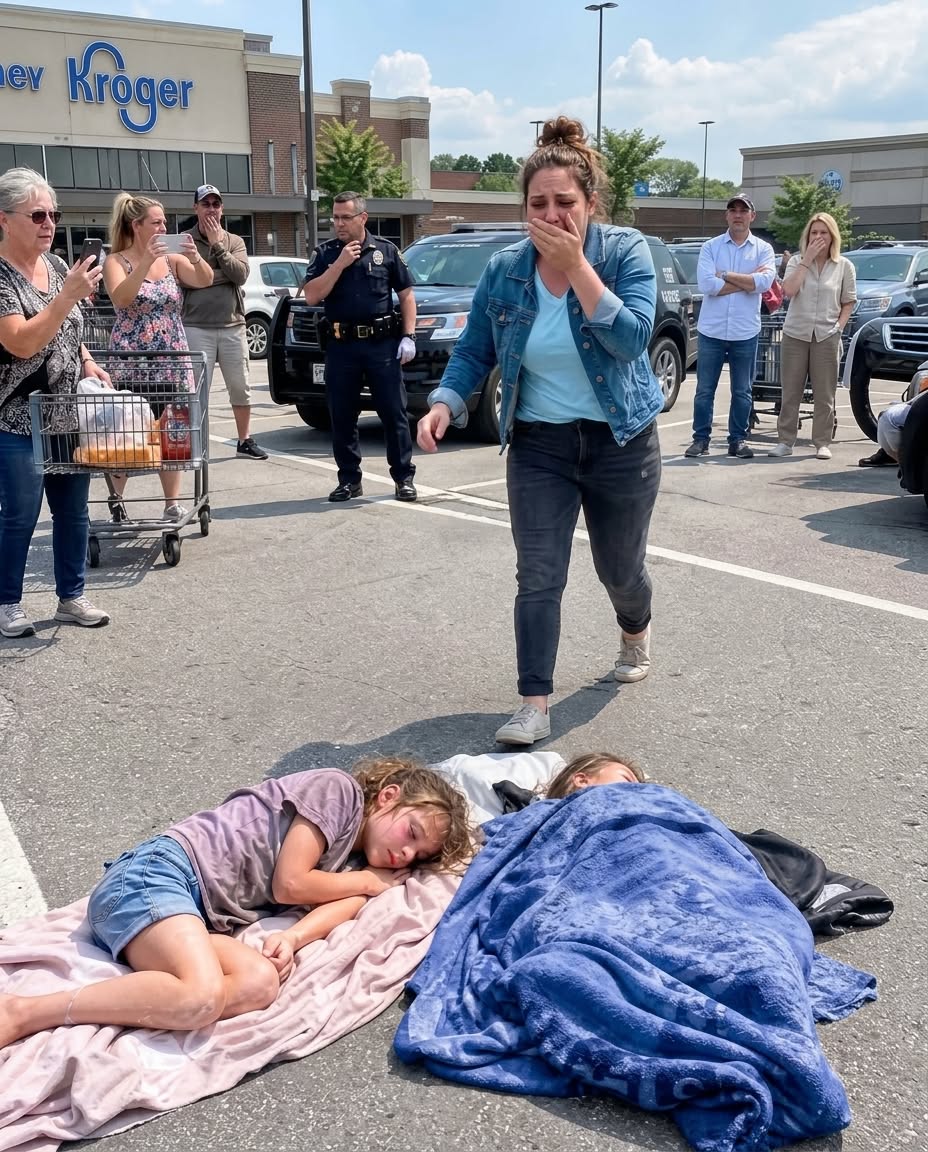
Three nights in a parking lot.
Then the documents.
The signature.
The property.
The financial records.
Each event had revealed another layer.
But none of it had happened in isolation.
The legal records showed a financial motive.
The family behavior showed the emotional control.
And Delilah's experience showed how those two things could reinforce each other.
If she believed every problem was her fault, she was less likely to ask questions.
If she was afraid of causing conflict, she was less likely to examine documents.
If she believed the house belonged to Evan, she was less likely to challenge what he was doing with it.
The system depended on her silence.
The moment she stopped being silent, the system began to fail.
She had not planned to become brave.
She had simply reached a point where protecting Noah mattered more than avoiding another argument.
That was enough.
One Saturday, she asked me to come with her to the old house.
The attorneys had already handled the necessary legal matters concerning the property, and she needed to retrieve a few remaining personal items.
I agreed.
We parked outside.
The house looked exactly as I remembered it.
The same front steps.
The same windows.
The same small tree near the walkway.
But it no longer felt like my daughter's home.
That surprised me.
Years earlier, I had imagined Delilah and Evan raising Noah there.
Now I saw it differently.
It was a property.
A building.
A place connected to a period of her life that had ended.
We entered quietly.
The rooms were familiar.
The kitchen still had the same cabinets.
The living room still had the same floor.
But the atmosphere was different.
Delilah walked upstairs.
I waited below.
When she came back, she was carrying a small box.
“That's everything?”
“Yes.”
She opened it.
Inside were photographs, Noah's first drawing, an old baby blanket, and a few small keepsakes.
She looked at them.
“I thought I'd want more.”
“You don't?”
She shook her head.
“No.”
That surprised me.
“What about the furniture?”
“Leave it.”
“The things you bought?”
“Leave them.”
She closed the box.
“I don't want to spend my energy reclaiming a life I don't want anymore.”
I looked at her.
That sentence told me how far she had come.
Months earlier, she had been terrified of losing the house.
Now she was willing to walk away from most of what was inside it.
Because she had finally understood something.
A home was not furniture.
It was not a deed.
It was not a room someone could throw her out of.
Home was the place where she could breathe.
When we stepped outside, she looked back once.
Then she turned away.
“Ready?”
“Yes.”
We drove home.
Noah ran to the car before we had even opened the doors.
“Did you get my dinosaurs?”
Delilah laughed.
“No.”
He looked disappointed.
“Why?”
“Because your dinosaurs are already here.”
He thought about that.
“Oh.”
Then he ran inside.
I smiled.
Children have a way of simplifying things adults make complicated.
That evening, Delilah received another update from the attorney.
The questionable property-related transactions remained under formal review.
There was no sudden final victory.
No dramatic punishment.
No satisfying speech.
The legal process was doing what legal processes do.
It was slow.
It was careful.
It was based on records.
Delilah read the message.
Then she put her phone down.
“That's all?”
“For tonight.”
She smiled.
“I think I'm okay with that.”
“You are?”
“Yes.”
She looked around her small living room.
“I used to think everything had to be resolved before I could be happy.”
“And now?”
“I think I can be happy while some things are still being resolved.”
I smiled.
“That is a better way to live.”
She nodded.
Later, Noah fell asleep on the couch.
Delilah carried him to bed.
When she returned, she stood in the doorway for a moment.
“Mom?”
“Yes?”
“I want to tell you something.”
I waited.
“I don't hate Evan.”
“I know.”
“I don't forgive everything either.”
“You don't have to.”
She nodded.
“I think I just don't want him living in my head anymore.”
“That sounds healthy.”
She smiled.
Then she sat beside me.
“I used to think forgiveness meant pretending nothing happened.”
“It doesn't.”
“What does it mean?”
“Sometimes it means deciding the other person no longer gets to control what you do next.”
She thought about that.
“I like that.”
We sat quietly.
Outside, the street had become dark.
A porch light glowed across the road.
Somewhere nearby, a dog barked once and stopped.
It was peaceful.
Ordinary.
I thought about the parking lot again.
The first morning.
The cold air.
Delilah's frightened eyes.
Noah sleeping beneath that blanket.
If someone had told me then that six months later my daughter would be sitting beside me discussing forgiveness, I would have struggled to believe it.
But here we were.
The hardest part had not been finding the documents.
It had not been challenging the transactions.
It had not even been dealing with Evan.
The hardest part had been watching Delilah slowly understand that she had spent years apologizing for things that were never hers to carry.
Now she was putting those burdens down.
One by one.
Noah woke briefly and called for his mother.
Delilah went upstairs.
I remained on the couch.
A few minutes later, I heard her laughing.
It was a soft laugh.
The kind that comes from a safe room.
I closed my eyes.
For the first time, I understood that the story had never really been about whether Evan could keep the house.
It had been about whether my daughter could reclaim herself.
The documents had exposed an attempt to control an asset.
The eviction had exposed years of emotional control.
But the final victory would not be a courtroom result.
It would be Delilah waking up one morning and realizing she no longer needed anyone's approval to trust her own judgment.
That morning was coming.
Maybe it had already arrived.
Click Here to continue read next: PART8: When My Daughter Finally Looked at Noah Without Fear, I Knew the House, the Papers, and Everything We Had Lost Had Led Her Somewhere New
I Found My Daughter and Grandson Asleep in a Car, and the Fear on Her Face Told Me This Was Far Worse Than a Family Argument
Part 7 of 8

