
They did not go back to the house alone.
Sarah had imagined that moment many times while Emily was recovering.
In some versions, she marched through the front door without fear.
In others, Michael stood in the driveway and finally understood that he had lost control.
The real version was quieter.
An officer accompanied Sarah while Emily stayed with her aunt.
Sarah stood outside the house and stared at the front door.
The paint was the same.
The porch was the same.
The small flag beside the mailbox moved slightly in the afternoon wind.
Nothing about the house looked dangerous.
That was the strange part.
Sarah had spent fifteen years inside it.
The curtains were still drawn in the living room.
The flowerpot beside the steps still needed watering.
A pair of shoes sat near the door.
Ordinary objects.
Ordinary house.
A life that had looked ordinary from the street.
The officer asked if she was ready.
Sarah nodded.
She was not.
But she went inside.
The first thing she noticed was the silence.
The house smelled faintly of coffee.
Michael was not there.
Sarah walked through the hallway.
For years, she had moved through these rooms according to his moods.
She knew which floorboard creaked.
Which cabinet door needed lifting before it would close.
Which subject should not be mentioned after eight at night.
Which version of herself was safest in each room.
Now she saw the house differently.
Not as a home.
As a collection of places where she had learned to become smaller.
She went to the bedroom first.
Clothes.
Documents.
Medication.
Emily's school laptop.
Birth certificates.
Nothing sentimental was worth risking their safety for.
Sarah opened the drawer where Michael had kept financial papers.
The accounts were no longer his to control.
The social worker had helped her begin separating what she could.
Sarah found the old envelope she had used to hide emergency cash.
It was empty.
She smiled despite herself.
The money had done exactly what she needed it to do.
It had gotten Emily out.
She folded the envelope and put it into her bag.
The officer waited near the doorway.
“You ready?”
“Almost.”
Sarah walked to the bathroom.
The same sink.
The same mirror.
The same flickering bulb.
She remembered Emily folded over the porcelain.
She remembered Michael saying she was dramatic.
Sarah stood there for several seconds.
Then she turned away.
She did not need to stay in that room to prove anything.
They left.
By that evening, Sarah and Emily had a temporary place to stay.
It was not large.
The furniture did not match.
The kitchen had an old refrigerator that rattled whenever it ran.
The bedroom window faced a neighbor's fence.
Emily complained about the mattress.
Sarah laughed.
It was the first time she had heard her daughter complain about something ordinary in weeks.
“It's terrible,” Emily said.
“I know.”
“My back hurts already.”
“We can find another one.”
Emily looked at her.
“You mean that?”
Sarah smiled.
“Yes.”
The moment passed quickly.
But Sarah remembered it.
For years, every decision had been measured against Michael's reaction.
Now they could choose where to put a lamp without asking permission.
They could leave a cup on the table.
They could order food without explaining the price.
They could close a door because they wanted privacy, not because they were afraid.
Freedom arrived in pieces.
Not dramatic ones.
Small ones.
Emily's recovery continued slowly.
She returned to school gradually.
At first, she did not want anyone to ask questions.
Sarah respected that.
The hospital appointments continued.
The doctors checked the healing from the surgery.
The social worker checked their living situation.
The police followed up on the report.
Every appointment reminded Sarah that the night at the hospital had changed more than one medical diagnosis.
The ER had given them a record.
The record had given them protection.
The protection gave them enough room to make decisions.
Michael still tried to rewrite what happened.
He told people Sarah had overreacted.
He claimed Emily had misunderstood him.
He said the bruises had innocent explanations.
He insisted the threatening message had been taken out of context.
Sarah used to fear those accusations.
Now she understood something.
He could say whatever he wanted.
The hospital records would still exist.
The 4:29 message would still exist.
The medical examination would still exist.
The staff who witnessed him trying to enter the treatment room would still remember.
And Emily's voice had been heard.
That mattered.
One evening, Sarah sat at the kitchen table while Emily worked on homework.
The room was quiet.
A pencil moved across paper.
The refrigerator clicked.
Outside, someone was mowing a lawn.
Emily suddenly looked up.
“Mom?”
“Yeah?”
“Are we staying here?”
Sarah put down her phone.
“For now.”
Emily nodded.
Then she looked back at her homework.
A minute passed.
“Good.”
Sarah watched her.
There was no dramatic speech.
No promise that everything would become perfect.
Sarah had learned not to make promises she could not control.
Instead, she said, “We'll figure it out one day at a time.”
Emily nodded.
That was enough.
Weeks passed.
Emily began laughing again.
At first, she seemed surprised whenever laughter escaped her.
She would stop and look around.
Sarah noticed.
The first time Emily laughed without checking the doorway, Sarah had to turn away.
She pretended to look for something in a cabinet.
She cried quietly.
Not because everything was fixed.
It wasn't.
But because her daughter's body was beginning to understand something her mind had not yet fully trusted.
Nothing bad was happening.
No one was coming.
She could laugh.
Another evening, Emily left her phone charging in the living room while she went to bed.
Sarah noticed it.
She stood in the kitchen staring at the phone.
The screen lit briefly.
Sarah did not touch it.
She realized that once, Emily would never have allowed the phone to leave her hand.
It had been more than a device.
It had been a warning system.
Now she could sleep without it.
That was progress.
Slow progress.
Real progress.
One afternoon, a knock sounded at the front door.
Emily flinched.
Sarah saw it.
She also saw Emily take a breath.
Then the girl looked toward her mother.
Sarah walked to the door.
“Stay here.”
Emily nodded.
Sarah checked before opening it.
A neighbor stood outside with a package delivered to the wrong address.
Sarah accepted it.
“Thank you.”
She closed the door.
When she turned around, Emily was still standing in the hallway.
“You okay?”
Emily nodded.
“I didn't think about him.”
Sarah smiled.
“That’s good.”
Emily smiled back.
It was small.
But it was real.
Later that night, Sarah sat alone for a few minutes.
She thought about the hospital.
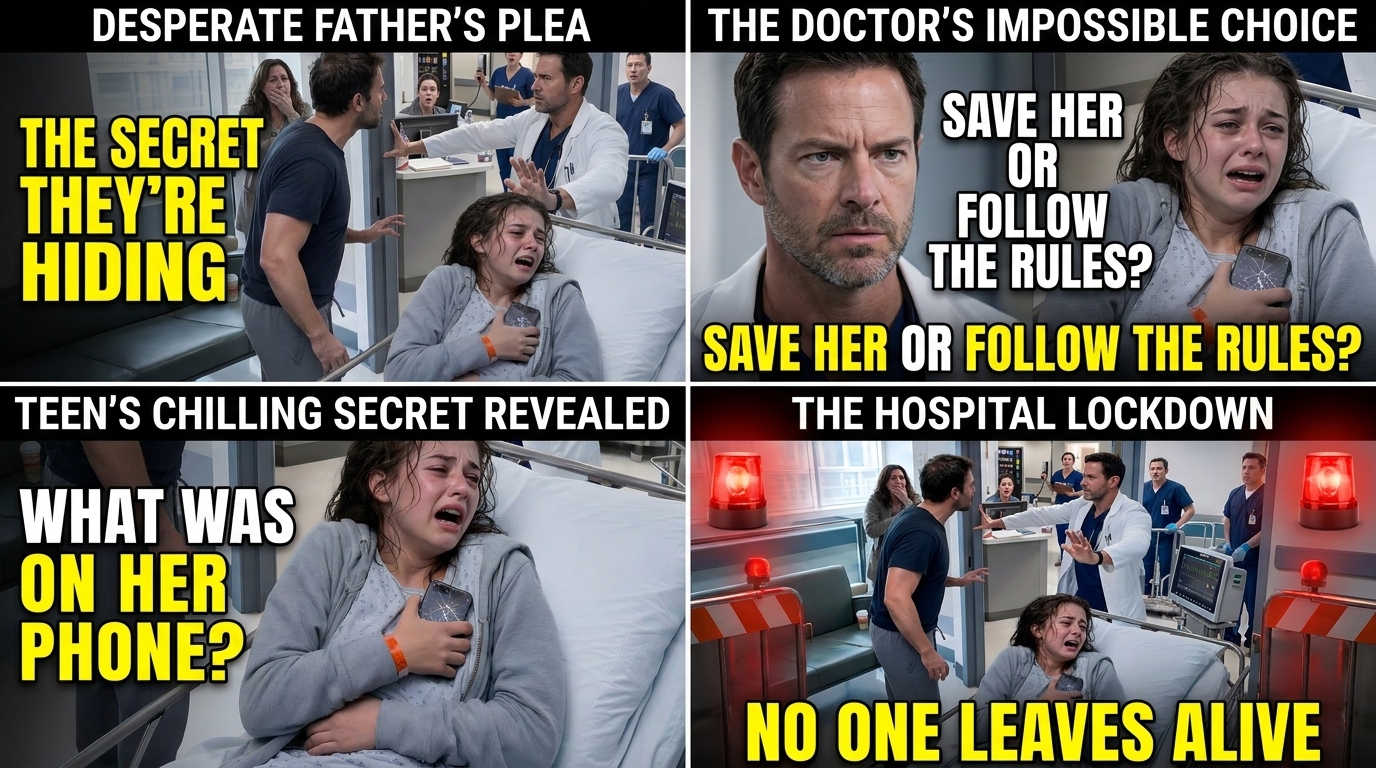
She remembered the doctor standing between Michael and the doorway.
She remembered the nurse holding Emily's cracked phone.
She remembered the moment Michael had looked at her and expected the old answer.
Tell him.
Fix this.
Make it disappear.
And she remembered saying no.
That word had not changed everything instantly.
It had not erased the fear.
It had not healed Emily.
It had not made Sarah fearless.
But it had interrupted the pattern.
That was enough to begin.
Sarah sometimes wondered what would have happened if Emily had not fainted.
What if she had waited another morning?
What if she had believed Michael?
What if the blood in the sink had gone unnoticed?
What if Emily had never spoken?
Those questions stayed with her.
She did not try to answer them.
Instead, she focused on what she could do now.
She could listen.
She could believe.
She could keep the doors locked.
She could work.
She could protect her daughter.
She could stop explaining away what hurt them.
And she could teach Emily something different from what Michael had taught them.
That fear was not normal.
That love did not require obedience.
That keeping someone calm was not the same thing as being safe.
One Saturday morning, Emily sat beside Sarah on the porch.
The sun was warm.
The neighborhood was noisy with lawnmowers and distant conversations.
Emily had a blanket around her legs even though she no longer needed it.
Her surgical scars were healing.
The deeper wounds were harder to measure.
“Mom?”
“Yeah?”
“Do you think I'll ever stop being scared?”
Sarah looked at her.
“I don't know.”
Emily seemed surprised.
Sarah continued.
“But I think there will come a day when fear isn't making your decisions for you.”
Emily considered that.
“I like that better.”
“Me too.”
They sat quietly.
Sarah watched her daughter sip ginger tea.
She remembered the hospital intake form.
Abdominal pain.
Fever.
Persistent vomiting.
Simple words.
Clinical words.
But behind them had been a girl who was terrified.
A mother who had finally acted.
A father who believed control would follow them everywhere.
And a hospital that refused to look away.
Sarah understood now why the ER door mattered.
When Michael arrived, he still believed the world worked like their house.
He believed the loudest certainty would win.
He believed Sarah would soften.
He believed Emily would stay quiet.
He believed fear could remain private.
He was wrong.
The hospital had witnesses.
It had records.
It had people whose job was to notice.
Most importantly, Emily had finally spoken.
Sarah looked at her daughter.
“Ready to go inside?”
Emily nodded.
They stood together.
Emily walked through the door first.
Sarah followed.
Neither of them checked the hallway.
Neither listened for footsteps.
Neither waited for someone to become angry.
The door closed behind them.
And this time, it did not feel like a prison door.
It felt like the door to a life they were finally allowed to choose.
Click Here to continue read next: PART5: Returning to the House Forced Sarah to Face the Rooms Where Fear Had Become Ordinary, While Emily Began Learning What Safety Felt Like
By the Time Michael Called Her Dramatic, Emily Had Already Become Too Weak to Stand Without Holding the Wall
Part 4 of 8

