
The garden was quiet that evening except for the soft scrape of Clara's shoes against the stone path. She had grown tall enough that, when she stood beside me, her shoulder reached mine. The last light of day rested along the hedges, turning their edges silver. She had been unusually quiet during dinner, and I knew that kind of silence. It was the silence of someone carrying a question too carefully because she was afraid of the answer.
“Mom?”
I looked at her.
She held a book against her chest, though she had not turned a page in several minutes. “Can I ask you something about Dad?”
My hand stopped over the cup I was holding.
I had known this day would come.
Not because children always ask about absent parents, but because Clara had never been given a false story about why Adrian was not part of our daily life. I had refused to make him a monster in her imagination simply because I had every reason to hate what he had done. She deserved facts before judgments. She deserved the opportunity to form her own understanding when she was old enough to carry it.
“Yes,” I said. “You can ask me anything.”
She sat beside me.
“Why didn't he stay?”
The question was simple.
The answer was not.
I watched a moth circle the garden lamp before landing briefly against the glass. For years, I had practiced how I might explain the past without placing its weight on her shoulders. I did not want her childhood filled with courtroom documents, hospital photographs, or the sound of a man's anger. Those belonged to my history. She deserved her own.
“He made choices that made it unsafe for me to stay with him,” I said.
Clara frowned. “Unsafe how?”
“He hurt me.”
Her eyes widened.
“Physically?”
I nodded.
She looked down at her hands.
“Did he hurt me because of something I did?”
The question cut deeper than anything she had asked before.
“No,” I said immediately. “Never. You were not responsible for any of it. You weren't even born yet.”
She absorbed that.
“Then why did he do it?”
“I don't know if there is one answer.”
I leaned back against the bench.
“Some people become so convinced that they are entitled to control another person that they stop seeing that person as an equal. They begin treating love like ownership. When that happens, the person being controlled can start believing they deserve it.”
Clara looked at me.
“Did you believe that?”
“For a while.”
She seemed surprised.
“I thought you were always strong.”
I smiled faintly.
“I became strong.”
“That isn't the same thing.”
“No,” I said. “It isn't.”
The garden grew darker around us. From the main house came the distant sound of dishes being put away. Hartwell House had changed over the years, but it had never become silent. There were always people moving through it, rebuilding lives that had arrived broken.
Clara knew the house as a place of safety.
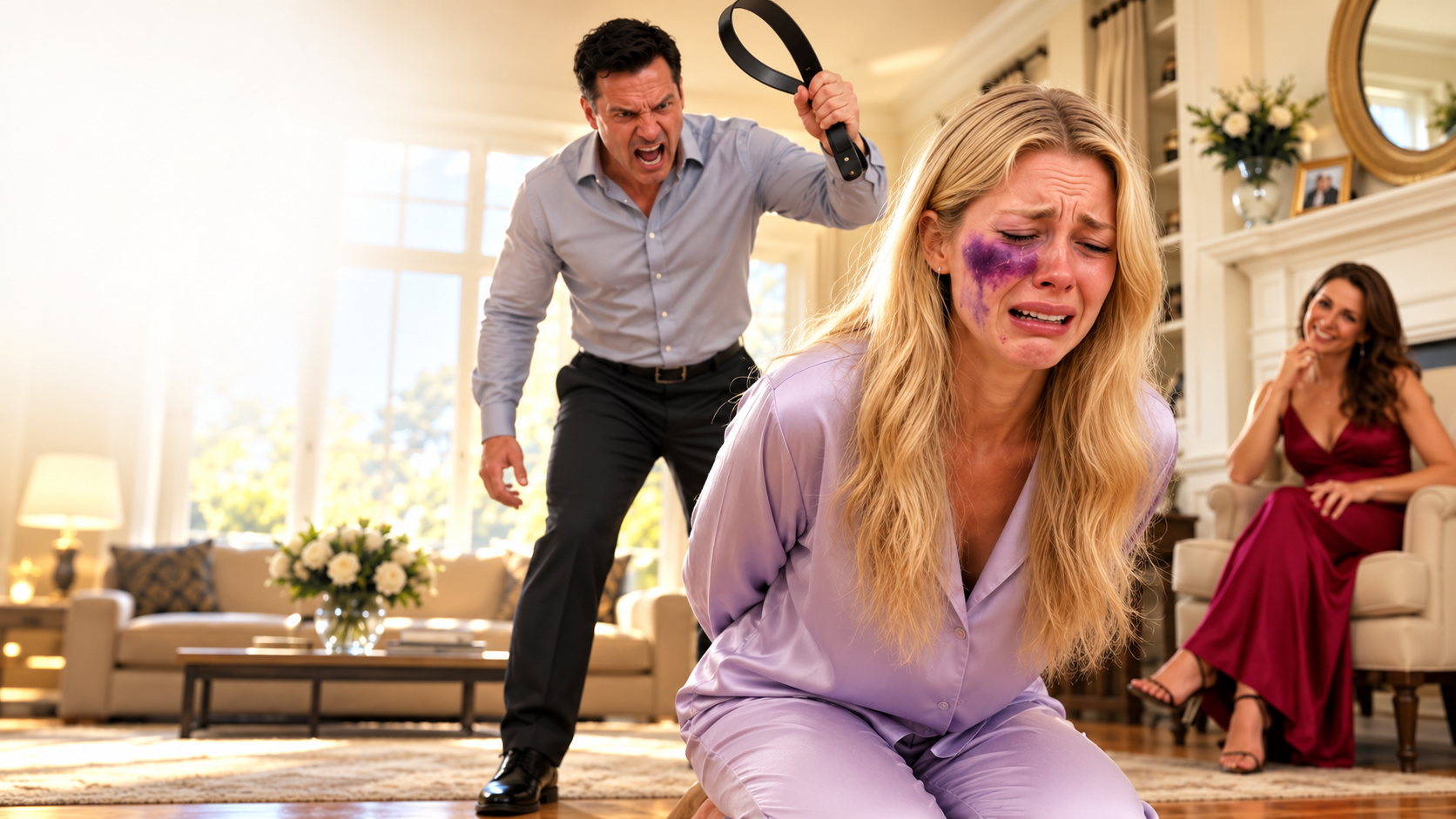
She did not know that I had once been on its marble floor unable to understand how quickly a marriage could become a prison.
She did not know about the riding crop.
Not yet.
I had waited because children should not be asked to carry adult violence simply because it is part of their family history.
But she was no longer a little girl.
She was old enough to understand that bad things could happen without being her fault.
“Did Dad love you?” she asked.
I looked toward the dark windows.
“That is a harder question.”
“Because you don't know?”
“Because I think he loved me in the way he understood love.”
Clara waited.
“He loved being admired by me. He loved having someone who believed in him. He loved the life we built around him. But I don't think he understood how different love is from possession.”
She looked thoughtful.
“Did you love him?”
“Yes.”
The answer came easily.
She seemed surprised again.
“I did,” I continued. “That doesn't mean I should have stayed.”
Clara lowered her eyes.
“Can you love someone and still leave them?”
“Yes.”
“Even if they say they'll change?”
“Yes.”
“Even if they cry?”
“Yes.”
“Even if you remember the good things?”
I smiled sadly.
“Especially then.”
She was quiet for a long time.
Then she asked, “What happened to him?”
I did not answer immediately.
“His company was taken over after the evidence came out. The courts froze his assets. There were criminal proceedings. His reputation collapsed.”
“Because of you?”
“No.”
I turned toward her.
“Because of what he did.”
“But Grandpa destroyed his company.”
“Your grandfather stopped protecting him from consequences. There is a difference.”
Clara considered that.
“Did Grandpa hate him?”
“For a while, he hated what Adrian had done to me.”
“That's different too.”
I laughed softly.
“Yes.”
She smiled.
Then her expression became serious again.
“Did Dad know you were rich?”
I looked at her.
“He knew my family had money.”
“But he didn't know how much?”
“No.”
“Why?”
“Because he never asked.”
She looked almost offended on my behalf.
“How could he marry you without knowing?”
I gave a quiet laugh.
“He thought he knew everything that mattered.”
“And he didn't.”
“No.”
Clara looked toward the mansion.
“Is that why Hartwell House exists?”
“Yes.”
She had visited the foundation many times, but she had never connected the place with the beginning of my life after Adrian.
I told her how the property had been transferred.
How I had stood in the grand hall months after the court hearing.
How I had remembered the exact place where I had fallen.
How I had realized that keeping the house as a monument to pain would give that night too much power.
“So you turned it into this.”
“Yes.”
“For women like you?”
“For women who need somewhere safe enough to decide what comes next.”
Clara's eyes moved across the garden.
“That seems better than keeping the house.”
“It is.”
She leaned her head against my shoulder.
For several minutes, neither of us spoke.
Then she said quietly, “I think I want to meet him someday.”
My chest tightened.
I had expected those words.
Still, hearing them made something inside me shift.
“You may,” I said.
She lifted her head.
“Really?”
“When you are ready.”
“What if I hate him?”
“You're allowed to feel whatever you feel.”
“What if I don't?”
“You're allowed to feel that too.”
She looked at me carefully.
“You wouldn't be angry?”
“No.”
I reached for her hand.
“He is your father. That fact belongs to your story. It does not have to control mine.”
Clara nodded.
The conversation ended there.
Not because everything had been answered.
Because some questions needed room to settle.
That night, after Clara went upstairs, I remained in the garden.
I remembered another night years earlier.
The chandelier.
The marble.
The phone in my hand.
My father's voice.
The moment Adrian realized that the woman he had dismissed was not powerless.
But as I sat beneath the same stars, I realized something else.
That night had once been the center of my life.
Now it was only a chapter.
I had spent years believing survival meant forgetting.
It did not.
Survival meant remembering without being trapped there.
The next morning, Clara found me in the kitchen.
She looked tired.
“Did you sleep?”
“Not much.”
“Thinking about him?”
“Yes.”
She poured herself some tea.
“Me too.”
I watched her carefully.
“Are you frightened?”
“A little.”
“That's normal.”
She nodded.
“I don't know what I expect.”
“You don't have to know.”
She sat across from me.
“Will you come with me?”
“If you want me to.”
She smiled.
“I do.”
Two weeks later, the meeting was arranged through attorneys and a court-approved process.
Adrian would not meet her at his old estate.
He no longer owned it.
He would not meet her privately.
Too much had happened for anyone to pretend caution was unnecessary.
The meeting would take place in a neutral office.
I agreed.
Not because I trusted him.
Because I trusted the boundaries around the meeting.
On the morning we left, Clara stood in front of the mirror adjusting the collar of her blouse.
“Do I look nervous?”
“You look like yourself.”
She smiled.
“That wasn't an answer.”
“It was the only one you need.”
In the car, she held my hand.
When we arrived, Adrian was already waiting.
I saw him through the glass before Clara did.
For one instant, I saw the man from our first year.
Then the years caught up with him.
His hair was gray.
His shoulders had narrowed.
The confidence that once filled every room had become something quieter.
He looked older than his age.
He looked like a man who had finally learned that consequences do not disappear simply because people stop talking about them.
Clara stopped walking.
“That is him?”
“Yes.”
She looked at me.
I squeezed her hand.
“You decide how close you want to get.”
She took a breath.
Then she opened the door.
Adrian stood.
His eyes filled immediately.
“Clara.”
She did not move.
He looked at me.
I gave him no instruction.
This was no longer my conversation.
It belonged to them.
And for the first time since the night on the marble floor, I stepped aside without feeling powerless.
I stepped aside because I finally understood the difference between surrender and choice.
Click Here to continue read next: PART6: Adrian Finally Met the Daughter He Had Nearly Lost Before Her Birth, and the Truth Between Them Was Harder Than Either Expected
Twenty Strikes Changed Everything, But the Call I Made Afterward Was the One My Husband Never Saw Coming
Part 5 of 8

