
The first time Trent and Madison seriously considered making an offer on a property, they did not call me immediately. They reviewed the listing, compared the likely expenses with their budget, and arranged a viewing. They returned to the property a second time, then spoke with a professional about the condition of the structure. Only after they had gathered the information did Trent call to tell me they were considering whether to proceed.
He explained that the property was modest, with enough space for their needs and a location that would make their commutes manageable. It was not the kind of house that would attract attention from people who cared about impressive entrances or expensive finishes. The rooms were practical, the yard was small, and several areas would need maintenance over time. But the price was within the range they had been considering, provided the inspection did not reveal major problems.
I asked whether they felt pressured to make an offer because they were afraid someone else would buy it. Trent admitted that they did feel some urgency. They liked the property and did not want to lose the opportunity. But they had agreed that they would not let the fear of missing out override the numbers. If the inspection showed that the repairs would stretch them too far, they would walk away.
That answer pleased me. It showed that they understood a home could be attractive without being the right purchase. I told Trent I would be happy to look over their cost estimates, but I would not make the decision for them. They needed to understand the risks and be comfortable with the commitment themselves. He said that was exactly what they wanted.
When the inspection report arrived, it identified several repairs that needed attention, though none appeared to make the property unsuitable. Trent and Madison obtained estimates and added the costs to their calculations. The total was higher than they had initially expected. They discussed whether to negotiate, proceed at the proposed price, or continue looking. Rather than convincing themselves that they could somehow absorb the expense later, they reviewed the figures carefully.
Trent called me after they had reached a decision. They planned to make a lower offer that reflected the necessary work. If the seller declined, they would not increase the offer beyond the amount they had agreed they could afford. He sounded calm, though he admitted he was disappointed that the process had become more complicated than he had hoped. I told him that careful decisions often involved accepting that a desired outcome might not be available on the terms someone wanted.
The seller declined their offer. Trent and Madison were disappointed, especially because they had begun imagining how they might arrange the rooms. For a few days, Trent found himself thinking about what they had lost. He called me one evening and said that part of him wanted to make another offer simply to avoid starting the search again. But the numbers had not changed, and he knew that paying more would leave them with less money for repairs.
I told him that walking away from a poor financial decision was not the same as losing. He had gathered information, assessed the costs, made an offer within his limits, and accepted the result when the seller declined. He had done what he could reasonably do. The fact that the outcome disappointed him did not mean the process had failed.
Madison later told me that the experience had tested their patience. They had both wanted the house, and for a while they had focused more on the imagined future than on the practical concerns. But after reviewing the figures again, they agreed that the decision had been sound. They had protected their savings and avoided committing to a price that made the repairs difficult to manage. They returned to looking at other properties without treating the first disappointment as a reason to rush.
I was struck by how different their response was from the way Trent had handled Brentwood. Back then, he had tried to make the situation fit the story he wanted to tell. Now he was allowing the facts to determine what he could do. The seller's decision was outside his control, and he accepted it. He did not need to convince anyone that they had nearly bought a house or that the opportunity had been unfairly taken from them.
Several months passed before they found another property worth considering. It was smaller than the first one, but the layout suited their needs. The inspection showed ordinary maintenance requirements rather than major immediate repairs, and the total cost fit their plan more comfortably. They took their time reviewing the documents and asked questions whenever something was unclear. When they finally decided to make an offer, they did so without assuming the seller would accept it.
This time, the offer was accepted. Trent called me with the news, and I could hear the excitement in his voice. He said he was happy, but he was trying not to make plans too far ahead before the remaining steps were complete. There were still documents to review, financing arrangements to finalize, and practical details to resolve. He wanted to celebrate the progress without pretending the purchase was finished before it was.
I congratulated him and Madison. I told them I was pleased they had found a property that appeared to fit their needs and their budget, but I reminded them to keep asking questions until the process was complete. They said they would. They had learned that enthusiasm and caution could exist together. They could be excited about a home without ignoring the responsibilities attached to it.
As the purchase progressed, they reviewed the closing costs, arranged the necessary inspections, and made a plan for the repairs they intended to complete after moving. They did not spend money on unnecessary upgrades before they understood the condition of the house. They also kept their emergency savings intact rather than using every available dollar to make the purchase look more impressive. Their goal was not to create a perfect home immediately. It was to establish a stable place they could maintain.
When the final arrangements were completed, Trent invited me to see the house. I drove over on a Saturday afternoon and found him waiting outside with a set of keys. He looked excited and a little nervous. The house was not grand, but it was clean, solid, and well suited to the life they were planning. The front steps needed attention, and the yard required some work, but neither problem seemed overwhelming.
Trent unlocked the door and stepped aside. “Come in, Dad,” he said.
The words were simple, but I felt their weight. I walked through the entrance and looked around the living room. The walls were bare, and several boxes stood near the hallway. Madison was in the kitchen, checking a list of items they still needed to buy. She greeted me with a smile and showed me the room where they planned to set up a small table for meals.
They took me through the bedrooms, the bathroom, and the utility area. Trent pointed out the repairs they had planned and explained which jobs they would handle themselves and which they intended to hire out. He did not pretend the house was flawless. He showed me the loose handrail, the worn section of flooring, and the place where the previous owner had patched the wall. He wanted to know what I thought should be addressed first.
I told him the handrail needed to be secured before they moved heavy furniture up the steps. The flooring could be assessed before they decided whether it required replacement, and the wall patch could wait until they had settled in. We made a short list, prioritizing safety and necessary maintenance over appearance. Trent wrote down the items without trying to turn the discussion into a declaration of how capable he had become.
After we finished, Madison made coffee in the kitchen. She said they were relieved to have reached this point, but they knew the work was only beginning. Owning a house meant taking responsibility for repairs and expenses that had previously belonged to a landlord. They had planned for those costs, but they expected to learn more as they lived there. She sounded hopeful rather than overwhelmed.
I told them that a house was never completely finished. There would always be something to repair, improve, or reconsider. The important thing was to keep enough room in the budget to handle ordinary problems without turning every repair into a crisis. They agreed, and Trent said they intended to keep a maintenance fund separate from their other savings.
As I prepared to leave, Trent walked with me to the front door. He thanked me for coming and asked whether I would return after they had moved in. I told him I would. He smiled, then said he wanted me to know that buying the house felt different from the story he had once told about Brentwood. This time, the property was genuinely theirs, and they had made the decision together after understanding what it required.
“I don't need to tell anyone we bought it before we've done the work,” he said. “I just want to live here and make it a good home.”
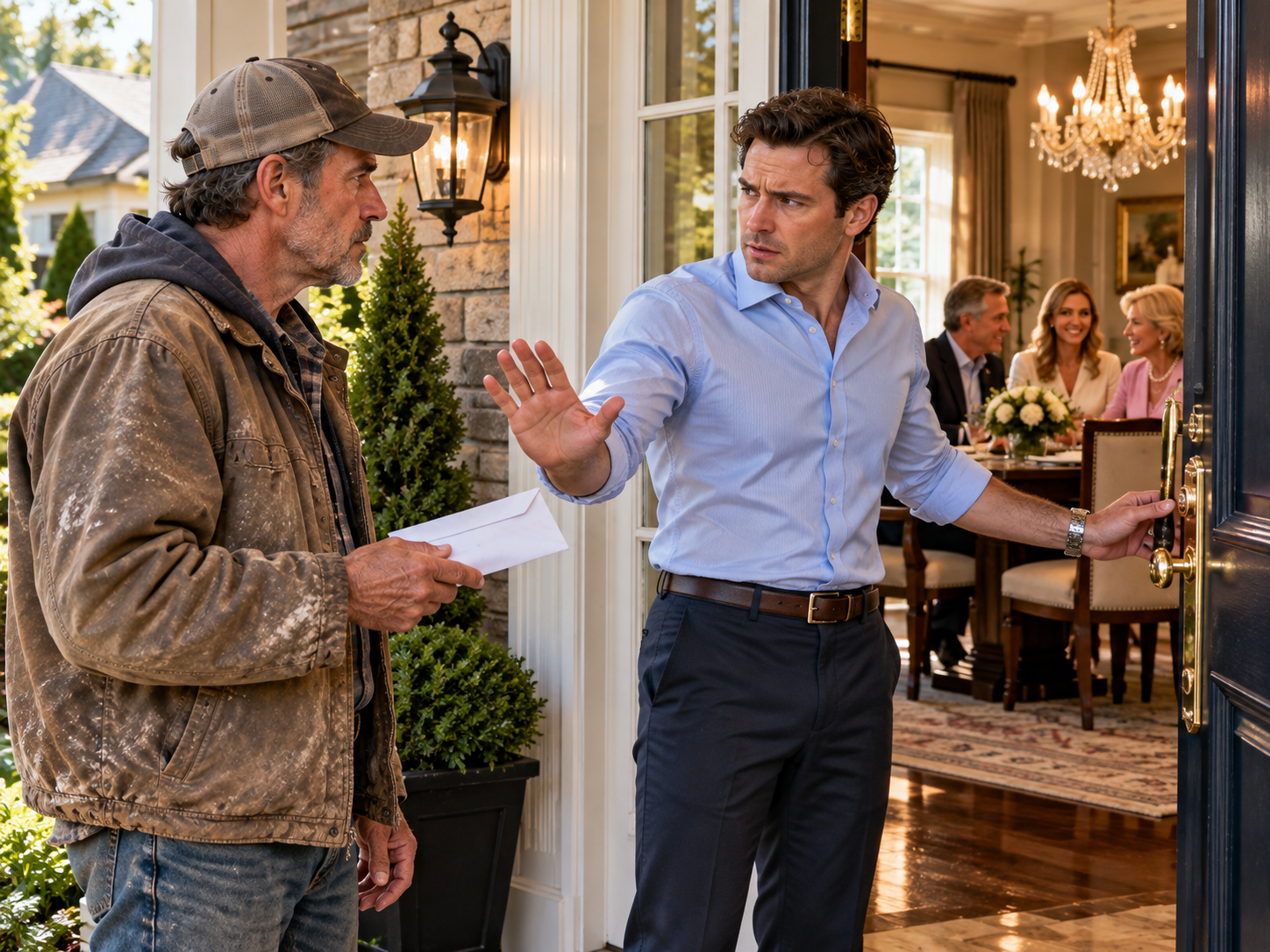
I shook his hand and told him that was a fine place to begin. I did not feel the need to remind him of the porch or explain why the moment mattered. He understood. The difference was visible in the way he had opened the door, the way he had shown me the unfinished parts of the house, and the way he spoke about the responsibility ahead.
On the drive home, I felt a quiet happiness for them. Their house was not proof that the earlier conflict had been necessary, and I would never claim that the pain had been worth it simply because something good eventually followed. But they had learned from the experience, and they had reached this point through careful decisions rather than a story designed to impress other people.
The house they had actually built was not only the property they had purchased. It was the understanding between them, the financial habits they had developed, and the willingness to face facts before making promises. The building itself would need repairs, and their lives would continue to bring unexpected costs. But they had begun with a more honest foundation than before.
I hoped they would remember that foundation when the excitement of the purchase faded and the ordinary responsibilities arrived. A home could provide shelter and stability, but the people inside it still had to choose honesty, respect, and responsibility every day. Ownership did not guarantee those things. The choices they made would.
For now, though, they had every reason to celebrate. They had saved, researched, negotiated, and waited until the numbers made sense. They had not needed to claim a house that belonged to someone else or pretend their future had already arrived. They had built their way toward it, one careful decision at a time.
Click here to continue reading: PART 20: The Home That Needed No Explanation
My Son Closed the Door Before I Could Discover What He Had Told His In-Laws
Part 19 of 20

