
Two years passed.
The archive became a place people visited for more than the Castillo history.
Families came looking for records.
Adopted children came searching for birth information.
Parents came seeking legal advice.
Daniel transformed the foundation into something Eduardo had never imagined.
A place built around transparency.
Not prestige.
Not inheritance.
Not control.
Adrian contributed anonymously at first.
Eventually, people discovered who had funded the education program.
He didn't deny it.
He simply said the money had been sitting inside a life that no longer needed it.
I admired that.
Not because it erased his mistakes.
It didn't.
But because he had finally stopped using money to avoid responsibility.
Noah grew taller.
Lily became more confident.
Their questions changed.
They no longer asked why their parents divorced.
They asked why adults lied.
They asked why people cared so much about names.
One evening, while we were eating dinner, Noah asked,
“Why was the Castillo name so important?”
I put down my fork.
“It represented history.”
“Is history important?”
“Yes.”
“More important than people?”
“No.”
He nodded.
“Then why did everyone act like it was?”
I looked at him.
“Because sometimes people confuse what they inherited with what they deserve.”
Lily frowned.
“That sounds silly.”
“It can be.”
Noah looked at Adrian.
“Did you think you were better because of the name?”
Adrian didn't avoid the question.
“Yes.”
“Why?”
“Because I was taught that.”
“By Grandma?”
Adrian hesitated.
“By many people.”
Noah thought about that.
“Did you stop believing it?”
Adrian looked at me.
Then at the children.
“Yes.”
“Good.”
The conversation moved on.
Children were good at that.
They asked difficult questions and then returned to dessert.
I envied them.
That night, Adrian stayed after dinner.
He stood on the balcony.
“I didn't know they remembered so much.”
“They remember more than we think.”
“I want to tell them everything someday.”
“You can.”
“Not yet.”
“No.”
He nodded.
“I want them to have a childhood before they have a family history.”
“That is wise.”
He smiled.
“Look at me.”
“What?”
“You just called me wise.”
“Don't get used to it.”
He laughed.
The following month, Daniel invited us to the foundation's anniversary.
The courtyard was filled with families.
Children played under strings of lights.
There were photographs from the archive displayed on large boards.
Thomas's story was included.
So was Daniel's.
The exhibit didn't glorify Eduardo.
It didn't demonize Margaret.
It explained what happened.
That distinction mattered.
History was complicated.
People could do terrible things and still have loved someone.
People could make mistakes and still try to repair them.
That didn't erase consequences.
It simply made the truth more complete.
At the center of the exhibition was a sentence from Eduardo's journal.
Secrecy does not preserve families. It preserves appearances.
I stood beneath it for a long time.
Then Noah joined me.
“Is this the sentence you told us about?”
“Yes.”
“I like the other one better.”
“Which one?”
He pointed.
Your inheritance is not the fortune. It is the truth.
I smiled.
“You remembered.”
“Of course.”
Lily joined us.
“What's inheritance?”
I looked at both children.
“Something passed from one generation to another.”
“Like money?”
“Yes.”
“Like stories?”
“Yes.”
“Like recipes?”
“Yes.”
She smiled.
“Then I want Grandma's soup recipe.”
Everyone laughed.
Even Adrian.
The moment was simple.
It was also everything.
Later that evening, Daniel gave me a small box.
“What is this?”
“Something that belongs to you.”
I opened it.
Inside was my original divorce agreement.
The one Adrian had signed without reading carefully.
I stared at it.
“I thought this was destroyed.”
“It was preserved in the archive because it became legally significant.”
I laughed softly.
“The paper that ended my marriage became an archive document.”
Daniel nodded.
“You should keep it.”
I closed the box.
“Why?”
“Because sometimes people need to remember the moment they chose themselves.”
I thought about that.
I had spent years believing leaving meant failure.
It hadn't.
Leaving had been the first honest decision I made in a long time.
That night, Adrian and I walked outside.
“I saw the box,” he said.
“You did?”
“Yes.”
“What do you think?”
He looked at me.
“I think I was arrogant.”
“That isn't news.”
He laughed.
“I mean about the divorce.”
He became serious.
“I thought signing those papers meant I was getting rid of the part of my life I didn't want.”
“And?”
“I didn't understand that I was signing away the version of myself that thought everything belonged to me.”
I didn't answer.
He continued.
“I wish I'd understood sooner.”
“So do I.”
He looked toward the children.
“But if I had, maybe none of this would have happened.”
“Maybe.”
“Do you ever wonder whether we could have saved the marriage?”
I thought about it.
“Yes.”
He looked surprised.
“But I don't wonder whether we should have.”
He nodded.
“I understand.”
We stood silently.
Then he said,
“Thank you for not turning the children against me.”
“I didn't need to.”
He looked at me.
“What does that mean?”
“They saw your choices.”
He lowered his eyes.
“That hurts.”
“It should.”
He nodded.
“I know.”
The next morning, I received the final legal notice concerning the inheritance.
The children's trusts were permanently secured.
The foundation was independent.
Adrian's assets were separate.
Daniel's trust was protected.
Gabriel had no financial claim.
Margaret had no control.
Vanessa had no authority.
The family had finally stopped fighting over the same locked door.
I signed the acknowledgment.
Then I put it away.
No celebration.
No champagne.
No dramatic announcement.
Just relief.
That afternoon, I took the children to the beach.
They ran along the water.
Adrian joined us.
He kicked off his shoes.
Noah challenged him to a race.
Adrian lost deliberately.
Noah accused him of cheating.
Lily laughed.
I watched them from the sand.
The sun was low.
The water reflected gold.
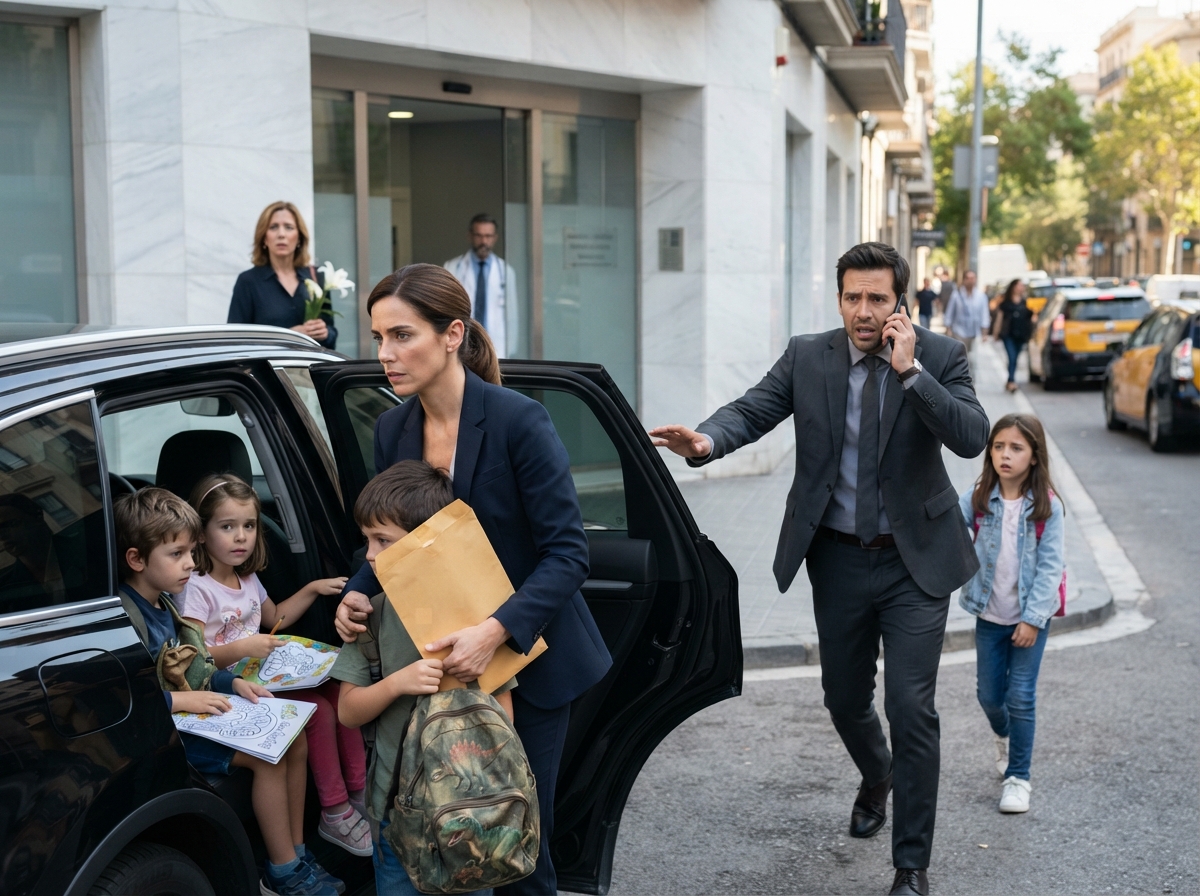
For a moment, I remembered the morning I had signed the divorce papers.
10:03.
A pen.
A polished desk.
Adrian checking his phone.
Five minutes later, he had rushed toward another life.
I had walked out with two passports.
At the time, I thought the hardest part was leaving.
It wasn't.
The hardest part was understanding that the life I had fought to preserve had already been built on things I could not control.
Once I stopped trying to control them, I could finally protect what mattered.
My children.
My peace.
My future.
The next chapter didn't require a family name.
It required honesty.
That was enough.
Years later, when Noah and Lily were adults, they would eventually read every letter.
They would read Thomas's words.
Eduardo's confession.
Daniel's testimony.
My divorce agreement.
Adrian's letters.
They would learn the full story.
Not the polished version.
Not the family version.
The truth.
And when they asked me why I had kept everything, I knew what I would say.
Because children deserve the chance to understand their history without inheriting its bitterness.
That was the promise I had made to myself.
And the promise I intended to keep.
Click Here to continue read next: PART16: Years Later, My Children Opened the Last Letter From Their Father, and the Words Inside Finally Closed the Chapter None of Us Could Escape
Five Minutes After He Gave Away Our Children, I Realized the Signature He Barely Read Had Already Changed All of Our Futures
Part 15 of 16

