
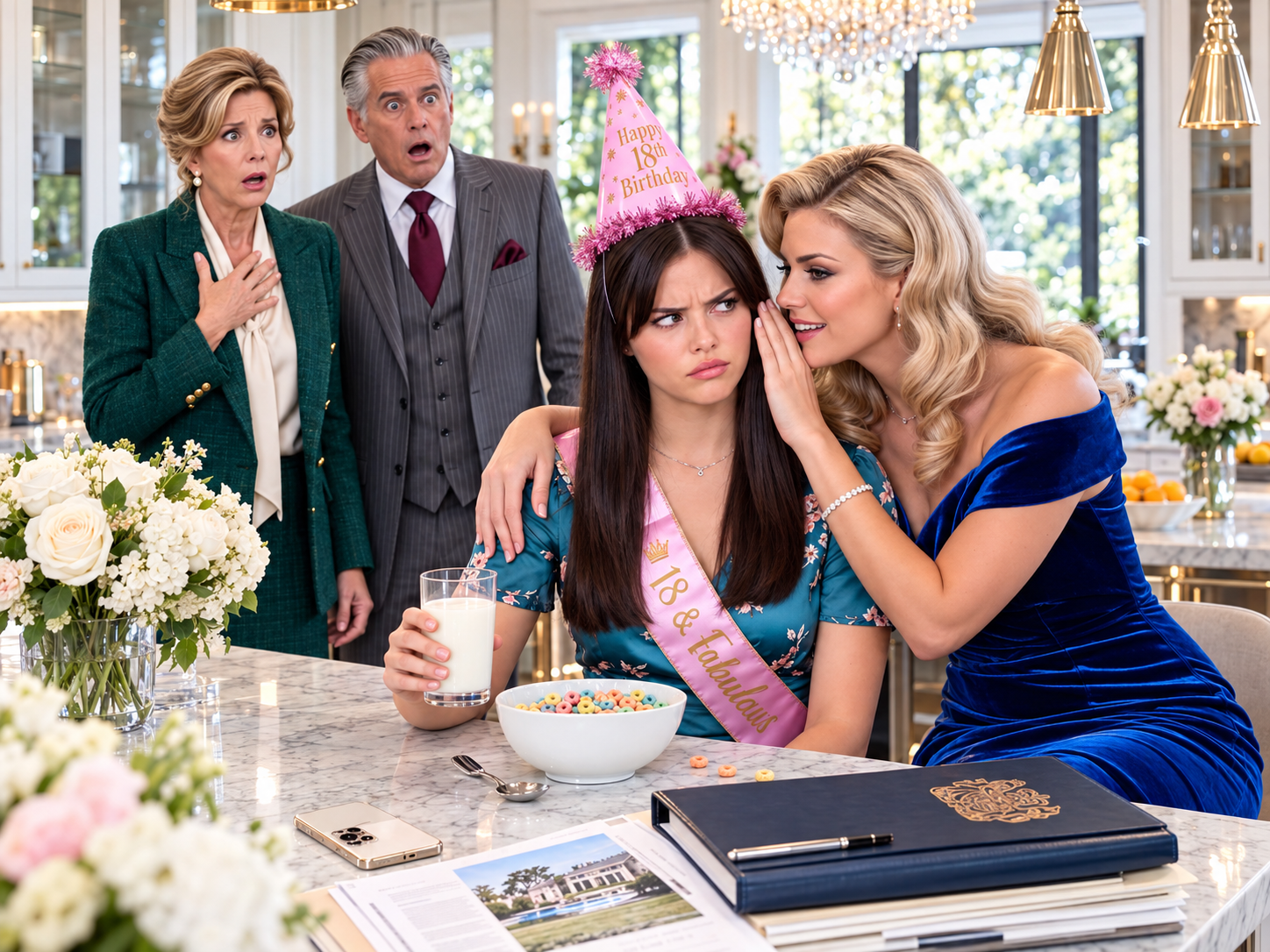
At 11:58 p.m., two minutes before my eighteenth birthday, I sat alone on the edge of my bed with my grandfather’s brass key resting beside my phone. Downstairs, my parents were still talking and laughing as though tomorrow belonged to them. I had spent the last week pretending not to notice the strange excitement in the house. Tonight, I finally stopped pretending. I opened the message Fran had prepared for me and waited for midnight.
I had never been the daughter my family worried about. That was Rebecca’s role. She was eight years older than me, and somehow every mistake she made became another emergency everyone else had to solve. When she quit college, Mom said she was finding herself. When she abandoned an apartment in Chicago, Dad called it an unfortunate chapter. When her art studio failed, they called it a temporary setback. I learned early that Rebecca’s problems arrived with sympathy attached to them.
My problems were handled differently. If I needed something, I was expected to figure it out. At sixteen, I found a weekend job at a hardware store and started keeping every paycheck in a small wire-bound notebook. I wrote down what I earned, what I spent, and what I could save. The numbers were never impressive, but the habit gave me something I could control. I began buying my own school supplies, replacing my worn shoes, and paying for small things without asking anyone.
The difference between Rebecca and me became impossible to ignore when I was fifteen. My school had nominated me for a summer mathematics program. It was exactly the sort of opportunity my teachers said could open doors later. The tuition was expensive, but not impossible. I brought the form home carefully folded inside my backpack and waited until dinner was finished before showing Mom.
She read the page, sighed, and pushed it back toward me.
“Sweetheart, this year just isn’t the year for extras.”
I understood what she meant. The family budget could not stretch that far. At least, that was what I believed until three weeks later, when I learned my parents had helped Rebecca secure an expensive apartment in Chicago.
I did not confront them. I simply folded my mathematics-program application into the trash and stopped asking for things that mattered to me.
That was when my grandfather became even more important in my life, although he had already been my favorite person for as long as I could remember. Walter Bennett had built Bennett Mechanical from a modest contracting business into a company large enough to support an entire region. He never talked about success as though it were magic. He talked about systems, discipline, and knowing exactly where every moving part belonged.
When I was eight, he took me into his workshop and placed an old brass key in my palm. It was heavy for my small hand, scratched around the edges, and warm from his fingers.
“You know what a key means?” he asked.
I guessed that it opened something.
He smiled.
“It means somebody trusts you enough to let you lock up after yourself.”
He called me Poppy, a nickname that had followed me since childhood, and squeezed my fingers around the key.
“You’re the one I trust with mine.”
I did not understand then why those words stayed with me for years.
When Walter eventually sold Bennett Mechanical, he arranged his estate with the same care he brought to everything else. Three million dollars went into an irrevocable trust in my name. I would not receive control of it until I turned eighteen. Until then, my father served as trustee.
Dad always described the arrangement casually.
“It’s all one pot, Pop.”
He said it so often that the phrase became part of the background noise of my childhood. If I asked about the trust, he told me not to worry. If a statement arrived in the mail, he handled it. If I asked whether Grandpa had really left me three million dollars, Dad would laugh and tell me that money was complicated and that I should concentrate on school.
But Grandpa had prepared me for that too.
Before cancer took him when I was thirteen, he made me promise something I did not fully understand.
“When you turn eighteen,” he said, “call Fran before anybody else gets the chance to fill your head with plans.”
Fran Whitaker was the financial adviser who had helped him establish the trust. I had met her only a few times, but Grandpa trusted her completely.
“Promise me.”
I promised.
For years, I assumed the instruction was simply another strange piece of grandfatherly advice. By the summer before my eighteenth birthday, I realized it might have been the most important thing he had ever told me.
My parents had suddenly become obsessed with real estate. At first, they claimed they were helping Rebecca settle down. She had moved back from Chicago after another failed venture and was supposedly ready to become responsible. Listings began appearing on the kitchen counter, tucked beneath grocery receipts and restaurant menus.
Then I saw the house.
It was priced at one and a half million dollars. The photographs showed a large suburban property with a polished kitchen, a wide backyard, four bedrooms, and a separate downstairs area. Mom had circled the words “private primary suite” twice.
I stared at the floor plan longer than I should have.
Rebecca was twenty-six. She was single. She had no children. Yet the downstairs suite had its own entrance, bathroom, and living area.
“Nice place,” I said casually.
Mom immediately covered the page with another listing.
“It’s just something Rebecca is considering.”
I nodded and walked away.
After that, I started paying attention.
Conversations stopped whenever I entered the kitchen. Dad began taking phone calls in his office with the door shut. Mom suddenly became interested in expensive furniture catalogs. Rebecca started sending messages about paint colors and dining tables. None of it made sense until one afternoon when I passed Dad’s office and heard him speaking through the partially closed door.
“As soon as the wire clears after her birthday, liquidity won’t be an issue.”
I stopped in the hallway.
He continued talking, unaware that I was standing outside.
My birthday.
The words hit harder than they should have.
That night, I opened the drawer where I kept copies of the trust statements I had quietly saved over the years. I had started keeping them because Grandpa had taught me to keep records. I spread them across my bedroom floor and compared the balances.
The account should have been untouched.
It wasn't.
Small withdrawals appeared again and again. A few thousand here. Ten thousand there. The amounts were spread across months, almost carefully enough to disappear into ordinary paperwork. But when I compared the dates against what had happened in our family, the pattern became obvious.
One withdrawal matched Rebecca’s failed art studio.
Another appeared around the time she bought a new SUV.
Several more lined up with periods when my parents had talked about “helping Rebecca get caught up.”
My hands became cold.
The total was roughly one hundred and eighty-five thousand dollars.
I sat on the carpet surrounded by statements and realized something worse than the missing money.
My father had been protecting an inheritance that belonged to me by spending it on someone else.
The next morning, Rebecca sent me a message.
“Pop, I still can’t believe you’re doing this for me. Seriously, you’re the best sister ever.”
I stared at the screen.
I had never offered her anything.
I had never discussed a house with her.
Yet she was thanking me for one.
That was the moment I understood the house was not a sudden idea. My family had already made a decision about my money, my future, and my consent. They had simply been waiting for the date when they believed I would be legally old enough to sign the paperwork.
I looked at Grandpa’s brass key on my desk.
Then I looked at the clock.
There were four days left until my eighteenth birthday.
I picked up my phone and opened the contact Fran had given me years earlier.
This time, I did not hesitate.
Click Here to continue read next: PART2: The House Was Only the Visible Part of a Plan My Parents Had Been Building With My Money
My Family Had Already Spent My Future Before I Was Old Enough to Defend It
Part 1 of 8

