
For several years, our life settled into a rhythm that felt almost ordinary. That was perhaps the greatest gift of all. There were mornings when Paisley complained about school, evenings when Matthew refused to sleep, and weekends when Zachary insisted that everyone help him repair something that had not actually needed repairing.
I continued working at St. Luke Memorial. My hours remained unpredictable, but nobody treated that unpredictability as a betrayal. If I was called into the hospital during dinner, Zachary packed my food for later. If I missed a school performance because a trauma case arrived, Paisley saved me a copy of the program and told me which parts I had missed.
There were still difficult days. Healing had never erased the past. It had simply stopped the past from controlling the present.
One Tuesday afternoon, I was finishing paperwork when the hospital receptionist called my office.
“Dr. Miller, there is a registered letter for you.”
I frowned.
“From whom?”
She hesitated.
“It says Andrew Foster.”
I felt the old name settle heavily in the room.
For several seconds, I did not move.
Andrew had disappeared from my life after the divorce from Gemma. There had been occasional messages, mostly apologies followed by requests for help, but I had stopped responding. Eventually the messages stopped too.
I walked downstairs and accepted the envelope.
My name was handwritten across the front.
Inside was a single sheet of paper and a copy of a legal notice.
Andrew was selling the townhouse.
That part did not concern me.
The second page did.
My name appeared in a section concerning an old financial account we had opened together before our engagement. I had forgotten about it. Andrew apparently had not.
There was money in the account.
A considerable amount.
I called the bank and learned that the account could not be closed without both signatures.
I stared at the paperwork.
For years, I had believed I had removed every thread connecting us.
Apparently one remained.
That evening, I told Zachary.
He read the document carefully and set it down.
“Do you want me to come with you?”
“Yes.”
He did not ask whether I was afraid.
He knew.
Two days later, I met Andrew in a lawyer's office downtown.
He looked older.
Not dramatically. Just enough that I noticed the difference immediately. His hair had thinned around the temples, and there were deep lines beside his mouth. He wore the same expensive kind of suit he had always preferred.
For one strange second, I remembered the man who had once kissed me beside a Christmas tree and promised that we would grow old together.
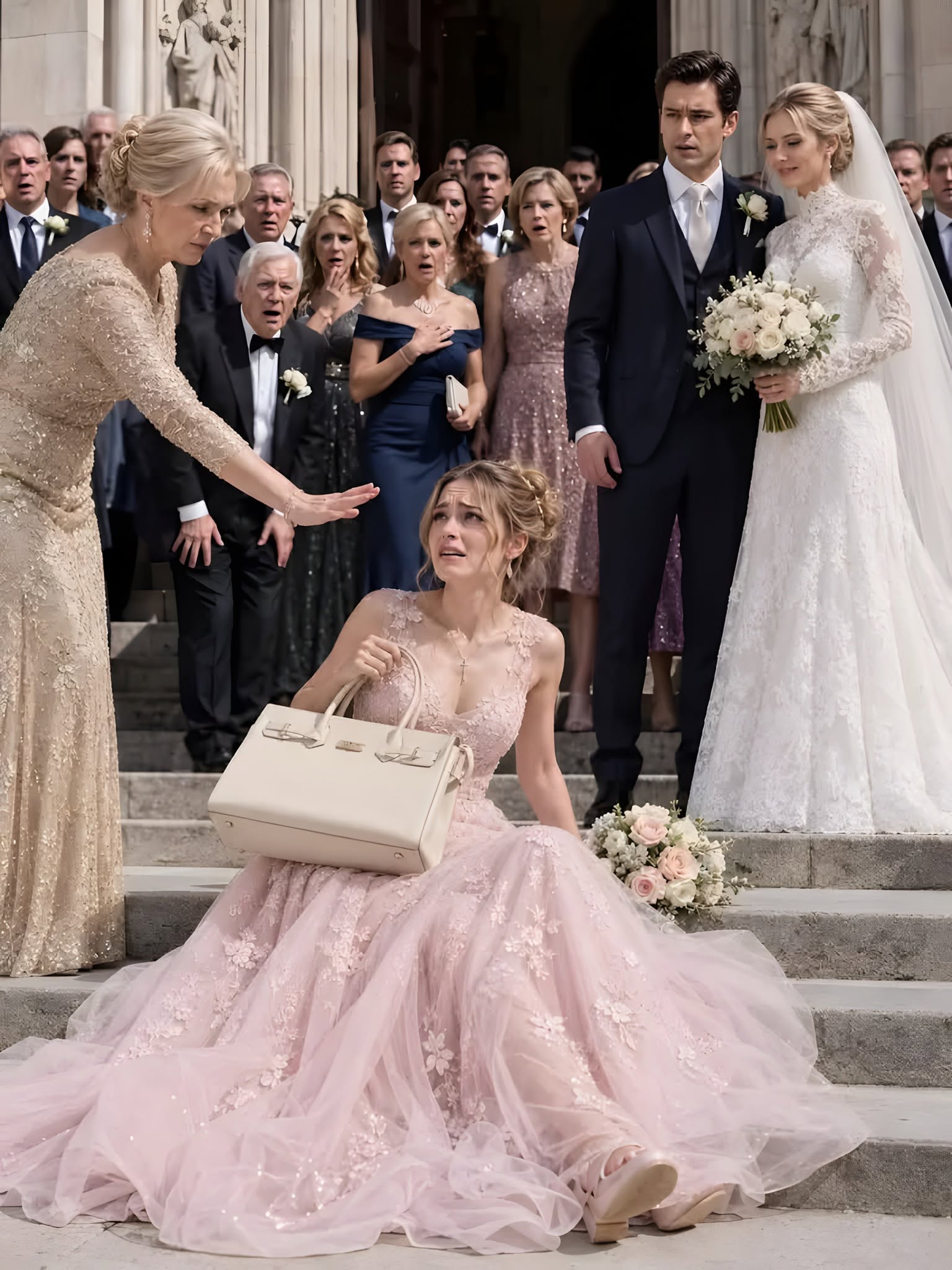
Then I remembered the marble entrance of the wedding venue.
The memory corrected the first one.
“Samantha,” he said.
“Andrew.”
His eyes moved to the wedding ring on my hand.
“I heard you have a family.”
“I do.”
He nodded.
“I saw the hospital article.”
I said nothing.
“I was wrong.”
The sentence was so unexpected that I almost looked behind me.
“About what?”
“Everything.”
The lawyer entered the room before he could continue.
We dealt with the account first. The process took less than an hour. We signed the necessary documents, divided the remaining funds according to our agreement, and closed the account.
It should have ended there.
But Andrew remained seated.
“I owe you an apology.”
“You've given me several.”
“I know.”
“And they never changed anything.”
He looked down.
“I thought you were choosing medicine over me.”
“You knew my profession when you proposed.”
“I know.”
“You knew what the job required.”
“I know.”
I waited.
He finally looked at me.
“I didn't want a wife who had a life I couldn't control.”
There it was.
The truth he had spent years disguising as disappointment.
I breathed slowly.
“Thank you for finally saying it.”
His face tightened.
“I don't expect forgiveness.”
“You shouldn't.”
“I deserved that.”
“Yes.”
He nodded.
There was no argument.
No attempt to make himself the victim.
That surprised me more than anything else.
Outside the office, Zachary was waiting.
He did not ask what Andrew had said.
He simply held the passenger door open.
As I climbed inside, I realized I had expected to feel shaken.
Instead, I felt relieved.
The last loose thread had finally been cut.
A month later, Paisley asked me whether I had ever regretted missing my first wedding.
We were sitting on the back porch.
She was older now, old enough to understand that adults could make serious mistakes and still survive them.
I considered the question carefully.
“I regret what happened to me that day,” I said.
“But not saving me?”
“Never.”
She smiled.
“Good.”
I looked at her.
“Why did you ask?”
“Because sometimes people talk about your wedding like you lost something.”
I was quiet.
She continued.
“But you didn't lose everything.”
“No,” I said.
“I think you got us.”
I laughed softly.
“You make it sound like a trade.”
She shrugged.
“Maybe it was.”
Zachary came outside carrying three glasses of lemonade.
“What are we trading?”
“Nothing,” Paisley said.
“That's what people say when they're definitely trading something.”
She grinned.
The moment was so ordinary that I almost missed how precious it was.
That night, after the children were asleep, Zachary and I sat in the kitchen.
“I sometimes wonder what would have happened if I had arrived at the venue on time,” I said.
He looked at me.
“You might still have married him.”
“I might.”
“You might have discovered the truth a year later.”
“I might.”
“Or five years later.”
I looked at him.
He reached across the table.
“But you didn't.”
“No.”
“You came to the hospital.”
“I did.”
“And Paisley needed you.”
I smiled.
“Your daughter needed me.”
“Our daughter needed you,” he corrected.
The words caught me.
He saw my expression.
“What?”
I shook my head.
“Nothing.”
But it wasn't nothing.
He had called Paisley our daughter without hesitation.
I realized that family had become so natural between us that we rarely noticed when the language changed.
A week later, Paisley won a regional science competition.
Her project examined how emergency medical teams respond under pressure.
She had built a miniature operating room out of cardboard.
At the center was a tiny paper patient.
On the wall she had written:
EVERY SECOND MATTERS.
I stood in the audience while she explained the project.
When she finished, the room applauded.
I looked at Zachary.
He was crying.
I whispered, “You're going to embarrass her.”
He wiped his face.
“I don't care.”
Paisley spotted us.
Her smile widened.
After the ceremony, she ran straight toward us.
“I won!”
“You did,” I said.
She hugged me.
Then she hugged Zachary.
A reporter asked whether she wanted to become a doctor someday.
Paisley thought about it.
“Maybe.”
“What changed your mind?”
She looked at me.
“I used to think doctors just fixed people.”
“And now?”
“They also have to make choices when nobody else knows what to do.”
The reporter smiled.
I did not.
Because I knew exactly where she had learned that.
That evening, I found the old wedding photograph in a box while looking for decorations.
Andrew and I stood together in it.
The picture had been taken months before everything happened.
We looked happy.
Maybe we had been.
That did not make the ending wrong.
It simply meant the beginning had once been real.
I placed the photograph back in the box.
Zachary watched from the doorway.
“You don't have to throw it away.”
“I know.”
“Memory isn't loyalty.”
I looked at him.
“That sounds like something you've been saving.”
He smiled.
“Maybe.”
I closed the box.
There was no anger in me.
Only distance.
Years earlier, I had believed closure meant making someone understand how badly they had hurt you.
Now I understood something different.
Closure was being able to remember without needing the person who caused the wound to approve of your healing.
I put the box away.
Then I went downstairs.
Paisley was arguing with Matthew over the last piece of cake.
Zachary was pretending not to notice.
I laughed.
My life was waiting for me.
I no longer needed to look backward to know where I belonged.
Click Here to continue read next: PART6: When Paisley’s Questions Became More Difficult Than Any Examination, I Finally Told Her What Really Happened Before She Came Into Our Family
The Morning My Wedding Clock Started Losing to a Child’s Failing Pulse, I Had No Idea the Life I Was Racing Toward Was Already Disappearing
Part 5 of 8

